

If money were no object, would you still work the same job?
Like most people, you’d probably say no. However much you love or hate your job, pay is one of — if not the — most important concerns of every working person. After all, it’s why we don’t simply earn money or a salary — we earn a living.
No wonder talking about pay is so stressful. Not just for employees, but for managers as well. As a manager, you’re in an unenviable position. You’re the one who has to justify company compensation decisions, even when you don’t actually control them.
But avoiding those hard conversations isn’t an option. Employees want to understand why they earn what they do and to know that it’s fair. When companies shut down the discussion, it can backfire: Trust erodes, and employees start looking elsewhere.
Here, we’ll explore practical strategies for handling pay discussions confidently, navigating difficult conversations without losing trust, and working with HR to offer real transparency that makes employees feel valued.
Common Challenges Managers Face
Discussing pay is still taboo. While pay secrecy has been declining in recent years, it remains common in the US private sector. In most states, it is illegal to outright prohibit employees from discussing pay, but many companies still strongly discourage it.
Here are a few reasons why employers and employees feel uncomfortable discussing employee salaries:
- Power dynamics: Whether speaking to their manager or the HR team, employees might fear that asking for a pay increase is out of line and could be met with a negative reaction from those who keep them in a job.
- Performance or professionalism concerns: Employees may also worry that mentioning salary expectations could seem demanding or unprofessional. They may fear appearing like they’re “only in it for the money.”
- Fear of confrontation: Pay is an emotive and often very personal issue. As such, there’s always a risk of conflict. An employee may be overly demanding, a manager overly dismissive. And there may be disagreements about performance-related pay. Comparisons with colleagues or perceived pay discrimination may be flashpoints for conflict.
- Opaque pay policies: Employees often lack clarity about pay structures and how they work, and many companies prefer to keep these details under wraps (although changing pay transparency legislation in the US since 2023 has made that more difficult). Employers might fear losing competitive advantage or creating resentment.
Best Practices for Effective Pay Conversations
Here are five strategies to encourage positive pay conversations.
1. Ensure psychological safety for employees.
A pay conversation is likely to be very stressful for your employee, even if they’re the one who initiated it. Pay is a topic loaded with emotional baggage, so it’s crucial to defuse any tension right from the start.
As a manager, it’s up to you to create a safe environment for your team members. You need to ensure your employees feel respected, not judged.
What to Say
Ask open-ended questions that allow the employee to express themselves. For example:
- “How do you feel about your current pay?”
- “What are your thoughts on your performance over the past quarter?”
Use inclusive and non-judgmental language. For example:
- “How can we work together to find a solution that works for you?”
2. Listen carefully to requests for raises.
When an employee approaches you to ask for a raise, they’ll be prepared with reasons why they believe they deserve it. They’ll also likely be primed to hear “no” and ready to react. So be conscious of how you respond.
Listen without judgment, acknowledge their reasons calmly, and be honest about the options. If you do have to say no, make the reasons clear and objective. If possible, suggest actions that would support future salary increases.
It’s also important to consider employee retention. This conversation might be an unspoken ultimatum, as your employee may already have a better-paying job lined up. Compensation is the most common reason employees leave their jobs, according to a 2024 Gallup poll. More than half of employees (53%) said a significant improvement in income or benefits is very important to them when deciding whether to take a job with another organization.
Simon Bacher, cofounder of Ling, stressed the importance of taking these conversations seriously, especially with remote employees. “It’s easy for remote and tech workers to find another job, as we experienced in the Great Resignation. If the employee is a top performer, it could significantly impact your remote business operations.”
What to Say
“Whenever I receive pay-related questions,” Bacher said, “I ask exploratory questions, such as ‘Why should the company increase your pay by 10%?’ Expect answers like they’ve found a better-paid job elsewhere, have been performing excellently, working in the company for years, or are dissatisfied with their current salary because of inflation, family, or additional workload. I can then make a sound decision based on my employee’s answer.”
{{rich-highlight-3}}
3. Explain the compensation strategy.
Transparency is vital to positive pay conversations. Employees need to be clear on why they are paid as they are, and how their compensation package relates to the company’s performance management strategy.
“Explain the compensation philosophy early in the recruitment process,” advised Nellie Wartoft, CEO and founder of Tigerhall. “Be clear about how compensation is linked to performance, and what type of performance is rewarded with higher compensation. Spell out what is important to the company and how compensation links to that.”
It’s also a good idea to stay up to date on any issues that might impact policy so you can respond to questions from employees. For example, workers whose expertise is complemented by AI may want to renegotiate their pay, as increased AI exposure has been associated with wage growth in such roles.
Nat Miletic, founder of web design company Clio Websites, emphasizes the importance of being aware of your industry’s compensation standards and being able to explain how the company stands in the industry:
“It’s easier to navigate and communicate when you have market insights. It makes for a more data-driven discussion between HR and employees, and that helps employees understand how the company positions itself while remaining fair and competitive.”
What to Say
When explaining the compensation strategy, be sure to provide the reasoning for each aspect and explain how it aligns with your company’s compensation philosophy. Aim to consider the situation from the employee’s perspective, rather than simply outlining corporate policy. For example:
- “We use salary bands to help give structure to our pay decisions. The compensation we offer takes into account the skill set and the level of responsibility as per our job descriptions.”
- “Let’s take a look at the current salary range for your role. You’re earning the midpoint of the pay scale here, which is in line with HR’s guidance for employees that share your [experience level/performance reviews/geographic location].”
- “Our compensation guidelines are meant to ensure employees are being paid equitably, but sometimes that results in different salaries for the same role. The differences might relate to things like merit increases, geographic location, or tenure.”
4. Facilitate negotiations between HR and employees.
As a manager, you have a dual role. You need to represent the organization to your team, providing the context and reasoning behind financial decisions and pay structures. And you should also act as an advocate for your employees, making sure that they receive fair compensation and recognition for high performance.
Being a good advocate for your team requires you to make the business case to HR or leadership, rather than simply sharing your opinions. It’s much easier for HR to approve a raise when you present clear performance evidence and a rationale tied to the team’s goals.
It’s also worth raising the request with HR before you’ve said anything to the employee that sounds like a commitment. “I’ll push for this” is safer than “I’ll get this approved,” especially if the answer comes back no. And it’s best to be discreet: While HR can provide support and clarity on policy and finances, compensation discussions and negotiations about employees’ pay should stay between the two of you.
What to Say
When seeking your human resources team’s approval for an employee raise, tie the employee’s performance, career goals, and contributions to the company’s objectives, particularly profitability. Ask your employee to help you by providing proof points to justify a raise. For example:
- “To escalate this request to HR, I’ll need your help documenting the extra work you want to be compensated for. Can you send me a list of examples by the end of this week?”
- “Here’s a list of responsibilities for the job title directly above yours. Are you doing any of these tasks already? If so, please give me a list of examples by the end of this week, as that will help me escalate this request.”
- “HR asked for context on how this compares to others on the team. I’ve put together comparable performance data and timelines. Can we go through it together before I send it over, so I make sure I’m representing this fairly?”
5. Take fairness and equitable pay into account.
According to 2022 Gartner research, only 32% of employees believe their pay is fair, and only 34% believe it is equitable. The perception of unfair pay can be enough to make someone leave their job. This is why it’s vital to be transparent and to take account of diversity, equity, inclusion, and belonging (DEIB) in all your compensation reviews.
Bringing openness to conversations around fair and equitable pay can not only help alleviate the tension around those issues but can also help you reduce inequalities in your own business.
What to Say
Ensuring fairness in pay conversations means being open to, and respectful of, employees’ perspectives, even if you don’t agree with them. Emphasize any ways that your pay policies avoid bias. For example:
- “I want to assure you that your compensation is based solely on your skills, performance, and contributions.”
Be honest about any areas where the company might be falling short, as your employees may well already be aware of these. For example:
- “We are actively working to address wage gaps that may exist based on gender, race, or other factors to make sure we are paying everyone fairly.”
Be open to and appreciative of feedback. For example:
- “I encourage you to share your thoughts or concerns on this, as it helps to improve our compensation policies for everyone.”
How to Handle Difficult Pay Conversations
Despite your best efforts, there will inevitably be times when tensions and even conflict arise. An employee may react angrily to a pay reduction, or get upset if a raise you offer falls short of expectations. In some cases, you may find yourself facing accusations of unfair or discriminatory pay practices.
It’s not about avoiding those moments, but rather being ready for them. Preparation means you won’t get thrown off your stride, and whatever arises, you can respond with clarity and calm.
Here are some key techniques for preempting conflict, de-escalating, and maintaining trust.
Communicate with clarity.
How you frame your conversations can make all the difference. Lead with the context, not the number. Before delivering a pay decision an employee won’t like, set out the reasoning: performance metrics, business context, decision criteria.
If you open with the bad news, you risk triggering a reaction that makes it harder to gain and maintain their trust. If you open with the context and rationale, you give your employee the framework for understanding your decision, even if they don’t agree with it.
Be upfront about what you can and cannot share. If there are details you can’t disclose — like another employee’s salary or internal review findings — say so, and explain why. Explaining limitations fosters understanding, while dismissive statements (e.g., “That’s just the policy”) can breed suspicion.
Manage the emotional dynamic.
Pay is personal, and strong emotional reactions are to be expected. When they come, don’t argue or contradict. Instead, listen. Acknowledge the employees’ feelings even if they don’t seem warranted. Allow the employee reasonable time to respond before you move on.
Before you walk into the meeting, think through the different scenarios that may arise and how you’d handle each one best. The Lattice AI Agent can support you with personalized coaching, so that you can anticipate employees’ reactions and work out the appropriate responses in advance.
Focus on a collaborative conclusion.
When pay conversations get difficult, your instinct may be to defend the decision. This is where the conversation can easily devolve into confrontation. The goal is not to win an argument, but rather to create understanding while maintaining trust and respect.
Treat this pay conversation as part of a longer communication, not as a definitive endgame. Focus on what comes after the decision: the next steps, growth and performance expectations, and any opportunities for future pay decisions.
{{rich-highlight-1}}
The Role of Pay Transparency
Employees want to be paid fairly for the work they do. After job security, fair pay was the second most important factor in employees’ decisions to stay with their current employer, according to a 2024 Mercer report. In another survey, pay transparency and equity ranked as the top job factor for one in three American workers, with support even stronger among younger generations.
The law is moving in the same direction. US federal law protects employees’ right to discuss pay in most circumstances, and at least 16 states have their own pay transparency laws as of 2026. In the EU, the Pay Transparency Directive requires companies to disclose salary information to job seekers, respond to employee requests for pay criteria, and report pay gap data if their organization meets specified thresholds.
While some companies continue to discourage conversations about pay, the trend is toward greater openness. And that can be good business: Transparency builds trust, and with trust comes respect, engagement, and retention. It’s in everyone’s interest.
What Transparency Looks Like in Practice
Recruitment: Disclosing salary ranges in your job listings gives applicants clear expectations and shows your commitment to transparency, which can make a difference in a competitive job market. And it’s increasingly a legal requirement.
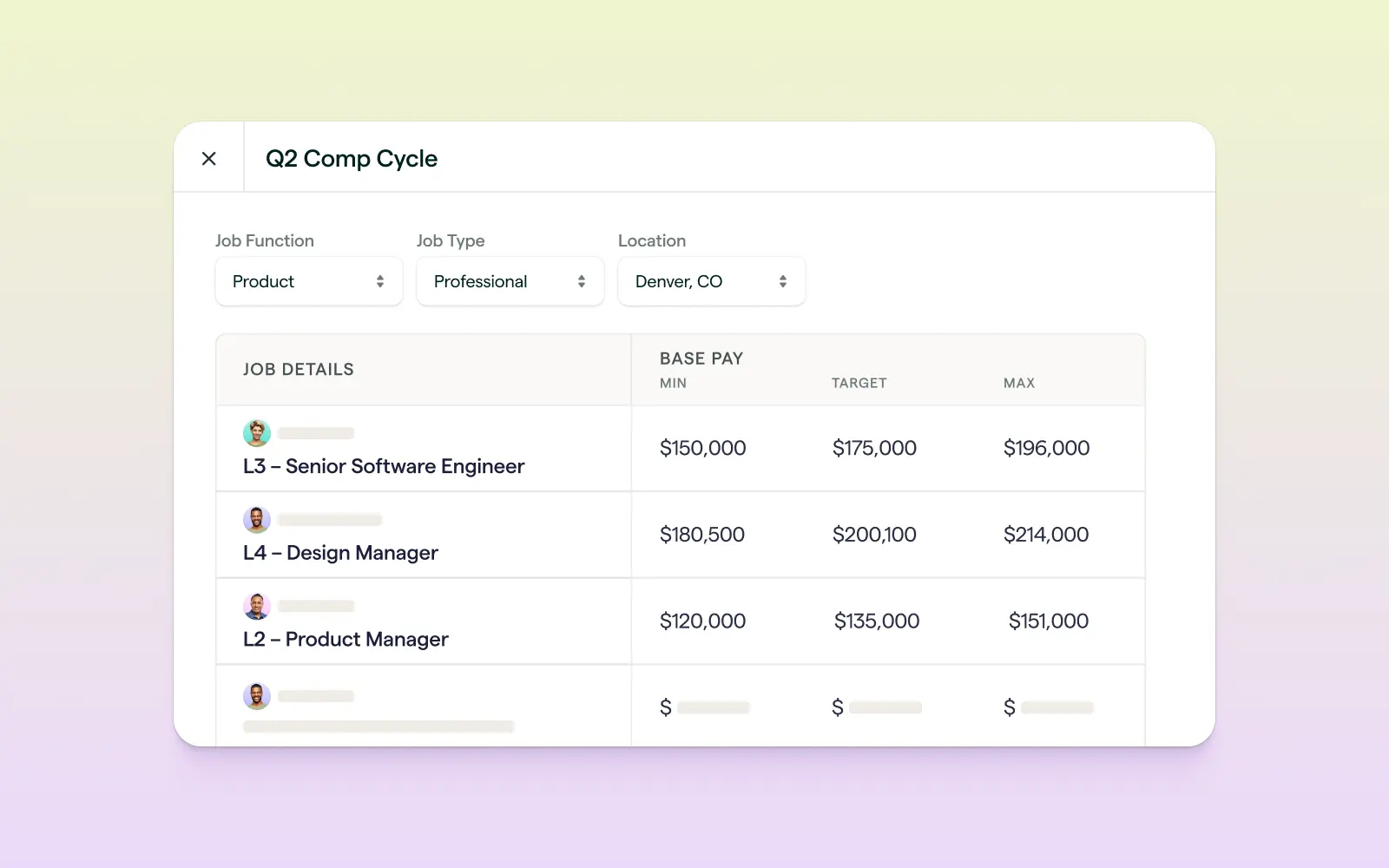
Salary bands: Companies define the minimum, midpoint, and maximum pay for specific roles or job families. These pay ranges are useful for explaining an employee’s current compensation and what is and isn’t possible with salary adjustments.
Pay frameworks: Setting out the skills, experience, performance expectations, and scope of work associated with each band makes pay feel objective, justified, and earned.
Communication: Being open about how pay decisions are made answers questions, alleviates doubts, and preempts suspicions of unfairness.
How You Can Support Transparency
Managers rarely set the pay grades, but you’re often the ones who have to explain and defend them. This means you should be well-informed and ready to respond to any query.
To support pay transparency, you should:
- Know what information can and can’t be shared in pay conversations, and why.
- Be able to speak clearly to the rationale behind any pay decisions.
- Direct employees to the HR policies, pay frameworks, and formal resources for questions beyond your remit.
- Keep messaging consistent with company pay policy and the legislation.
What Managers Need to Succeed
Gartner research found that employees are 4.3 times more likely to trust leaders who explain their decisions, and 6.5 times more likely to trust leaders who demonstrate genuine care for their concerns. Pay conversations put both of these to the test at once: They involve a number, which demands an explanation, and they involve someone’s livelihood, which demands care. Get either one wrong, and the conversation — and the trust behind it — can unravel.
This means you need the right information, tools, and training to have those conversations well.
The Right Information
Managers need easy access to pay bands and approved compensation frameworks, and you should be clear on the criteria underpinning every payment decision. You should be able to speak confidently about how decisions are made and support them with authority.
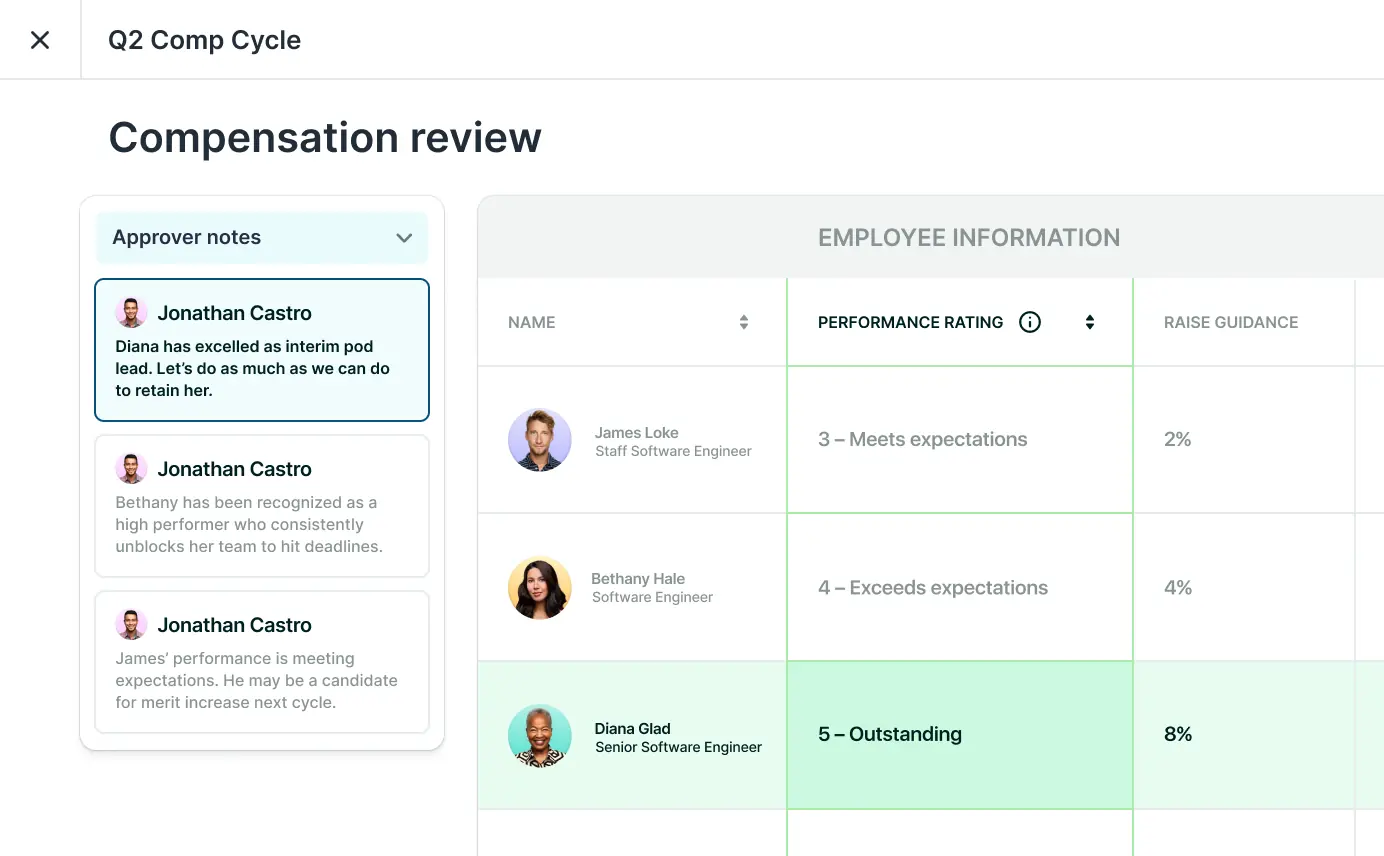
In practice, that means knowing, for any given employee:
- Their performance rating for the cycle
- Where they sit in their band relative to the market
- How their pay compares to peers doing similar work
- What budget was available for this cycle specifically
- How long it’s been since their last pay increase
This information can usually be found in your company’s HR platform. Pay bands, budget guidance, and policy documents are typically published there. If the platform doesn’t answer your question, go to HR directly. Ask for the reasoning behind a specific band, what discretion you actually have within it, and what’s changed since the last cycle.
The Right Tools
To have effective pay conversations, you need an accessible HR platform where you can find relevant documentation and data. Tools like Lattice Compensation help inform pay discussions by connecting to individual employee data, such as performance review results. It can show where employees sit within their pay band and communicate pay decisions with transparent, personalized statements.

The Right Preparation
Pay conversations can go wrong in predictable ways: A manager can’t explain why a raise was or wasn’t given, or they reveal more than they should about how others are paid. Role-playing potential scenarios can help you work out what to say, and what not to, before you talk to an employee.
A few scenarios that you might want to consider rehearsing beforehand:
- What will you say when an employee asks why a colleague got more? Can you answer that honestly without naming the colleague or their number?
- What would you say if a high-performing employee questions why they only received a small increase? If it’s a budget issue, can you explain that without it sounding like an excuse?
- What would you say when someone is simply below the market rate for their role? Can you acknowledge that honestly without promising a fix or a timeline you can’t guarantee?
You don’t have to work through this alone. HR has usually seen every version of these conversations play out and can tell you in advance what you can and can’t disclose. Before a difficult conversation, it’s worth checking your talking points with them, inviting them to role-play the exchange with you, or simply asking what they’d flag as the riskiest part of this particular case.
{{rich-highlight-2}}

Comp got your tongue?
Use Lattice’s salary negotiation template to prepare for sensitive pay conversations.
How Lattice Helps Improve Pay Conversations
When you go into your compensation meetings equipped with the right data, a clear and consistent framework, and a respectful and understanding approach, your employees can trust that the company’s decisions are fair.
Lattice provides managers and HR professionals the infrastructure to prepare for pay conversations and handle whatever arises.
Lattice Compensation connects pay grades directly to performance, giving you the context to explain decisions with evidence. Salary bands are visible and easy to share, with personalized pay statements to give employees clarity about their pay.
As you prepare for difficult conversations, the Lattice AI Agent can deliver personalized coaching and prep support, helping you think through scenarios ahead of time and deliver consistent, equitable messaging — whatever happens.
Learn how Lattice can transform your compensation conversations with a product demo today.
Get a template, give a raise.
Simple as that. Lattice’s pay raise letter template can help you communicate salary changes with compassion and professionalism.