

Regular appraisals are one of the best ways to engage and empower employees. But trying to manage these manually, with spreadsheets or Google Docs, can be a time-consuming process, especially as companies move toward more regular reviews.
Lattice’s 2026 State of People Strategy Report found that 51% of HR teams in Europe are running quarterly appraisals — that’s a lot to manage without automation. Rather than getting bogged down by paperwork, modern HR teams are turning to performance management tools. By offering AI-powered feedback, real-time performance tracking, and integrations that support engagement and retention, tools like Lattice are transforming the appraisal process.
Below, we’ll explore 10 of the best software systems, including their key features and review ratings.
{{rich-takeaway}}
What is employee performance appraisal software?
Employee appraisal software is designed to track and improve the appraisal process. The right system helps organisations move from static, ineffective appraisals toward a dynamic, effective AI-enabled process.
“Spreadsheets and static documents only ever give half the story,” said Marvin Webb, fractional CHRO and CFO, and founder of Nonprofit Operations. He added that while these methods might capture numbers and comments, they rarely preserve the richness of growth, context, and patterns over time.
“Platforms like Lattice bring more depth because they function like an employee file: Once an appraisal is completed, it’s locked and preserved,” explained Webb. In contrast, he added that Google Docs are just links: easy to change, often left open, and rarely secured. “That difference matters. When reviews are living records, they lose credibility; when finalised and stored, they become trustworthy data points for employees and organisations.”
Here’s more about how modern appraisal software differs from the traditional review process:
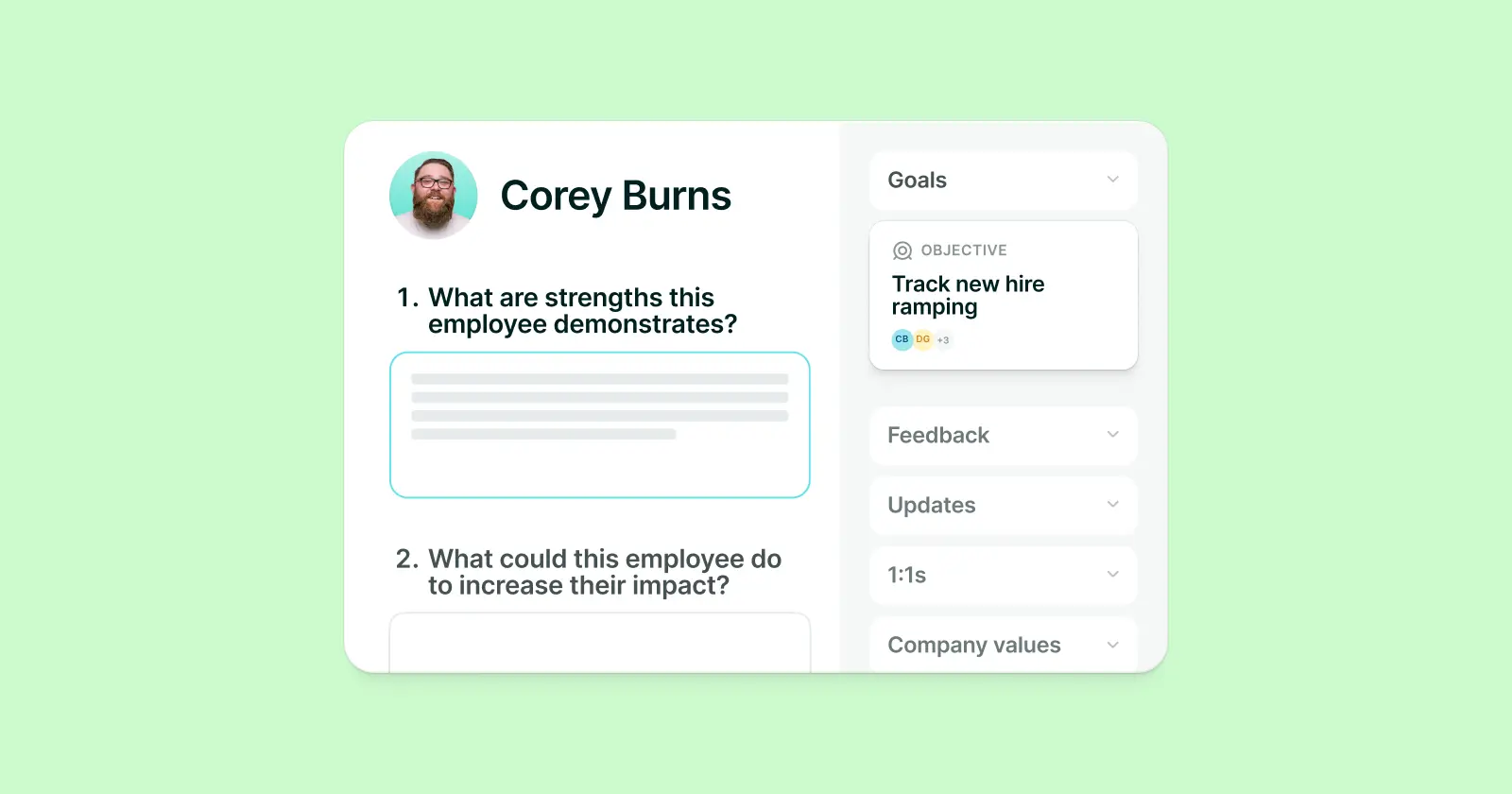
On top of handling regular performance reviews, employee appraisal software tools often include features that help employees monitor their performance continually, including goal setting, direct feedback tools, and push notifications that keep appraisals moving forward.
If you’re looking for a streamlined process that achieves all of the above, you’ll need software with the right features and functions.
The Core Features and Functions of Employee Appraisal Software
While platforms vary, there are some common key elements to look for, including:
- Talent reviews: By pinpointing the skills and competencies of an organisation’s entire workforce, talent reviews can highlight skills gaps, identify high-potential employees, boost retention, and help guide succession planning.
- AI-powered insights: Artificial intelligence can highlight potential bias, quickly analyse performance data, help managers write better reviews, flag when employee engagement is dipping, and more.
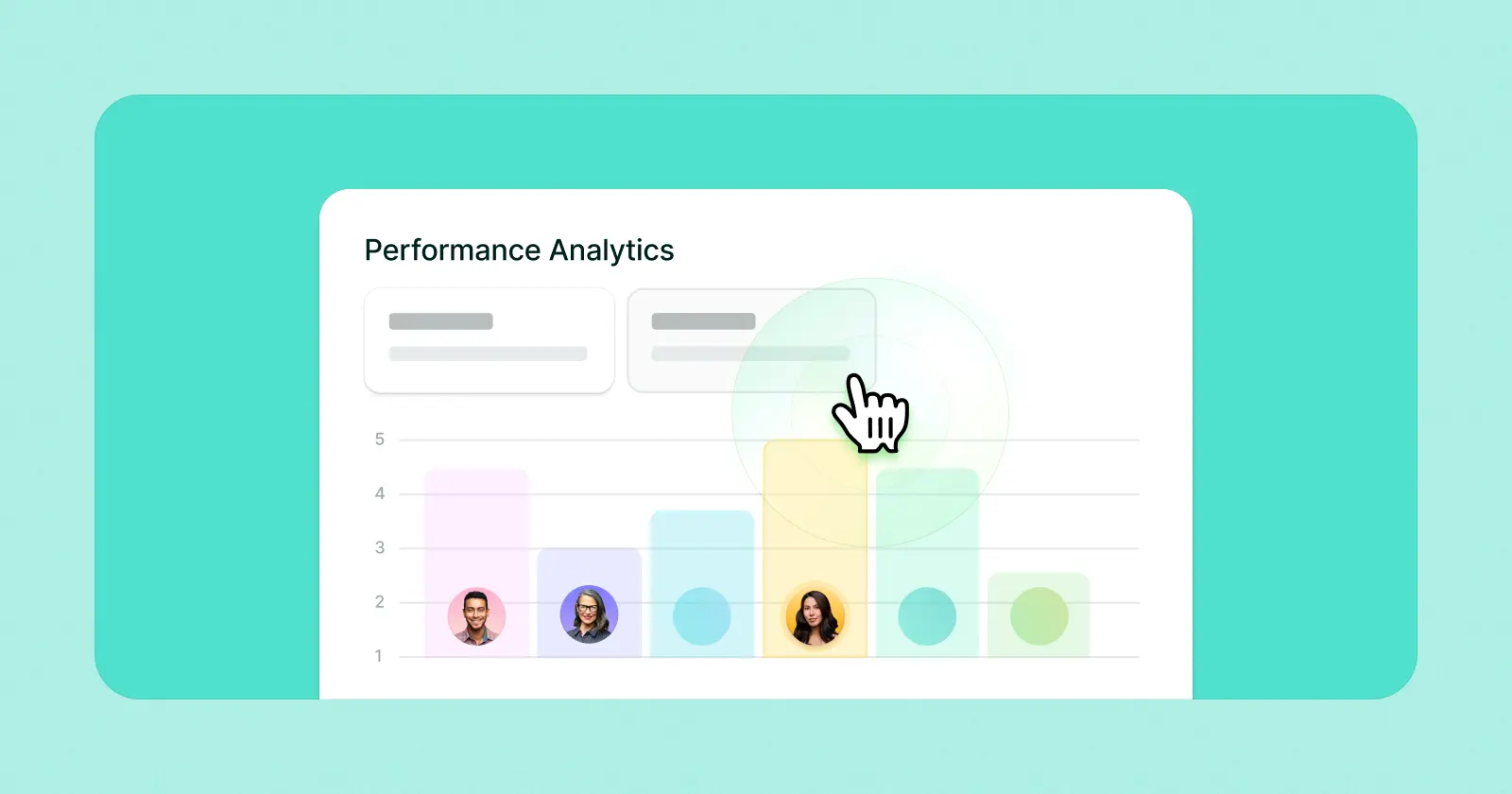
- Insights and analytics: Access to both high-level and granular data helps organisations make informed decisions that drive growth. The most effective platforms don’t just dump a bunch of data in your lap; they help managers see how that data impacts company goals with charts, graphs, and analytics.
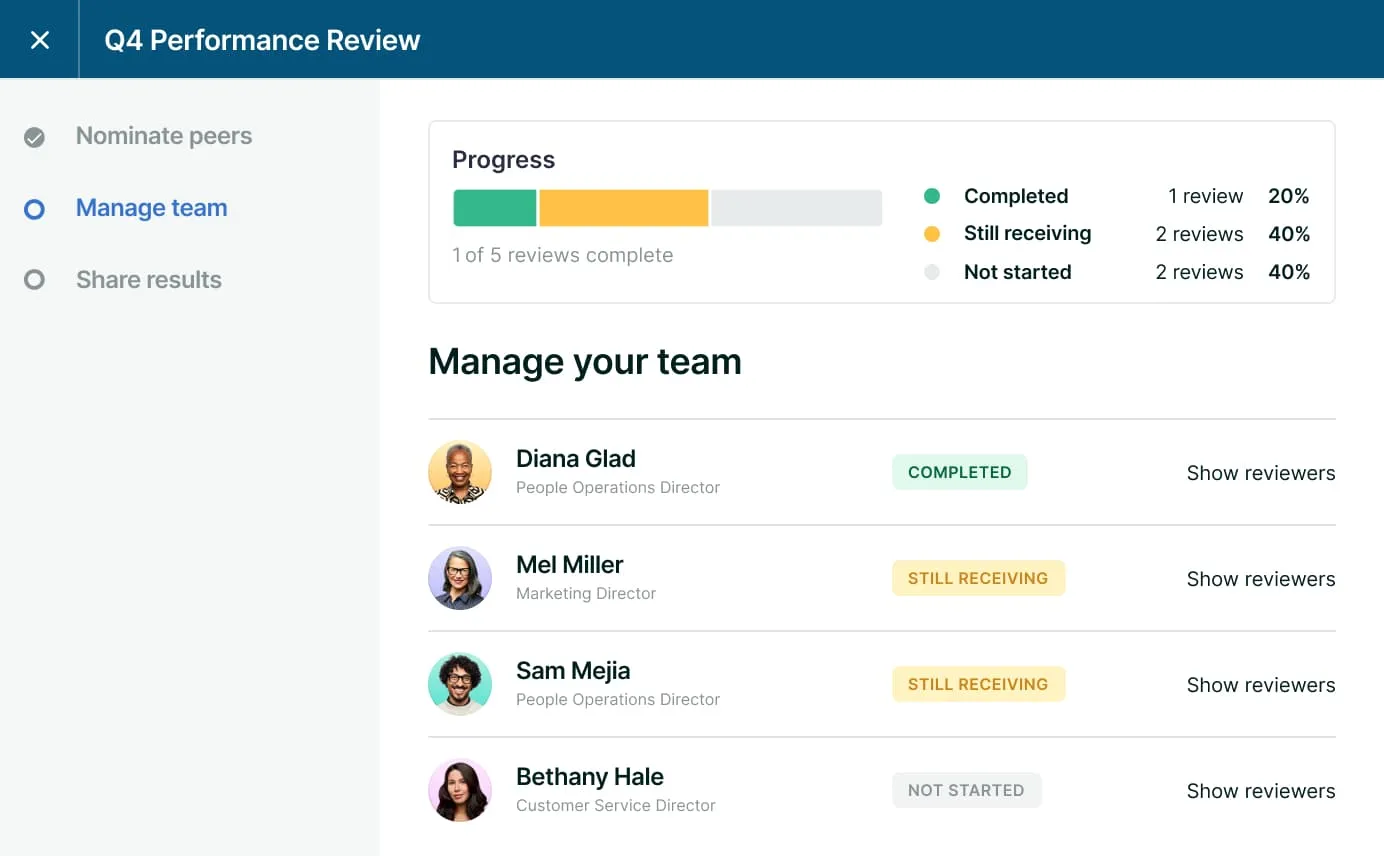
- 360-degree feedback functionality: Feedback shouldn’t just go from the top down. 360-degree feedback pulls input from all directions, including managers, coworkers, and direct reports. This provides more actionable commentary and enables multiple types of appraisals, including talent reviews and development appraisals.
- Objective scoring adjustments: Ensuring appraisals are objective and unbiased keeps the process fair and equitable. By reducing subjectivity in the data, performance review calibration helps guarantee that all employees are scored on the same level.
- Integrated goals and feedback: Integrating goals into the appraisal process provides employees with the context needed to do their best work. Choose a platform that allows managers and employees to create and track goals so they can see exactly how they’ve progressed — and how to improve.
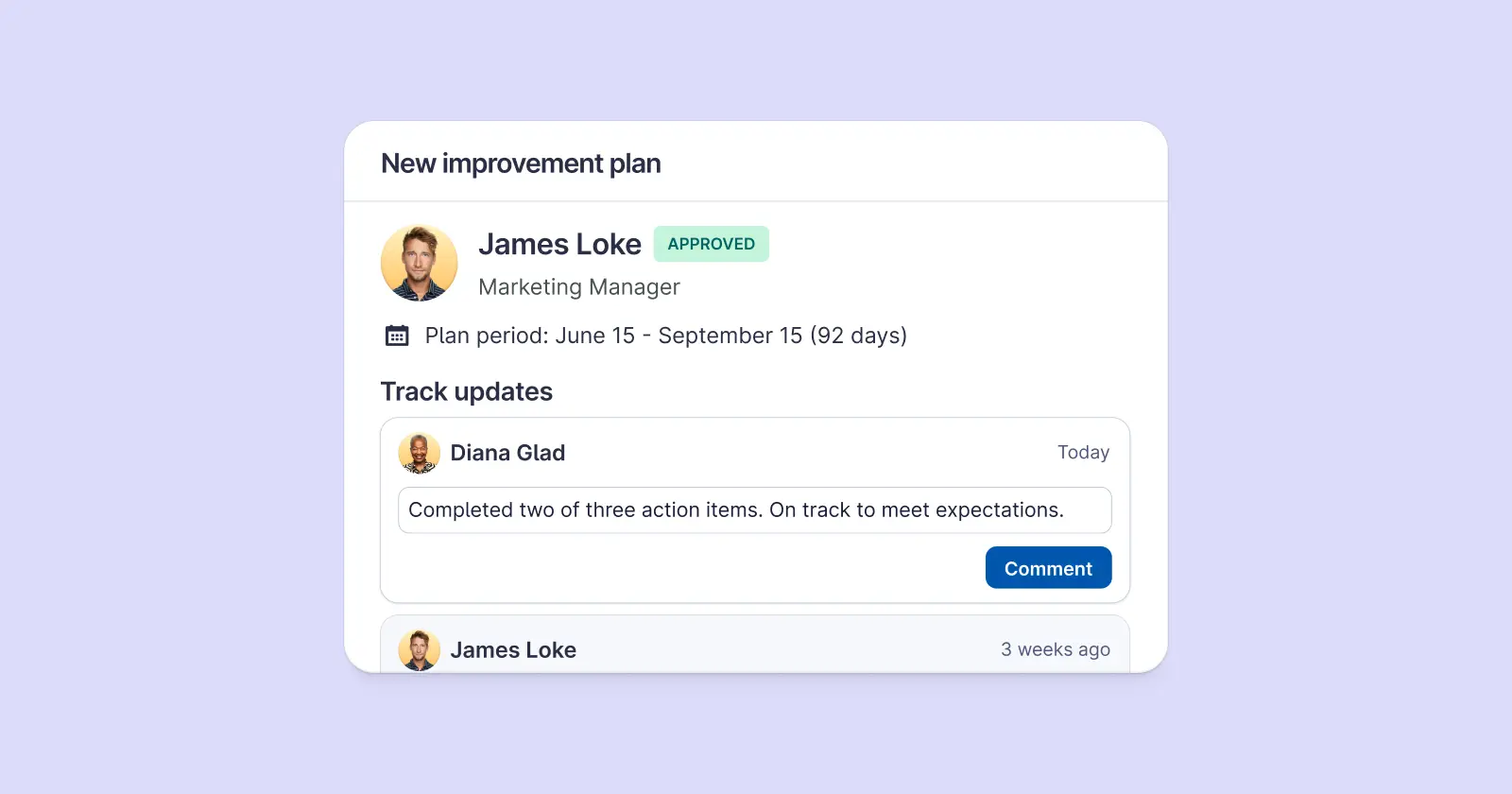
- Performance improvement plans: Clear performance improvement plans (PIPs) provide the support and clarity that employees need to succeed. Establishing a consistent standard for PIPs makes it easy to set milestones, check progress over time, and document outcomes.
- Flexible and customisable appraisal management: This feature makes it easy to streamline the appraisal process based on your organisation’s needs. For example, you might want to connect individual performance to organisational goals or offer appraisals by project or team.
The 10 Best Performance Appraisal Tools for 2026
Spreadsheets were never a good fit for performance management, said Guillermo Triana, founder and CEO of PEO-Marketplace.com. “They don’t scale. They rarely sync up. No one reads them except for the week of review.”
Instead, modern HR professionals are turning to performance appraisal tools as an effective way to make review cycle management easier while building a high-achieving workforce.
Here are ten of the best.
1. Lattice
Lattice goes beyond the traditional appraisal process by combining engagement, performance, and professional development data into a single, unified platform.
Instead of treating reviews as a one-off exercise, Lattice helps you build 360-degree feedback loops, kickstart meaningful conversations between employees and managers, and track progress so you can make adjustments as you go. Plus, it adapts to how your company works — even if you don’t follow a traditional structure.
Key features include customisable review cycles, real-time feedback, OKR and goal tracking, career development frameworks, and analytics that tie employee performance to business outcomes.
Lattice’s intuitive design encourages meaningful conversations between managers and their team members, while AI-enabled insights help quickly identify feedback patterns, opportunities for growth, and next steps for employee development. Instead of just supporting the appraisal process, Lattice makes it more intentional and strategic.
Pros:
- AI-enabled insights
- Transparent pricing
- Ease of use
- Ongoing product innovation
- Wide range of integrations
- Centralised dashboard for goals, appraisals, feedback, and more
Cons:
- Best for HR teams that want to mature their people strategy
💸Free Trial: Demo Available
⭐G2 Rating: 4.7/5
🧩Best fit for: Companies of all sizes looking for a way to combine engagement, performance, and professional development data into a single, unified platform
Lattice is trusted by more than 5,000 top organisations, including Anthropic, Calm, Gusto, NPR, and Plaid. To find out how Lattice can help your company support the appraisal process and drive growth, download The Total Economic Impact of Lattice.
{{rich-highlight-2}}
2. Culture Amp
Culture Amp is an all-in-one employee experience platform that combines employee engagement, performance evaluation, feedback, and development. It also includes customisable review templates and detailed insights designed to help boost performance.
Pros:
- Ease of use
- Frequent updates
- Strong analytics and benchmarking tools
Cons:
- Can be expensive for smaller companies
- Limited flexibility for highly custom workflows
- Built for surveys and engagement, lacks performance management features
💸Free trial: Demo available
⭐G2 Rating: 4.5/5
🧩Best fit for: Midsize to large companies focusing on engagement and analytics
3. HiBob
HiBob helps simplify the appraisal and performance management process for onsite, hybrid, and remote teams. It offers features including 360-degree reviews and continuous feedback, all backed up by comprehensive HR data.
Pros:
- Excellent customer support
- Designed for distributed teams
- Simple and straightforward to use
Cons:
- Expensive
- Lengthy set-up process
- Limited options for customisable reports
💸Free trial: Demo available
⭐G2 Rating: 4.5/5
🧩Best fit for: Midsize to large companies looking for a platform that combines HR and performance
4. Rippling
Rippling is an all-in-one platform that combines HR, IT, payroll, and finance workflows. The performance management module uses existing employee data to allow for easy goal setting and reviews.
Pros:
- Easy-to-use platform
- Appraisals can be adapted to different teams
- Lots of integrations with other HR tech tools
Cons:
- Support is limited to chat only
- May be too expensive for smaller businesses
- Performance management tools are an add-on, rather than a core feature
💸Free trial: 14-day free trial
⭐G2 Rating: 4.8/5
🧩Best fit for: Small to midsize companies looking to build high-performing teams
5. BambooHR
BambooHR is a complete human resource management tool that includes a wide range of appraisal features, including feedback management, goal tracking, and both individual and company-wide performance reports. It also offers payroll management, applicant tracking, and time-off processing.
Pros:
- Complete HR solution
- Excellent customer support
- Detailed reporting and analytics
Cons:
- Steep learning curve
- Limited customisation options
- May not suit larger enterprises
💸Free trial: Yes
⭐G2 Rating: 4.4/5
🧩Best fit for: Small and midsize businesses looking to manage employee performance
6. Sage HR
Sage HR is a cloud-based HR platform that helps businesses manage employee onboarding, project planning, and performance management. It includes features like goal tracking, performance reviews, and feedback.
Pros:
- Ease of use
- Strong customer support
- All-in-one platform
Cons:
- Mobile app can be difficult to use
- Initial set-up can be time-consuming
- Performance appraisal features aren’t as comprehensive as some other tools
💸Free trial: 30-day free trial (limited to the UK, Ireland, and South Africa)
⭐G2 Rating: 4.4/5
🧩Best fit for: Small to midsize businesses looking for an all-in-one platform with some appraisal tools
7. PerformYard
PerformYard helps employees stay connected and motivated with annual review management, goal setting, and continuous feedback loops. Features include customisable review cycles, practice questions, progress tracking, and visual reporting tools to compare performance.
Pros:
- Intuitive and easy to use
- Offers enterprise-level security
- Dedicated success manager helps teams launch faster
Cons:
- No mobile app
- Search function can be difficult to use
- Fewer reporting functions than some other tools
💸Free trial: 14-day free trial
⭐G2 Rating: 4.7/5
🧩Best fit for: Small to midsize businesses looking for a customisable, easy-to-launch platform for performance management
8. Leapsome
Leapsome is an employee appraisal solution that helps businesses streamline employee performance reviews and build custom engagement plans. Top features include automated review cycles, templates, professional growth roadmaps, and detailed review analytics.
Pros:
- Detailed visual reporting tools
- Easy to launch and customise
- Designed for growing businesses
Cons:
- Requires training for best results
- Focuses on small businesses, which is limiting for growing companies
- Response time from support team can be lengthy
💸Free trial: 14-day free trial
⭐G2 Rating: 4.8/5
🧩Best fit for: Small to midsize businesses looking for a flexible appraisal tool
9. 15Five
15Five is an employee and performance management platform designed to help organisations bring out the best in their employees. Key features include performance review management, real-time feedback, weekly check-ins, OKRs, goals, and employee recognition.
Pros:
- Designed for remote teams
- Offers a wide range of integrations
- Improves the manager-employee relationship
Cons:
- Limited customisation options
- Onboarding can be challenging
- May not scale well for larger organisations
💸Free trial: 14-day free trial
⭐G2 Rating: 4.6/5
🧩Best fit for: Small to midsize organisations looking for a user-friendly platform
10. Workday Talent Management
Workday Talent Management has a blend of features, including recruiting, performance management, and employee development. While it’s not as appraisal-focused as some other platforms, it does allow users to set goals and create tasks.
Pros:
- Complete recruiting, development, and employee sentiment platform
- Automation features help reduce tedious tasks
- Includes insights powered by machine learning
Cons:
- Steep learning curve
- Limited pricing information
- Few employee appraisal features
💸Free trial: No
⭐G2 Rating: 4.4/5
🧩Best fit for: Large enterprises looking for an all-in-one HR and finance system
How to Choose the Right Performance Appraisal Software
There are a lot of performance appraisal systems out there, so trying to choose the right one can be overwhelming. Here’s what to consider.
Scalability
One of the key features that Susan Snipes, head of people at Remote People, looks for is scalability. “Employers shouldn't have to go through multiple software implementations as they grow,” she explained.
When choosing appraisal software, consider how it handles rising headcount or more frequent review cycles. Will it continue to provide the level of data you need as volume and reporting needs increase?
Features
Take stock of your current appraisal process. Do appraisals take too long? Do managers struggle to provide actionable goals? Do employees feel like the process is a waste of time? Make a list of your organisation’s challenges, and then ask how each platform can solve those problems.
Reporting and Analytics
Reporting and analytics tools help you do more with the data you gather. Ask what types of data you'll have access to, what reports are available, and what format the data comes in. Do you have the resources to access the data? Does the platform offer ways to filter data, such as reporting by job position, project, or location?
Customer Support
Even the best system is useless if no one uses it. Does the platform offer onboarding and training to increase adoption? Does it provide support during your business hours? If your company spans several time zones, is the platform capable of providing the support you need?
Also, consider whether customer support is offered in a variety of channels that suit all users. Some people may prefer to use a chat-based support system, while others might be more comfortable with emails or phone calls.
Diversity, Equity, Inclusion, and Belonging (DEIB)
DEIB tools help ensure performance reviews are free of bias. Features like bias checks, 360-degree reviews, and AI algorithms that detect patterns of bias can all help ensure an equitable review process where all employees are evaluated consistently.
AI Governance
AI-powered insights are increasingly common in HR tech — but that doesn’t mean we should hand over all control to the machine. It’s important to check how each tool on your shortlist deals with transparency, accuracy, and fairness within any AI-driven content.
Some tools, like Lattice, allow users to disable AI insights. This can be useful if your organisation prefers human-led evaluations, or if you want to opt out of a specific feature like AI-powered writing assistance.
Integrations
When choosing the most effective performance management software, it’s important to pick one that supports seamless integration with your existing systems, like HRIS and communication tools, said Vit Koval, cofounder of GoGloby. “The goal is to embed performance management in the routine stream of activities rather than a quarterly or yearly task,” he added.
Free Performance Appraisal Templates
Bring structure and consistency to your reviews with these free templates, designed to help streamline the appraisal process:
- 360 Performance Review Template: Collect feedback from managers, peers, and direct reports for a full picture of performance.
- 90-Day Review Template: This is an effective way for managers and new hires to connect on job performance and additional needs during the first three months.
- Annual Performance Review Conversation Template: Use this template to help guide annual reviews and assess employee performance over the last 12 months.
- Mid-Year Performance Review Template: Mid-year reviews are a powerful tool for managers and their teams to discuss wins, address roadblocks, and ask questions.
- Peer Performance Review Template: A valuable element of 360-degree reviews, peer reviews give colleagues a chance to offer their thoughts on others’ progress.
- Quarterly Performance Review Template: Quarterly reviews are one of the best ways to assess performance on short-term priorities and projects.
{{rich-highlight-1}}
Performance Appraisal Tools FAQs
When should we upgrade from a template or Google Doc to employee appraisal software?
Templates, spreadsheets, and Google Docs can slow the appraisal process down. Signs it’s time to move on from these methods include:
- Review anxiety: Instead of dreading review season, the right tool can make the process transparent, painless, and actually useful.
- Falling retention rates: Improving the employee appraisal process can support morale and provide employees with the tools they need to succeed.
- Fast company growth: Scaling companies need a streamlined, consistent process to make the most of appraisals.
- Too much paperwork: If admin is overwhelming managers and HR, streamlining the process can help.
What are the benefits of using appraisal software?
Without the right tools, appraisals can feel like a long, drawn-out process. A performance management system makes the process faster, more consistent, and more valuable by:
- Keeping everyone in the loop: Employees and managers get visibility into specific goals and metrics, making it easier to track progress and understand what might need to change.
- Helping managers give better feedback: Streamlined reviews mean managers can spend more time helping their direct reports grow. Features like built-in goal setting and analytics help managers deliver the feedback employees need to succeed.
- Reducing paperwork: Software helps automate time-consuming admin tasks, freeing up time for HR teams and managers.
- Unlocking insights: Centralised data reveals company-wide trends in performance, culture, and retention.
How can AI improve the performance appraisal process?
AI can enhance almost every stage of the performance appraisal process. It can provide real-time feedback, analyse performance data, highlight performance insights, help create individual development plans, check reviews for bias, and more.
However you’re using AI within the review process, it’s a good idea to create an AI usage policy that outlines AI governance, ethical guidelines, and data privacy. Lattice’s AI Usage Policy Template can provide a starting point for your company’s AI policy — which should always be approved by legal counsel before publication.
How do 360-degree appraisals work?
The 360-degree performance appraisal method collects feedback from managers, peers, and direct reports to create a fuller, more balanced picture of employee performance.
Set Up to Scale Up and Grow with Lattice
Lattice helps organisations move beyond traditional performance review cycles toward something more effective and impactful. Here’s more about the features that make that possible:
- Reviews: Run performance appraisals your way with a tool that adapts to your needs and makes cycle management a breeze.
- Feedback: Peers, direct reports, and managers can share real-time feedback that helps drive future performance and improve engagement.
- Praise: Encouraging public praise helps integrate feedback into daily routines, supporting morale and a high-performance culture.
- AI performance insights: Managers get actionable, AI-powered insights that help them write better reviews in less time, based on goals, growth areas, cross-functional feedback, and more.
The right kind of appraisal software offers all these features but also scales with your org — ideal for expanding small to midsize businesses and enterprises looking for an effective, growth-focused review process.
Discover how Lattice can help run high-impact performance appraisals. Book your free demo today and have a conversation with one of our live product experts.
Take Lattice for a spin.
The best HR teams deserve the best HR tech. Take a self-guided tour of our best-in-class appraisal software and see for yourself.
✨Key Takeaways:
- Modern employee performance appraisal software helps companies move away from ineffective, static reviews.
- Employee appraisal software includes key tools and functions that streamline the review process, like AI-powered feedback and objective scoring adjustments.
- Discover 10 of the best appraisal software systems, designed to streamline review cycle management.
- Find out more about how Lattice can help supercharge employee appraisals.