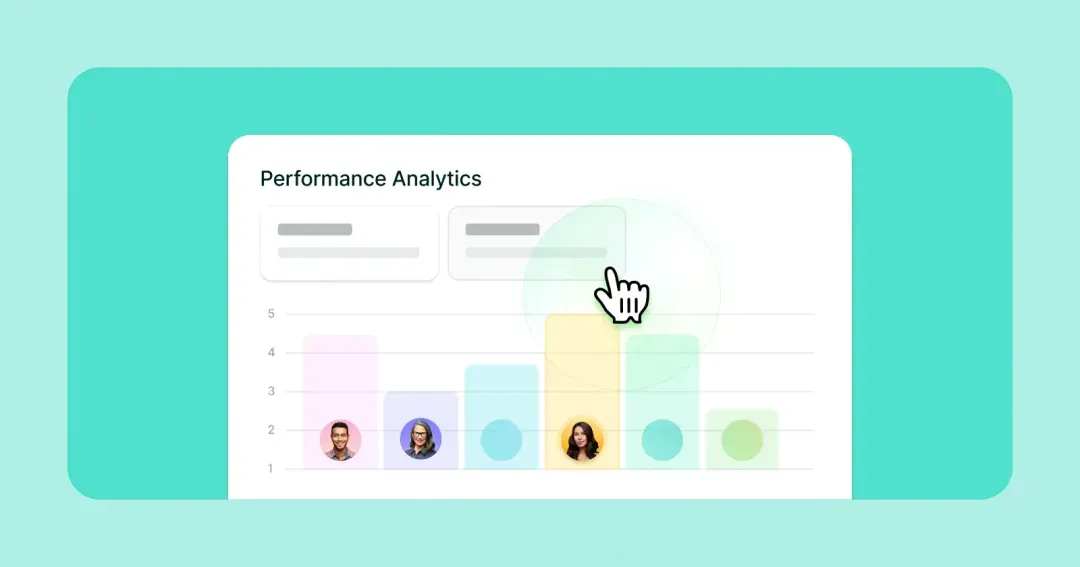


Performance reviews are one of the most important conversations a manager can have. And one of the most dreaded.
For employees, performance reviews can come across as a top-down judgment on their shortcomings. For managers, they can be time-consuming to prepare and stressful to deliver, especially if there’s difficult feedback involved. Unsurprisingly, managers often walk in unprepared, and employees walk out unsure of what happens next.
Done right, the performance review conversation can become a natural space to connect daily work to long-term growth and have an honest dialogue about what’s working and what needs improving.
This guide is designed to help both managers and employees show up better to performance reviews. We examine:
- What makes for a great performance review conversation
- How to build a continuous feedback culture
- How managers and employees can prepare and deliver feedback — good and bad
- How to use AI tools to improve performance review conversations
- How to turn performance reviews into action
Why Performance Reviews Are Important
Performance review conversations provide managers and employees the structured space for honest dialogue and constructive feedback. A single conversation can accomplish a lot, including:
- Reflecting on past performance: Assessing the wins and the gaps from the last review period helps to draw lessons for what comes next.
- Recognizing great work: Acknowledging real achievements and specific behaviors makes the review individual rather than generic, and sets a supportive tone for the conversation.
- Giving and receiving feedback: Reviews create a framework for building regular feedback into the organizational culture, so feedback flows both ways. Employees who strongly agree they receive valuable feedback are five times more likely to be engaged, and significantly less likely to be burned out or looking for another job.
- Fostering employee development: Managers can support employee growth by asking about career aspirations and helping to connect the dots between where they are and where they want to go.
- Setting clear goals: Well-defined, ambitious objectives give employees a roadmap for the next cycle and the motivation to follow it.
- Driving future performance: Open, two-way communication makes people feel valued and invested in, and that is reflected in how they work.
Just remember: Annual performance reviews should not be the only venue for manager-employee conversation. When two-way feedback is part of day-to-day work, it creates an atmosphere of respect and reduces the pressure around performance reviews.
What a Great Performance Review Conversation Actually Looks Like
It’s easy to know when a performance review has not gone well, but it’s harder to articulate what a good one looks like. Here are four qualities that a great review conversation should have.
1. It’s specific.
Vague statements like “Great job this quarter” or “You need to work on your communication” are not of much practical use. Feedback grounded in real examples, data, and observed behavior gives the employee a clear sense of what they need to do.
2. It’s connected.
A review shouldn’t be an isolated event. It needs to be linked to the employee’s career path, development plan, and team goals.
3. It’s two-way.
Don’t just deliver a verdict on your direct report’s scores. Create a dialogue around the results by asking questions, leaving room for the employee to reflect and share their perspective.
4. It’s forward-looking.
Past performance provides context, but the conversation should be anchored in growth and goals, not just grades. Effective reviews help employees improve their performance in the future.
Great review conversations encapsulate those qualities from start to finish, while following a clear path:
- Set the tone. Start by framing the conversation as a genuine exchange, not a one-way judgment. A simple opener — “I want this to feel like a real conversation, not a readout” — can be enough.
- Deliver the performance feedback. Share what you’ve observed in the review period (positive and negative), as well as the impact it had.
- Discuss development opportunities. Turn toward the future, focusing on what the employee wants to accomplish, the skills or experiences they need, and how their growth will contribute to the team.
- Close with clear next steps. Before wrapping up, review what was discussed, what the employee is working toward, and when you’ll check in. This shifts the conversation toward actual development.

Preparing for Performance Review Conversations
Many performance reviews fall flat due to a lack of preparation. Managers may treat them as a scorecard rather than an opportunity for creating dialogue, recapping scores without translating what they mean for the employee. Without preparation, conversations can become one-sided, vague, or defensive, leaving employees unsure of what’s changed or what’s expected.
Here are some tips for managers and employees to help set the tone for an effective performance review.
How Managers Should Prepare
Whether you’re an old hand or a new manager facing your first performance review conversation, it’s crucial to arrive prepared. That means having the right information at hand and a structured plan for the conversation, so that you’re ready for whatever comes up. Here’s how to get ready:
- Identify the key themes. Clarify the main points you need to address and why they are important. This should include a balance of positives and negatives. Keep these manageable, so employees don’t feel overwhelmed.
- Use templates. Rather than starting from scratch for each review, build on a ready-made template. This will keep the conversation focused and ensure you don’t miss anything. Lattice has a range of templates for annual, quarterly, and mid-year reviews.
- Prepare examples. Find specific examples of the achievements, shortfalls, and behaviors you want to address, so employees are clear on the point you’re communicating.
- Review the full picture. Don’t limit your planning to recent events, but revisit peer reviews, past one-to-ones, and goal progress for the whole period.
- Anticipate the employee’s viewpoint. How are they likely to experience it? Are they expecting praise or a tough message? And how are they likely to respond?
- Plan for dialogue. Prepare questions as well as statements, and consider what you need to hear from them, not just what they need to hear from you.
- Know your next steps. Have a clear idea of the actions you want to follow from the discussion, but be ready to adapt these if the flow of the conversation changes things.
How AI Can Help Managers Prepare
Prepping for performance appraisals has typically demanded a lot of time and effort from managers: researching past reviews, comparing goals to performance scores, writing feedback, planning meeting agendas.
While AI shouldn’t replace your own judgment and knowledge, it can reduce that grind and help you show up fully prepared. Here’s how to use AI effectively:
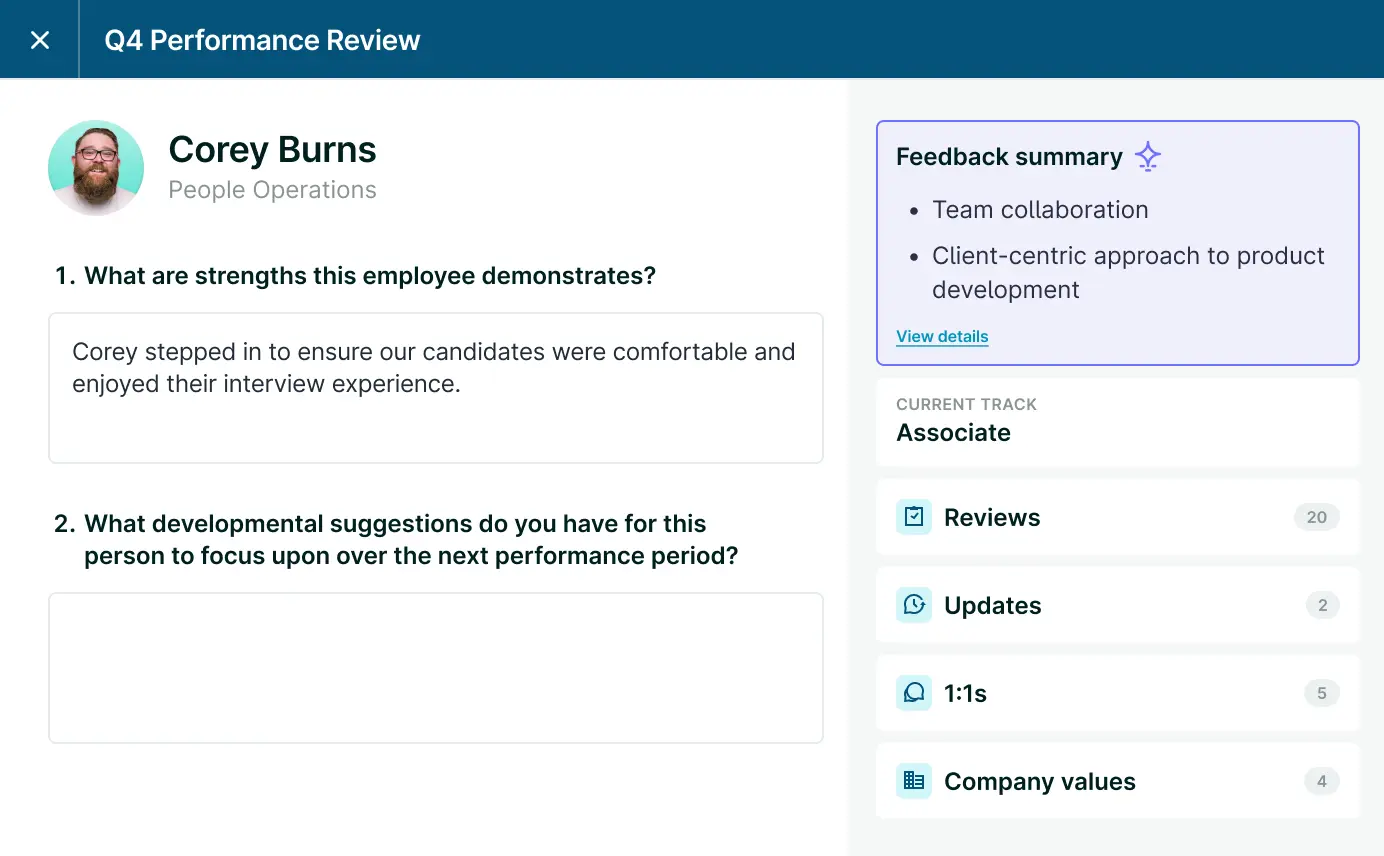
- Research assistance: Use AI to pull up employee performance history in seconds, along with feedback and one-on-one notes, performance trends, and engagement risks. The Lattice AI Agent does this automatically, creating pre-review summaries and suggesting talking points with clear actions for growth, keeping planning focused while saving you time on preparation.
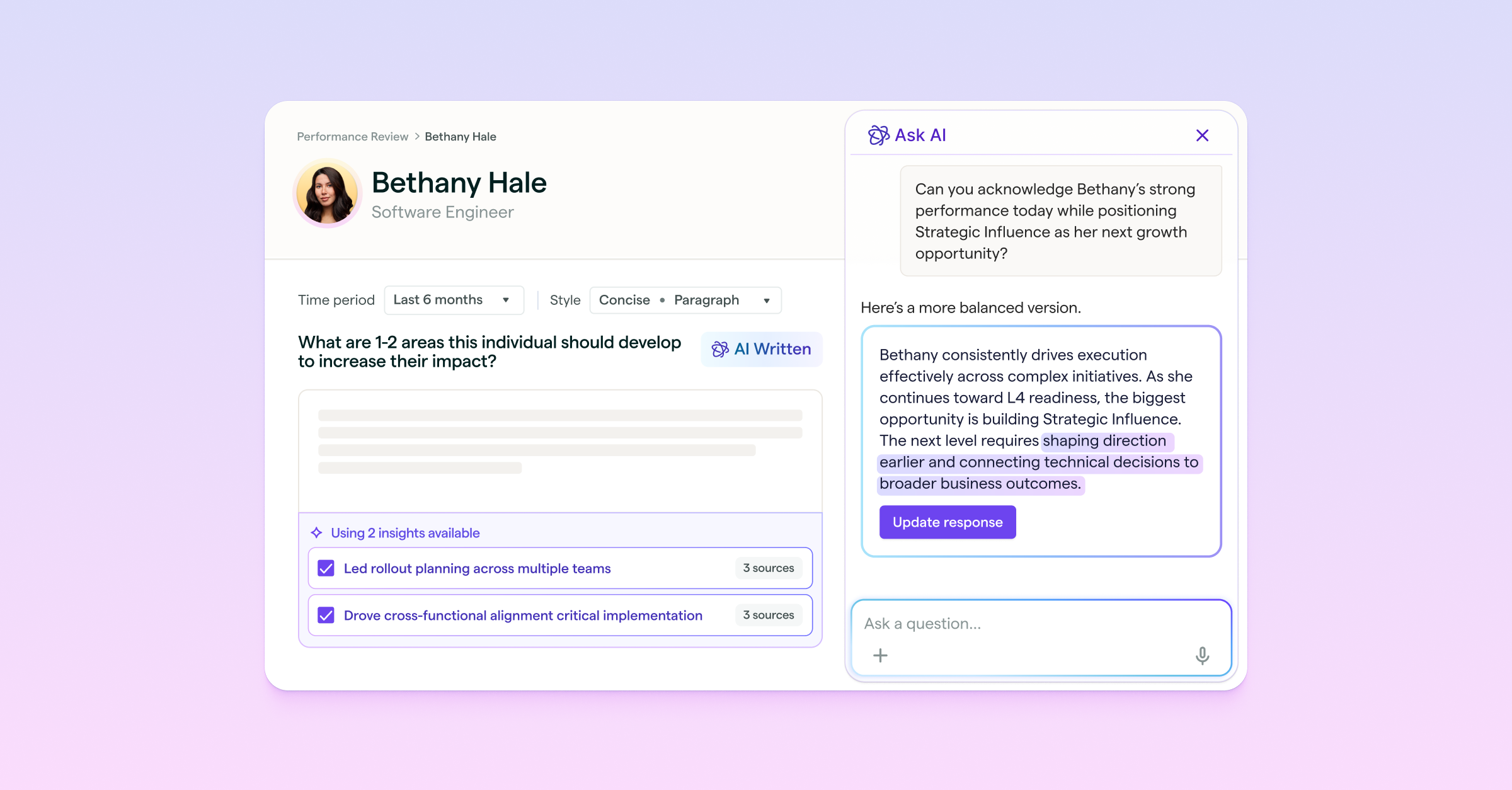
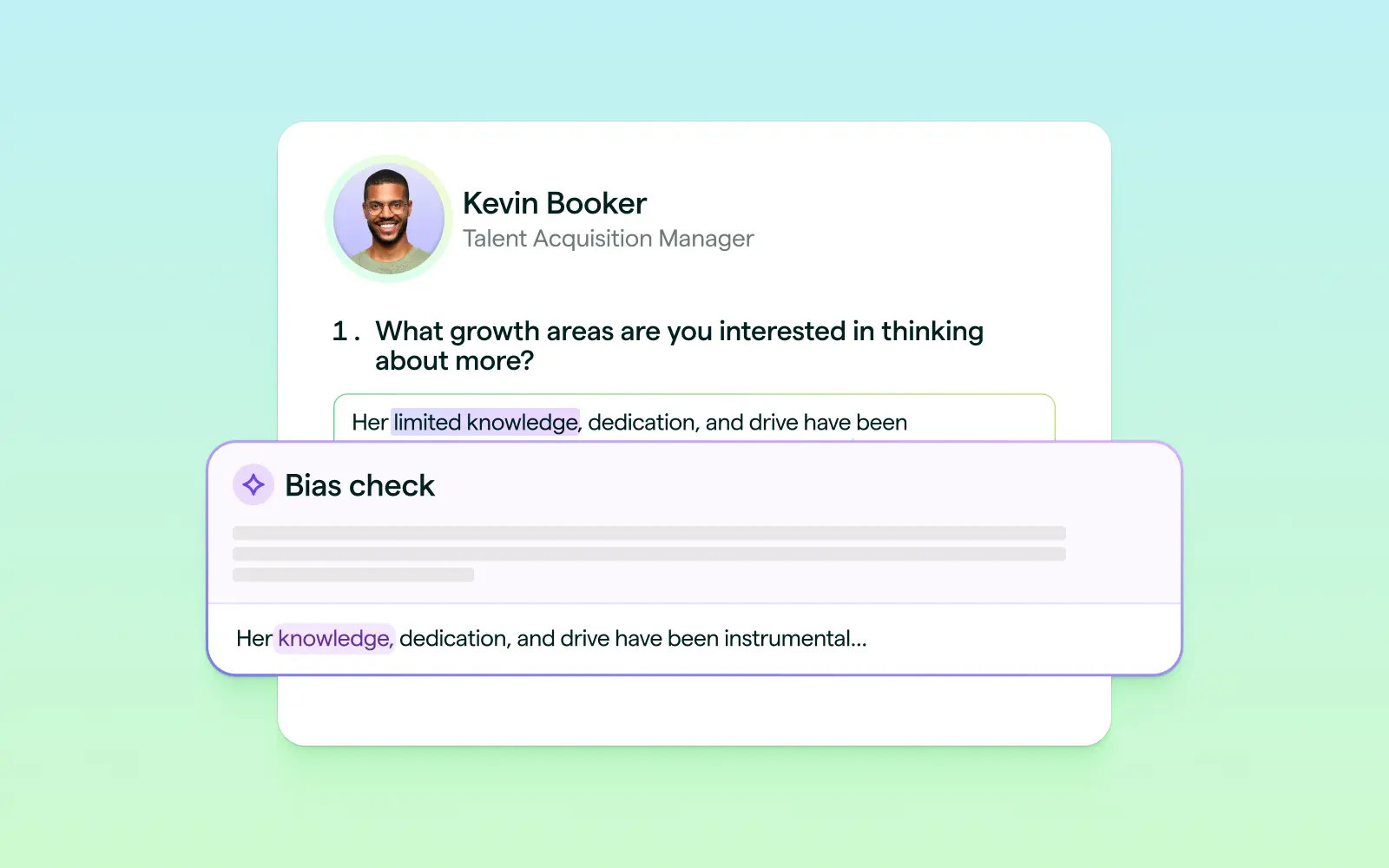
- Writing assistance: AI tools like Lattice Writing Assist help structure and improve performance reviews and feedback, check grammar, and flag unintentional bias. It can turn a manager’s raw and unfiltered thoughts into a specific, fair, and growth-focused message that helps the employee move forward. Here’s what that looks like in practice:
- First draft: “Emma is a solid contributor but can struggle with communication on cross-functional work.”
- AI-refined: “Emma consistently delivers strong individual work. In cross-functional projects this quarter, a few teammates mentioned they weren’t always sure where she stood on shared priorities. Exploring this and building clearer communication habits would set her up well for the senior role she’s working toward.”
A caveat: AI writing assistance is just that — assistance. It’s a starting point, not the final submission. Employees deserve genuine feedback from their manager, so it’s essential that you read it, own it, and edit it to reflect your honest views of the employee before you share it with them.
- Role-play and practice: Rehearsing the review conversation in advance lets you prepare for problems. For example, by prompting the AI to simulate a defensive response, you can rehearse staying calm and constructive. Here are some sample prompts to use.
- Delivering difficult feedback: “Play an employee who has been underperforming for months but seems genuinely unaware of it and is expecting a positive review.”
- Pushback and defensiveness: “Simulate a direct report who disagrees with my feedback and has a counter-example ready for everything I say.”
- Disengagement and retention risk: “Act as an employee who seems to have checked out and is giving minimal answers and is not invested in the conversation.”
- Career development and growth: “Be a direct report who wants to move into a leadership role but isn’t ready yet. Ask me what’s holding them back.”
A caveat: This is not about scripting the conversation, but about approaching it confidently and being ready for the unexpected. Read more about role-playing performance reviews with AI.
How Employees Should Prepare
Employees should be active participants in their performance review meetings. Encourage them to come prepared with their achievements and challenges — plus feedback of their own.
- Naming successes: This is an employee’s moment to showcase their wins and how they achieved them. Lattice Feedback enables employees to look back over peer reviews and praise and get a clear idea of where their strengths and growth areas lie.
- Preparing feedback: Reviews give employees the chance to share what they need from their managers. They should come ready to suggest ways their manager can better support them in the next review cycle.
- Writing a self-evaluation: This is an opportunity for employees to reflect on their performance, share the impact of their work, and identify opportunities for improvement. AI tools like Lattice AI can help structure, check, and refine self-assessments, though the final draft should reflect the individual’s voice and viewpoints.
Streamlining and organizing ideas is one of the best uses for AI tools in Lattice. A process that could have taken hours was simplified into about 30 minutes.
Giving and Receiving Positive Feedback
There’s a tendency to present the good news before the bad to soften the blow. But positive feedback should not be just a warm-up before the “real” feedback. Focusing on weaknesses doesn’t improve performance, according to Gallup. Recognizing what’s working and why reinforces positive behaviors and drives greater motivation.
Giving Positive Feedback
- Be specific. Positive feedback needs to go beyond generalizations or vague praise (e.g., “Great job this year!”). Name the specific behavior and encourage them to keep doing it.
- Don’t rush. Strengths deserve as much preparation and airtime as development areas; they shouldn’t be just a set-up for a “but.” Instead, take the time to detail the impact of the employee’s or manager’s strengths.
- Emphasize actions, not outcomes. People often have more control over their behaviors than over the results, and will take more pride in being recognized for what they did. Instead of saying, “You met the sales target,” which focuses on the outcome, you could say, “I noticed how well you followed up with clients.” Likewise, an employee might tell their manager, “Your advice in our weekly check-ins helped me prioritize,” rather than simply saying, “This was a good quarter.”
Lattice Feedback and Praise help teams and managers embed positive feedback and recognition as a part of day-to-day work, not just at review time. This also provides an easily accessible record of achievement that managers can draw on when the review conversation comes around.
Receiving Positive Feedback
- Ask for feedback. Simply asking, “Is there anything I could be doing differently to better support you?” or “What’s been most helpful in how we work together?” creates the permission structure that allows others to share their thoughts confidently.
- Show appreciation. When someone shares positive feedback, it’s important to acknowledge it. Say thank you and ask any follow-up questions, such as:
- Can you say more about why that worked for you?
- What would you like me to continue doing?
- In your eyes, how could I improve that more?
Giving and Receiving Difficult Feedback
Constructive criticism can be beneficial, even if it isn’t easy to give or receive. Whether it’s underperformance, missed goals, or something more sensitive, difficult feedback should be framed with the intention to help.
Giving Difficult Feedback
- Avoid surprises. Difficult feedback shouldn’t come out of the blue. A continuous feedback culture means issues or achievements can be addressed throughout the review cycle and not just sprung on someone in an annual review, when it’s often too late to act.
- Be specific here, too. Tiptoeing around the issue might make it easier, but hedging language will just cause confusion. Ground your feedback in concrete observations of real behaviors.
- Don’t make it personal. Frame feedback around what someone did and the impact, not who they are. Accusations and judgment will lead to resentment, not change. Instead of saying, “You have a problem with timekeeping,” say, “I’ve noticed you’ve been more than ten minutes late to our last four team meetings.”
- Read the room. Be conscious of body language and non-verbal cues. Consider when you might need to slow down or allow some time for the other person to digest the feedback. Look for opportunities to ask questions and create dialogue.
- Focus on the remedy. Negative feedback is not about punishment, but improvement. Use feedback to offer forward-looking steps for positive change.
Receiving Negative Feedback
An open feedback culture means everyone will receive negative feedback at some point. It’s uncomfortable, but the response matters. When managers react with curiosity rather than defensiveness, they show their teams that honesty is safe, and that’s what keeps useful feedback flowing. The same holds for employees: Handling criticism well invites the candid guidance that drives growth.
- Set boundaries. Make it clear that while constructive criticism is welcome, personal attacks or passive aggression are not. Model this in how you give feedback.
- Listen actively. Listen to understand and respond rather than reacting defensively. Reiterate the main ideas to show you hear and understand their points.
- Validate the feedback. Even if you strongly disagree, acknowledge their perspective without pushing back. Saying “I appreciate you sharing that” costs nothing but avoids defensiveness and conflict, and leaves the conversational door open.
- Ask clarifying questions. Don’t respond until you have the full picture. Encourage them to share more details or explain their perspective on your behaviors. This will also help build trust.
Creating a Follow-Up Plan
The performance review conversation is most valuable when it leads to action. Agreeing on a follow-up plan is non-negotiable if you want to see and track positive change between review cycles.
- Recap the review. Summarize the conversation at a high level. Share your notes with your direct report so they have a record of everything you discussed. Encourage employees to reflect on the feedback and explore areas where their self-evaluations didn’t align. This can reveal expectation gaps and ensure everyone’s on the same page going into the next review cycle.
- Decide where to focus. The employee can’t tackle everything in a week, month, or even a quarter, so identify key feedback points that offer quick potential wins for improvement and career growth. With your direct report, identify 2-3 areas of improvement they should focus on in the coming review period.
- Establish professional development goals. Once you have a few key focus areas, break them down into attainable targets. Create SMART goals or objectives and key results (OKRs) that link success to specific metrics. This will help you track progress and adjust as needed.
- Document the plan. Record what was agreed and how it will be measured. You can use a Google Doc, Lattice Individual Development Plan, Performance Improvement Plan (PIP), or anything you can easily reference to track progress and maintain accountability.
- Regularly follow up on progress. Schedule recurring check-ins (or include them in your Lattice 1:1s agenda) to discuss goal progress, blockers, and any updates. This helps you provide ongoing coaching and regular feedback while giving employees the opportunity to grow and address any challenges.
- Improve the process. After the review cycle, reflect on what worked well and what could be improved. Share feedback with HR to help the performance review process evolve.
How Lattice Supports Better Review Conversations
A great performance review conversation doesn’t start when you sit down with your employee. It starts with preparation and building a feedback culture.
Lattice brings together all the pieces to make that happen in one place. With Lattice’s performance management software, you can prepare for review conversations with custom templates, calibration tools, and feedback history.
- Lattice Writing Assist helps managers turn rough ideas into specific, balanced, behavior-based, and bias-aware performance feedback that supports employees.
- Lattice AI Agent surfaces pre-review summaries and provides on-demand coaching so managers and employees can show up prepared, without spending hours combing through records.
- Lattice Grow helps tie what was discussed to PIPs and career tracks, so the conversation leads directly to real change.
As Waterford.org employee and Lattice user Samantha Boyer said, “Having everything in one place helped me organize my thoughts, stay focused on what mattered most, and quickly recall the key highlights from this season without scrambling through notes or trying to piece everything together at the end.”
That’s what a meaningful review process and feedback culture should feel like — a constructive conversation that everyone was ready for.