

When people enter performance reviews, the stakes feel high. Employees are waiting to find out how they’ve performed. Managers are preparing to deliver feedback ranging from good to bad and everything in between.
But often, managers aren’t sure how to lead these conversations. Gallup’s State of the Global Workforce 2026 report explained that many managers haven’t had the formal training they need to coach their teams toward high performance. That lack of training can lead to unclear feedback, unconscious bias, or the all-out avoidance of difficult topics — impeding the kinds of honest conversations that support employee engagement and performance. To address this gap, AI systems can simulate real-world dialogues, offer feedback on communication style, and help managers improve performance reviews.
Why Performance Reviews Are Still So Challenging
“Managers don’t struggle because they lack information,” explained Doug Hughes, CEO of the learning experience platform Codio. “They struggle because they lack practice.” He noted that delivering effective feedback requires clarity, tone, and confidence, but most managers just don’t get enough repetition in those moments. “It’s a high-stakes conversation that they’re often expected to get right without much training,” Hughes added.
That training gap has real consequences. Difficult topics might not be discussed, unconscious bias can influence evaluations, and feedback lacks the clarity employees need to improve.
KeyAnna Schmiedl, chief human experience officer at Workhuman, highlighted another challenge: Managers don’t always have clarity on what “good” looks like. “So they end up evaluating performance against a standard they can’t articulate and the employee certainly can’t understand. You can’t hold someone accountable for an expectation you never made explicit or a standard that keeps shifting without explanation,” she explained.
The result is a process that feels inconsistent and stressful for everyone involved. To improve outcomes, managers need opportunities to practice feedback conversations before they happen. Traditionally, that might have involved scheduling role-playing exercises with HR or a senior leader. But now, managers can do the same with AI.
What AI Role-Play Means for Performance Reviews
Rather than entering a performance review, preparing to deliver feedback for the first time, managers can use AI role-play to experiment, rehearse, and improve before the real conversation takes place.
Jackie Swanson, managing partner at Gartner, said that, at its best, AI role-play looks like repetition without consequence. “A manager can walk through a difficult underperformance conversation, get a defensive reaction from the AI, stumble through their response, reset, and try again.” She explained it’s this cycle of low-stakes practice that helps build the muscle memory that real performance conversations require. And over time, this muscle memory leads to better feedback in real life.
How AI Helps Managers Deliver Better Feedback
By helping managers build confidence, refine their tone, and become more consistent, AI role-play turns uncertain feedback into clear, empathetic communication, especially in the high-pressure conversations managers sometimes struggle to navigate.
Helps Refine Tone, Clarity, and Delivery of Feedback
Given the chance, many of us would choose to say something differently the second time around. That’s exactly what AI gives managers: a low-stakes environment to rehearse before a high-stakes moment, explained Emily Thompson, HR strategist and founder of Bloom Talent Advisors.
She noted that managers can describe a specific scenario (for example, an employee who missed their target, or a high performer who’s been passed over for a promotion), then work through how they’d open the conversation, respond to pushback, or land the key message without damaging the relationship.
“What makes it powerful is the iteration,” explained Thompson. “A manager can try the same conversation three different ways, get immediate feedback on tone and clarity, and build muscle memory for the moments that matter most in performance reviews. That’s never been possible at scale before.”
Builds Confidence Before Important Conversations
AI role-play helps managers build confidence in the structure of a conversation, said Swanson. She explained that this preparation frees up the mental bandwidth needed to listen actively during the real thing. “Managers who have rehearsed know where they are going, which means they spend less energy managing their own anxiety and more energy reading the person across from them. That shift shows up in the room.”
When managers are less focused on what to say next, they can be more present, responsive, and observant of an employee’s reactions, making the conversation more productive for everyone.
Develops Consistency and Fairness Across All Team Members
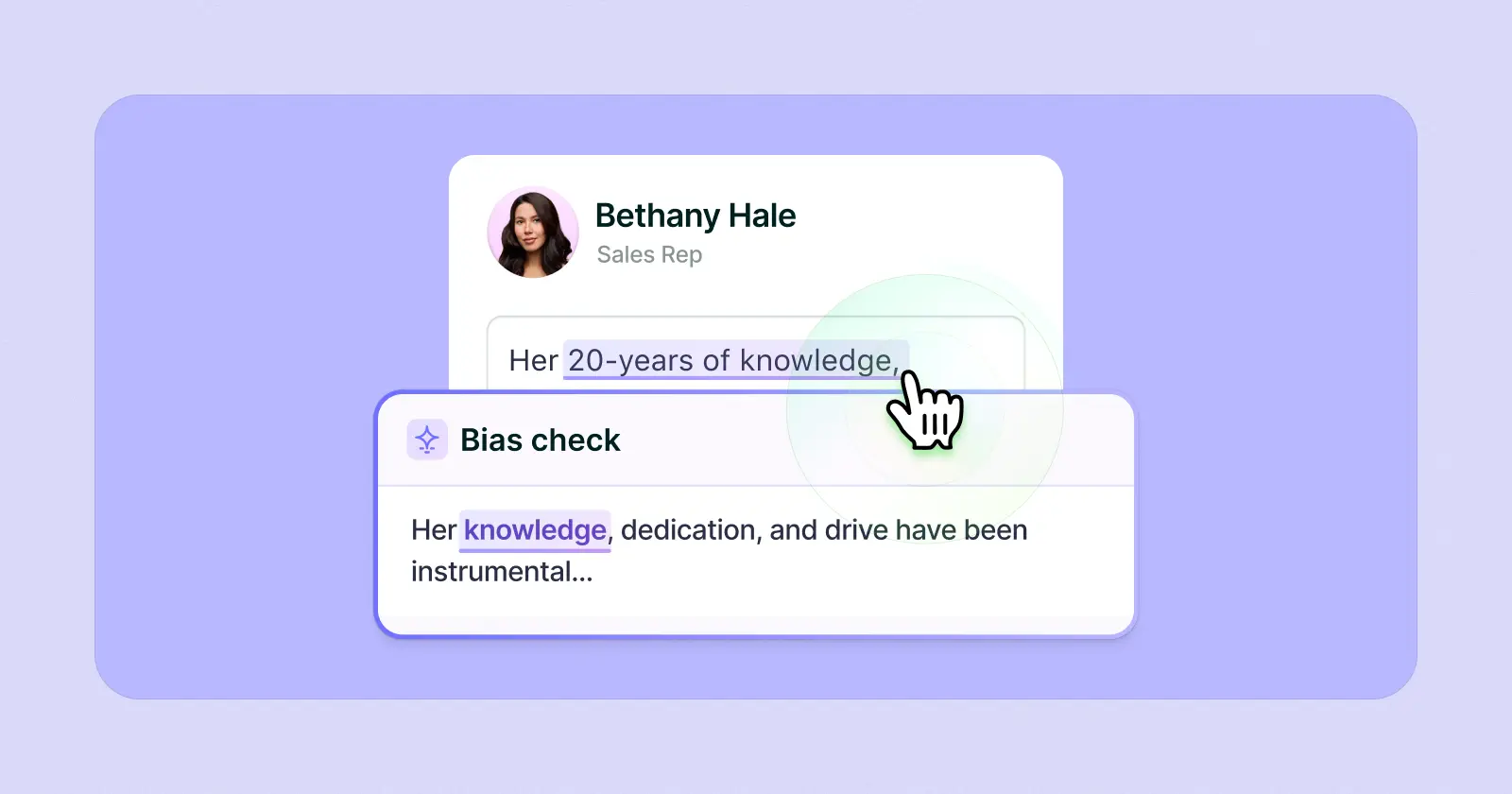
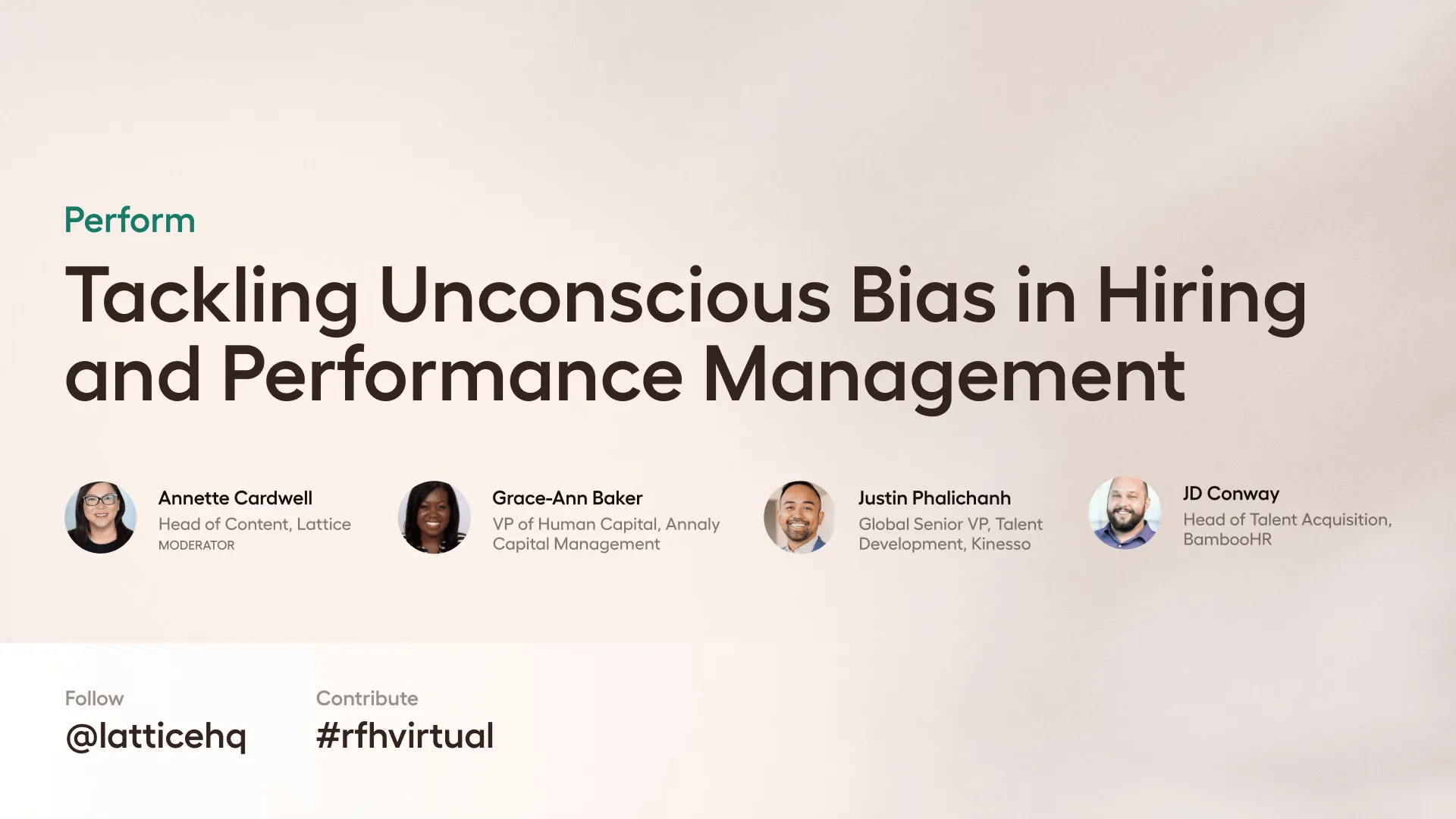
A structured, repeatable approach is one of the best ways to mitigate bias in employee performance reviews. AI role-play helps managers standardize how they approach performance conversations, ensuring that the language and evaluation criteria stay consistent across the entire team.
This consistency is crucial throughout the review process. So while AI role-play can help individual managers standardize their own approach, a clear, company-wide framework is also essential. This helps all managers apply uniform criteria and consistent formats, creating a more equitable performance review process.
Enables Continuous Learning
One of AI’s advantages is that it allows for repetition at scale. Rather than treating performance evaluations as isolated, high-pressure events, managers can use AI to practice and refine their approach over time.
But to really unlock this benefit, managers need help from their organizations, Schmiedl explained. “The organizations that get the most out of these tools are the ones that design the learning environment intentionally. They’re not just handing managers a chatbot. They’re pairing the AI practice with a debrief, a coach, a framework — giving the simulation a context to land in.”
Real-World Use Cases for AI in Performance Review Preparation
Hughes noted that the most effective use cases combine AI role-play with company frameworks. “Managers practice with realistic, anonymized scenarios, then refine their approach with guidance from HR or senior leaders. AI handles the repetition, while humans provide the nuance,” he added.
When used this way, generative AI becomes more than just a tool. It becomes part of a broader manager training program that helps managers prepare for real-world use cases like the ones below.
Preparing for Difficult Conversations
Some review conversations are harder than others. Hughes noted that conversations around underperformance, behavioral issues, or potential promotions are often the most difficult, but they stand to benefit most from AI-assisted role-play. “These are situations where tone and delivery matter just as much as content, and where managers are most likely to hesitate or avoid the conversation altogether,” Hughes said.
Role-playing ahead of time gives managers the chance to rehearse these discussions again and again, experimenting with different responses or asking for suggestions for improvement. That preparation can make it easier to communicate difficult decisions across a wide range of employee responses, while still preserving trust and transparency.
Delivering Constructive Feedback With Empathy
Constructive feedback works best when it’s paired with empathy and compassion. But that can be a difficult balance to strike. AI role-play gives managers a chance to test how their feedback lands, refine their wording, and adjust their delivery in real-time.
“An AI that can push back, get defensive, or shut down gives managers a chance to find their footing before any of that happens in a real room,” Swanson explained.
Because AI allows managers to repeat the same scenario multiple times, they also learn how small changes in tone or delivery can impact how their feedback is received. That kind of repetition helps managers work out how to deliver direct feedback without sacrificing empathy or clarity.
Best Practices for Using AI During Performance Review Prep
To be most effective, the use of AI role-play needs to be intentional. Here are some expert-approved best practices to help ensure managers have the support they need to make AI role-play truly valuable.
Align the use of AI with company culture, frameworks, and values.
Schmiedl explained that while AI can help managers get more comfortable with the mechanics of a difficult conversation, it cannot create an environment where that conversation is safe to have. “That part is a leadership and culture decision, and it has to happen first,” she added.
Before opening any AI tool, she recommends starting with your company’s own frameworks. “What does strong performance look like on your team? What are the behaviors your organization values? Get clear on that first. Otherwise, you’re just using AI to dress up vague feedback in more confident language.”
Use real (anonymized) employee scenarios.
The more realistic the scenario, the more valuable the practice. For best results while also respecting data privacy, AI role-play conversations should closely reflect real, anonymized employee scenarios.
Schmiedl noted that prompts like “How do I deliver feedback to an employee who has been struggling?” are too abstract. Instead, she recommended describing the actual dynamic in your prompt. For example, instead of saying the employee “has been struggling” generally, you could note that they:
- Deliver excellent results but create friction with peers
- Show high potential but keep missing deadlines
- Outperform their level but don’t know how to articulate the value of what they produce
“The more specific the scenario, the more useful the output,” she explained.
Focus on delivery, not just content.
Strong performance review conversations aren’t just about what’s said. They’re also about how managers listen and respond. Even so, Schmiedl noted that a lot of manager feedback training stops at delivery. “But the hardest part of a performance conversation isn’t the words coming out of your mouth — it’s what you do when someone gets defensive, or emotional, or goes quiet,” she explained.
To address this, Schmiedl recommended that managers “Practice the pauses. Practice the follow-up question. Practice not defending your assessment the moment it gets challenged. And practice how to articulate what they are doing well and why that matters, and the impact it has.”
Combine AI-driven practice with human oversight and feedback.
On its own, role-playing with artificial intelligence isn’t enough. “The biggest risk is treating it like a shortcut,” said Hughes. While AI can simulate the likely structure of a discussion, it can’t fully replicate the nuance and emotions of genuine conversation. That’s why Hughes recommended combining AI role-play with human guidance.
“The best implementations pair AI practice with a debrief from HR or a senior leader, so managers get a human read on what landed and what still needs work. AI can tell you that your response was vague. A good HR partner can tell you why it landed that way and what to try instead,” Swanson added.
The Role of HR in Scaling AI-Powered Manager Training
While AI-powered performance review training can offer easy access to low-stakes practice, Hughes explained that human resources also plays a critical role in grounding AI usage in company values and expectations. “The opportunity is to use AI to scale access to practice, while maintaining consistency through frameworks, coaching, and oversight,” he said.
Swanson said that HR’s role in this context is less about deploying the technology and more about building a culture where practicing hard conversations is seen as a sign of good management, not a sign of weakness. “That framing matters more than the platform. When managers feel safe admitting they need to rehearse, adoption follows naturally,” she added.
To scale AI-powered manager training effectively, HR teams should focus on three main priorities:
- Standardizing performance review quality across teams: Use AI training as a consistent way for managers to prepare for and deliver reviews. Over time, this helps create a more equitable review process and reduces variability across departments and leadership styles.
- Embedding AI into manager enablement programs: AI training works best when it becomes part of an ongoing training and development process, not a quick one-off exercise before review season. Rather than treating AI training as an optional extra, incorporate it into manager onboarding, leadership competencies, and ongoing upskilling initiatives.
- Measuring impact on engagement and performance outcomes: Track how AI-supported training influences review quality, employee engagement, retention, and overall performance conversations.
When paired with a thoughtful and intentional approach from HR, AI training becomes an effective way to support continuous feedback, stronger leadership development, and better enablement at scale. But to unlock these benefits, organizations also need to be aware of the pitfalls that can limit AI’s effectiveness.
Common Pitfalls to Avoid
AI role-play can be a powerful training tool, but its value depends on how it’s used. Here are two of the most common pitfalls.
Relying on AI-Generated Responses
One of the biggest risks is treating AI as a substitute for critical thinking. Swanson cautioned that managers who over-optimize for AI can develop a response style that sounds great in simulation and feels scripted in a real conversation. “The tool is a rehearsal space, not a script generator,” she said.
Schmiedl echoed this concern and noted that managers sometimes use AI to get more comfortable delivering the same feedback they had already planned to give, rather than genuinely pressure-testing it.
How to avoid it: Schmiedl recommended using AI to surface the gaps in your thinking: “The places where you don’t have a clear answer, where your evidence is thin, where you’ve conflated personality with performance.” Use AI role-play sessions to strengthen your reasoning, not memorize your delivery.
Trusting AI Without Human Judgment
AI can help managers prepare, but it’s no substitute for feedback from actual humans. “A manager who has only ever practiced with an AI and never received honest coaching from a senior leader or people team partner is missing the most important part: someone who can tell them when their intent is not landing the way they think it is,” said Schmiedl.
How to avoid it: Pair AI practice with human conversations, peer reviews, and role-based coaching that help improve how you lead over time.
How Lattice Supports Better Performance Conversations
AI role-play can help managers strengthen performance reviews, but it’s not the whole story. Effective performance conversations also rely on HR processes that make feedback continuous, actionable, and tied to employee growth.
Lattice drives better employee performance through tools designed to support managers and employees at every stage of the conversation.
- Lattice Performance: Creates structured review cycles and continuous feedback loops that keep performance reviews aligned, effective, and actionable.
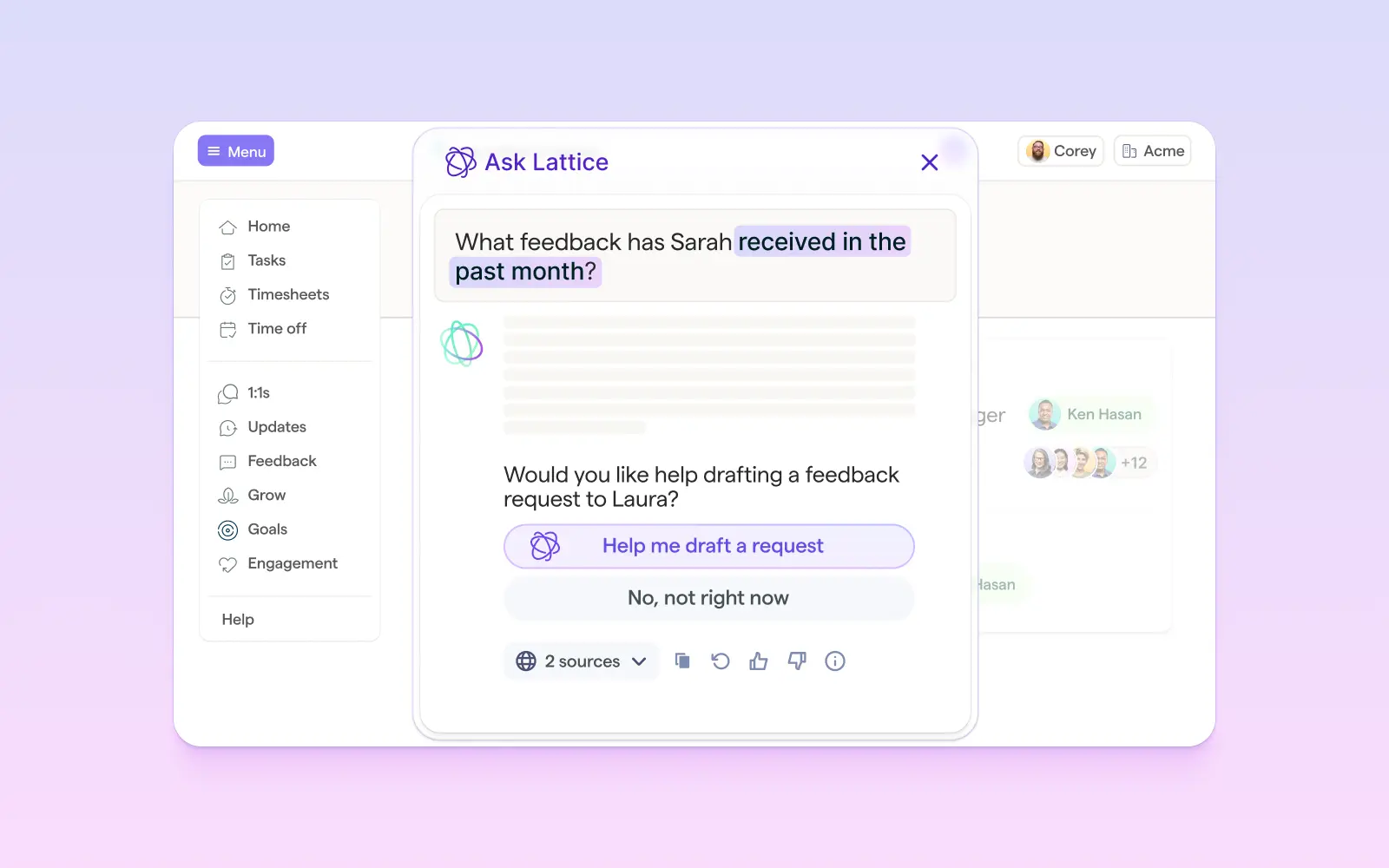
- Lattice Meeting Agent: Delivers meeting summaries and personalized, role-aware coaching insights designed to help managers improve how they show up in reviews.
- Lattice 1:1s: Encourages ongoing check-ins that reduce pressure on formal reviews and strengthen manager-employee relationships over time.
- Lattice Grow: Connects feedback to actionable next steps, supporting employee development planning and turning insights into measurable metrics for growth.
- Lattice Habits: Reinforces essential skills like coaching habits and communication, so managers can better support their team’s performance.
Together, Lattice’s AI-powered tools help managers practice, prepare for, and deliver more effective performance reviews. If you’re curious to learn how that could work at your organization, schedule a free demo.