


Connection matters, and regular meetings are one of the best ways for managers to create connection with their teams. A one-on-one meeting is a recurring check-in between a manager and their direct report, designed for open conversations about projects, performance, career growth, and more.
By giving managers the time to coach, support, and build trust with their teams, one-on-ones form the foundation of the kind of continuous feedback needed for high-performance cultures. Designed for first-time managers and seasoned leaders alike, this guide includes all the best practices, expert advice, and agenda topics you’ll need to lead efficient and effective one-on-ones with ease.
What is a one-on-one meeting?
One-on-one meetings are standard, recurring meetings between a manager and their direct report, typically held weekly, biweekly, or monthly. They’re different from team meetings or project status updates, since they focus on growth, engagement, career development, and performance management, in addition to task updates.
By providing dedicated time for two-way dialogue, one-on-ones allow managers to:
- Offer real-time coaching and feedback.
- Address obstacles or productivity blockers.
- Discuss performance and how this impacts career growth.
- Build trust and strengthen the manager-employee relationship.
Effective one-on-one meetings are more than just a quick check-in, though. They’re a cornerstone of continuous feedback — and getting them right brings all sorts of benefits.
Benefits of One-on-Ones
When done right, one-on-ones can help address roadblocks, build trust, boost connection, and more. Here’s a quick rundown of the main benefits.
Addressing Roadblocks Quickly
Casual, frequent check-ins allow employees to discuss obstacles before they become major issues. Whether it’s a process challenge, a stalled project, or team conflict, managers can step in with guidance and support.
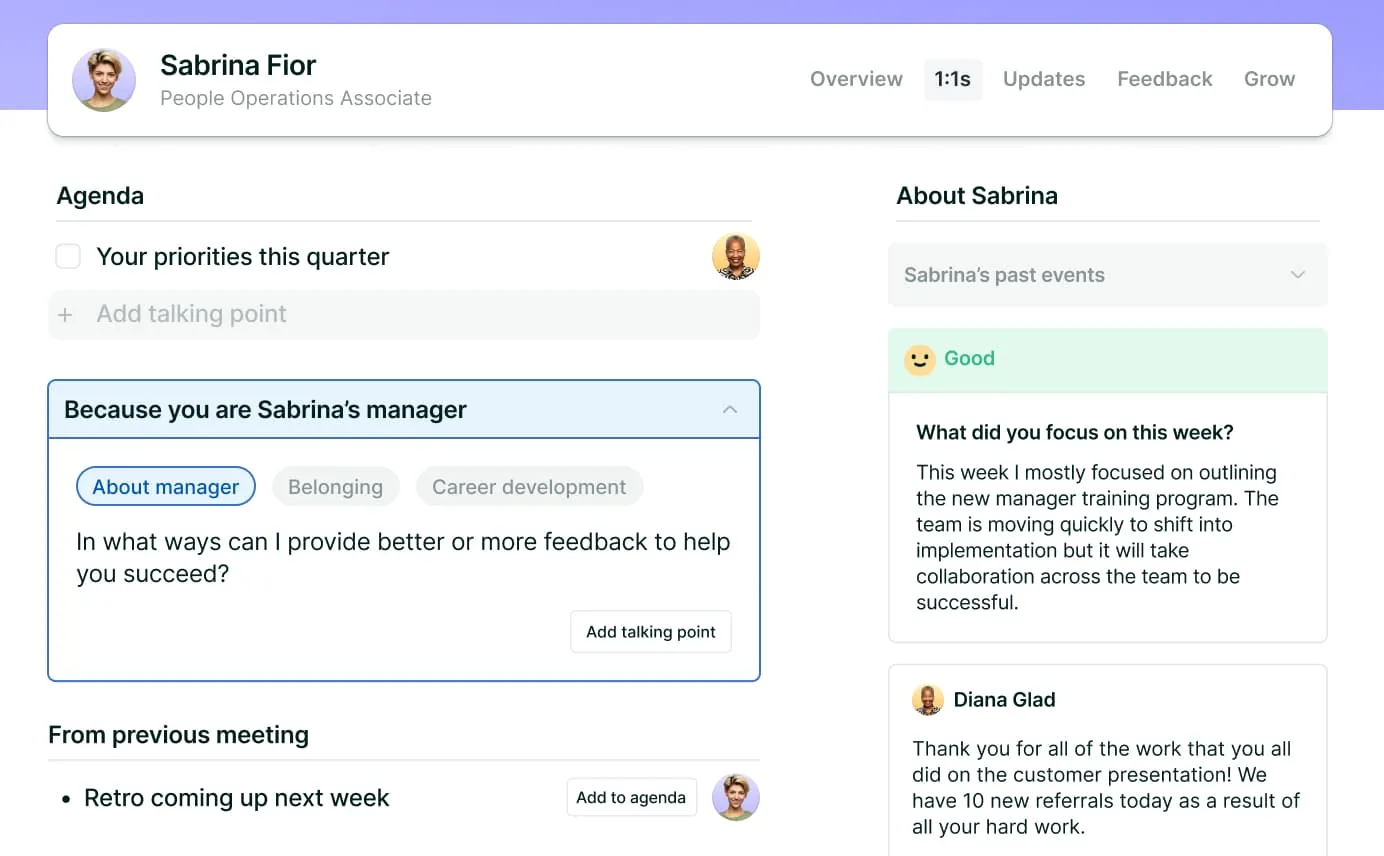
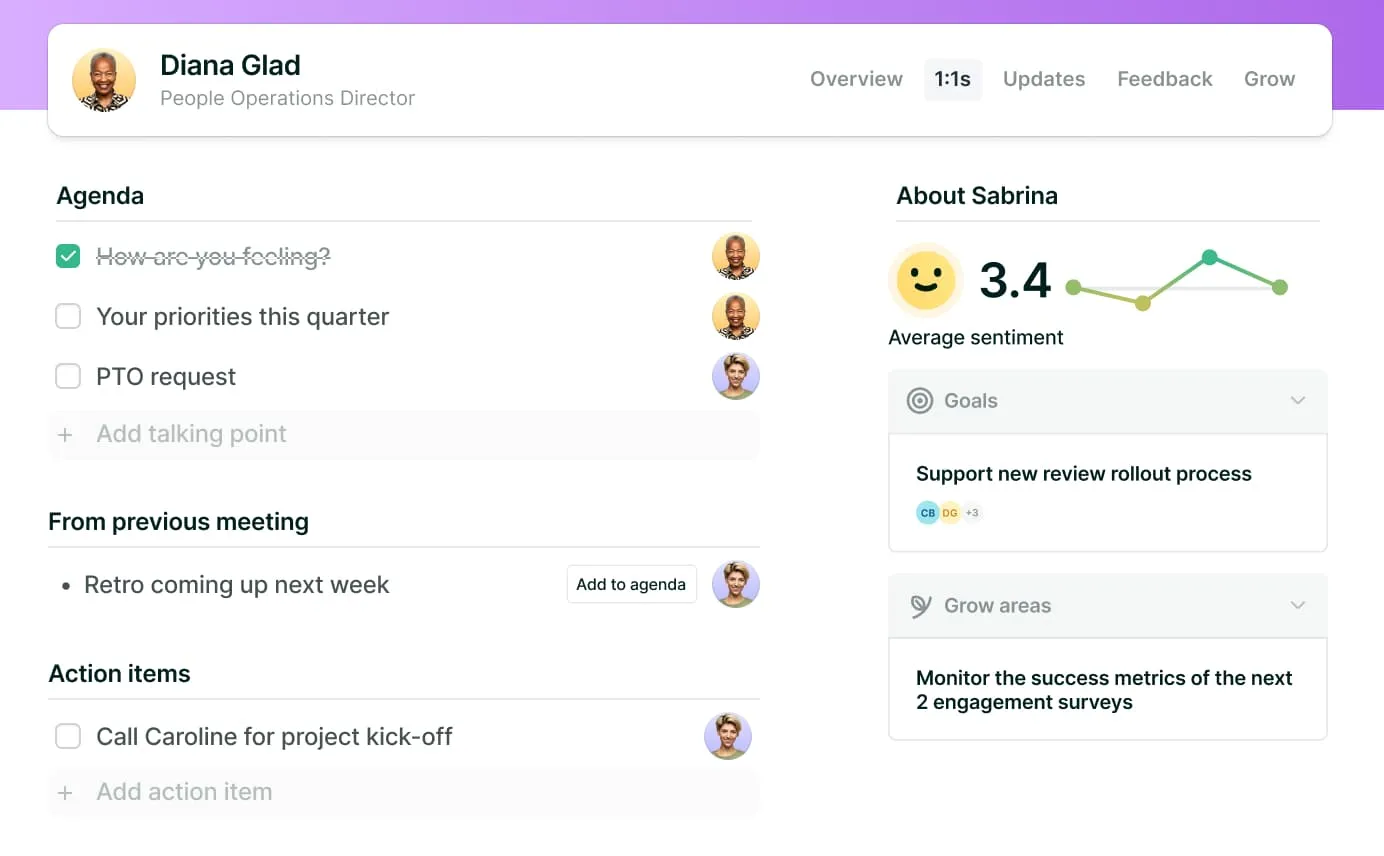
The sooner managers are aware of a specific roadblock, the sooner they can take action and help their team resolve it. Tools like Lattice 1:1s also help track action items and ensure things don’t fall through the cracks.
Building Connection and Trust
One-on-one conversations are about more than discussing tasks. They’re a chance for managers to strengthen relationships and better understand their teams.
“Regular one-on-one meetings are an invaluable way to help build rapport and mutual trust between managers and employees,” said Ewelina Melon, people manager at PsiBufet. “They are the best (and sometimes even the only) opportunity for managers to really get to know their workers and understand their perspectives. One-on-ones are perfect for carefully listening to employees’ needs, showing appreciation, and expressing that you care about them.”
These kinds of consistent meetings encourage open connection and boost psychological safety.
Getting Face-to-Face Time
For remote teams, one-on-ones are sometimes the only opportunity managers have to connect with individual team members face-to-face. For hybrid teams, one-on-ones can give remote team members the chance to ask questions or get updated on any in-person conversations they might have missed.
Video calls or private meetings are a powerful way for managers to pick up on nonverbal cues and maintain a sense of connection. They also help employees feel seen, heard, and included, which is essential for maintaining engagement and productivity.
Discussing Personal Topics
One-on-ones offer a private, safe space for employees to discuss personal topics that might be affecting their work, whether that’s a major life event or a workplace conflict. Managers can discuss the best way to move forward with their employees — by addressing a situation head-on, adjusting an employee’s work schedule, or encouraging them to take time off, for example.
Managers should be empathetic when their employees come forward with these types of challenges, so their team feels supported and comfortable opening up about personal issues in the future.
Supporting Career Development
One-on-ones are opportunities for managers to check in on their employees’ professional growth and ensure their direct reports feel challenged and fulfilled by their roles and responsibilities.
“A sense of career progression is a powerful motivational force,” said Laura Sukorokoff, cofounder and chief engagement officer of soft skills training company Take Charge Learning. “So taking some time to help team members develop their careers is a great display of manager support and care.”
By periodically discussing each employee’s long-term goals and career aspirations, managers can advocate for their teams, support their needs, and help them get one step closer to their dream jobs when there’s the chance of a promotion.
Sharing Real-Time Feedback
As a crucial part of the continuous feedback model, one-on-ones allow managers to share feedback quickly. “Ongoing one-on-ones allow for real-time adjustments to be made, such as shifts in objectives and responsibilities and more agile course correction,” noted Michele Mavi, VP of organizational effectiveness for the 4As Learning Institute. “Additionally, more specific feedback can be given, which is always more helpful than receiving feedback during annual reviews. Employees can make use of actionable feedback right away and see results.”
Tools like Lattice Feedback can also help track real-time feedback, which can then be discussed during one-on-ones and used to guide growth.
Boosting Employee Engagement
Lattice internal data shows that employees who have regular one-on-one check-ins with their managers are three times more likely to be engaged and 38% more likely to stay with their company. But being a manager who merely shows up at the allotted time isn’t enough — it’s also critical to come prepared to discuss the topics your direct reports care about.
Lattice 1:1s help center the conversation around the subjects employees care about, making each conversation meaningful. Over time, these discussions can boost engagement, which also impacts employee performance.
Enhancing Productivity
One-on-ones give managers and their direct reports a dedicated space to discuss ongoing tasks and progress. The structured rhythm helps employees stay accountable while also maintaining alignment with team and organizational goals. This helps employees prioritize work, overcome obstacles, and boost productivity.
HR software like Lattice makes it easy to document action items, track progress, and revisit priorities.
{{rich-highlight-2}}
How often should you have one-on-ones?
There’s no one-size-fits-all cadence for one-on-ones. But aim for consistent, regularly scheduled meetings. Lattice’s 2025 State of People Strategy Report found that 78% of managers have daily or weekly check-ins with their direct reports. Of those, 97% said they feel somewhat or very connected to their reports.
While daily or weekly one-on-ones will be the best option for some employees, others may prefer a biweekly or even monthly cadence. The key is tailoring meetings to each employee’s needs, plus recognizing that these needs may change over time.
HR tech like Lattice 1:1s can help maintain consistency, thanks to shared agendas, scheduling tools, and calendar integrations, which all help managers choose a rhythm that employees can rely on and that managers can actually keep.
One-on-One Meeting Agenda: What to Cover
A strong one-on-one agenda balances day-to-day tasks with long-term growth. While you don’t need to cover every topic in every meeting, rotating through these topics ensures the conversation stays meaningful, focused, and actionable.
Productivity and Projects
Rather than asking for a detailed status update, focus on reviewing priorities, progress, and blockers. Discussing where support is needed and whether timelines need to shift helps highlight issues as early as possible.
Feedback and Coaching
One-on-ones allow you to share feedback tailored to each employee, celebrate their wins, and address any roadblocks before they escalate. These meetings are also the perfect venue for coaching conversations, which help employees build skills, improve performance, and work toward their career goals.
Together, feedback and coaching will support continuous improvement and help prevent surprises during formal performance reviews.
Career Development
Career conversations shouldn’t be reserved for annual performance reviews. One-on-ones allow employees to discuss their professional development, whether they need any specific support, and what they’d like to work on next.
Engagement and Morale
Checking in on how employees are feeling is just as important as monitoring their performance. Asking about motivation, work-life balance, and general wellbeing can help you build trust and address issues like disengagement or burnout with your direct reports.
👀Looking for more inspiration? Download Lattice’s Manager One-on-One Agenda Template.
Sample One-on-One Questions
The right questions are key components of an effective and efficient one-on-one meeting. While each conversation will vary depending on the employee and context, it helps to keep a bank of thoughtful, open-ended questions that encourage employees to share insights and discuss concerns.
{{rich-highlight-1}}
Below, you’ll find some of our favorite questions to ask in a one-on-one meeting. You can also use the order of the topics, picking a few questions from each section, as a rough meeting template for your next one-on-one.
Personal Life
- How’s it going?
- How was your weekend?
- How has your work-life balance been recently?
- Are there any non-company issues that might be making it challenging to focus on your work?
Productivity
- What did you focus on this week?
- What are your goals for next week?
- What have you accomplished in the past week that you are most proud of?
- What’s your biggest roadblock right now?
- Is there something or someone holding you back at the moment?
- What can I do to make your life easier?
Collaboration and Teamwork
- Do you feel like the team is communicating effectively? If not, what could be improved?
- Is there a problem on the team that I might not be aware of?
- Do you feel connected with the rest of the team? If not, is there anything I can do to help?
Manager Feedback
- Do you have any feedback for me?
- How can I change my management style to better support you?
- Is there anything we can change about these meetings to make them more impactful for you?
- Is there anything we didn’t address today that you’d like to discuss in our next meeting?
- Would you like me to share more updates from the leadership team? If so, what kind of information would be helpful?
Career Development
- What aspect(s) of your role do you love and why?
- What aspect(s) do you dislike and why?
- Do you feel your current job and responsibilities align well with your career goals?
- In the next few weeks, our team will be taking on a few additional projects. Would you have any interest in working on one of them?
- Are there any skills you’re interested in learning or improving?
- Are there any conferences you’d like to attend or courses you’d like to take?
{{rich-highlight-3}}
8 Tips for Better One-on-Ones
With enough practice, any manager can lead effective one-on-ones. Here are our top tips for improving and optimizing your one-on-one meetings.
1. Prepare ahead of time.
Winging it rarely leads to a successful, productive meeting. One-on-ones might be casual in nature, but they still work best with the preparation and effort you would give to any other meeting.
For every one-on-one, managers and their direct reports can come prepared with a shared agenda and talking points to stay on track. Lattice 1:1s makes this much easier, with collaborative agendas, customizable meeting frequency, and trackable action items.
2. Choose the right cadence.
The best frequency for one-on-one meetings depends on your employees’ needs. Some employees might prefer a more hands-on approach with frequent meetings, while more autonomous employees might prefer fewer, shorter meetings. Seasonality and workload can also dictate how often managers and their direct reports meet.
Lattice 1:1s and calendar integrations make scheduling easy, ensuring meetings happen consistently and each employee feels supported.
3. Use a quiet, private location.
One-on-ones often involve sensitive topics, so privacy is critical. Choose a quiet office, meeting room, or virtual space where employees feel safe sharing challenges or personal concerns.
Minimizing interruptions also encourages openness, helps employees receive constructive feedback, and strengthens trust. For remote teams, video calls and headphones can maintain privacy and focus, ensuring these conversations remain confidential and productive.
4. Start with connection.
Starting with casual questions can help break the ice and create a relaxed, approachable tone for the meeting. Asking “How was your weekend?” or “How’s your work-life balance?” can build trust and foster rapport, making employees more likely to discuss challenges and aspirations during the rest of the conversation.
5. Cover the right topics.
One-on-ones should go beyond project updates. Include productivity, engagement, personal development, and feedback, while leaving space for employee-led topics. You don’t need to cover everything in each meeting, but try to address all themes regularly. Co-creating agendas in Lattice 1:1s also ensures each conversation is relevant and meaningful to both parties. That means employees and their managers both contribute talking points to cover during the meeting, instead of one person dominating the conversation.
6. Take notes.
Taking notes helps both parties stay aligned and accountable. Lattice 1:1 history logs make it easy to record action items, commitments, and key insights to maintain continuity across meetings. This prevents tasks from slipping through the cracks, reinforces follow-through, and shows employees that their concerns and ideas are taken seriously.
7. Make it actionable.
Always close with specific next steps. Review what was discussed, assign responsibilities, and set deadlines. Clear action items help employees understand expectations and allow managers to follow up in subsequent meetings. Lattice 1:1s makes assigning and tracking these actions simple, ensuring accountability and progress.
8. Ask the right questions.
Encourage employees to lead the conversation with questions that go beyond surface-level updates. Try asking specific, relevant follow-up questions like:
- You mentioned that you shared the first draft of the new policy with the leadership team. What kinds of responses have you gotten?
- You told me you’ve been experimenting with a new type of employee survey. How’s that been working?
These kinds of open-ended questions uncover challenges, highlight successes, and promote meaningful dialogue.
Common Mistakes to Avoid
Some one-on-ones stand out for all the wrong reasons. Here are the most common mistakes managers make during one-on-ones — and how to avoid them.
❌ Doing All the Talking
It’s important to ask questions, provide feedback, and coach your team members during a one-on-one — but you shouldn’t be doing all the talking. Instead, encourage your employees to lead one-on-ones, and kick off the agenda with what they want to discuss.
You should still answer questions and provide your insight, but make sure you’re spending a good deal of time actively listening so you can fully understand what’s on your employee’s plate, what they need help with, and how they are feeling about their role and the team.
❌ Canceling Meetings
Canceling or missing a one-on-one meeting, whether intentionally or by accident, can send a powerful message: I don’t have time for you. One-on-ones are the one time a week when you can give your employee your undivided attention, so you owe it to them to be there.
Of course, last-minute obligations pop up, but if and when they do, be sure to communicate to your employee the reason you have to miss your meeting, your gratitude for their understanding, and when a better time to meet would be. Try not to cancel without rescheduling immediately; otherwise, you might forget and fail to find another time.
❌ Only Covering Tasks and To-Dos
While it’s important to understand your employees’ workload and what projects they’re working on, status updates shouldn’t be the only thing you discuss during your time together.
Ask about their career aspirations, how they’re progressing in their goals, and what aspects of their job they love or dislike. These types of questions will help you better understand how to manage and coach your employees — and keep them happy during their time with the company.
❌ Being Distracted
Lack of focus is one of the most common mistakes managers make during one-on-ones, said Ron Hurst, PhD, president and owner of HR consultancy Developing Leaders Inc.
“Checking your phone, responding to text messages, and monitoring your email are behaviors that send a clear signal to your employee: You are just going through the motions and don’t really want to know them,” Hurst cautioned. “By continuing to focus on your work rather than focusing on your employee and building your relationship, you defeat the primary purpose of a one-on-one.”
Instead, give your employee the attention they deserve. This will help you not only provide better support but also detect subtle nonverbal cues, like tone and body language.
❌ Failing to Follow Up on Promises
Solid manager-employee relationships are based on trust and credibility. Forgetting to follow up on your commitments can undermine that trust and make an employee less likely to turn to you when they need help. It can also breed resentment and hurt engagement in the long run, so follow through on your commitments and admit when you make a mistake.
The right HR tech can also make it easier for managers to run effective one-on-ones, helping them build trust and connection with their team.
{{rich-highlight-4}}
FAQs
How long should a one-on-one meeting last?
One-on-ones typically last between 30 and 60 minutes. The length depends on the employee, topics, and meeting cadence. Shorter, more frequent meetings work well for quick check-ins, while longer sessions may be better for in-depth discussions.
Should employees set the agenda?
One-on-ones typically work best when employees have a say in what’s being discussed. Allowing employees to set or co-create the agenda helps ensure their priorities are addressed. Managers might choose to add their own action items, but letting employees lead at least part of the conversation can boost trust and engagement.
How do one-on-ones improve performance management?
One-on-ones provide a structured space for continuous feedback, coaching, and goal setting. These frequent conversations allow managers and employees to track progress and performance more effectively than using annual reviews alone.
How do you run remote one-on-ones effectively?
If possible, video calls are best for remote one-on-ones, as they help managers pick up on nonverbal cues and maintain a personal connection. Sharing an agenda before the meeting can also help managers and employees know what to expect.
How do you give constructive feedback during one-on-ones?
Feedback should always be centered on specific behaviors and outcomes rather than personal traits. Providing specific examples keeps feedback actionable, and frameworks like Situation-Behavior-Impact (SBI)™ ensure it’s balanced and forward-looking. Encourage discussion and focus on growth, rather than blame.
When should you escalate issues discussed in one-on-ones?
Issues involving safety, legal compliance, or harassment should always be escalated. If you’re unsure, it’s best to seek advice from management or HR. Documenting concerns and any escalations or action items can help ensure accountability and maintain context.
How do you measure the effectiveness of your one-on-one meetings?
HR tech like Lattice helps track progress toward goals discussed within one-on-one meetings. Managers should ask employees for feedback on the structure, cadence, and content of one-on-ones, to ensure they’re truly helpful. When the data show improvements in employee engagement and goal progress, that’s a good sign your one-on-ones are adding value.
How should new managers approach their first one-on-ones?
First-time managers should start by reviewing each employee’s recent work, goals, and any feedback from previous managers. Using a one-on-one agenda template can provide a useful framework for initial conversations, but this can then be tailored to each employee’s preferences.
How do one-on-ones differ across company cultures and industries?
Company culture and industry can affect the tone, cadence, and content of one-on-ones. Some companies favor weekly check-ins while others use monthly meetings. Whatever the culture or industry, the core purpose of a one-on-one should remain the same: supporting, coaching, and connecting with employees.

Ask better questions.
Use our free template to get a head start on your next one-on-one.
Drive performance when you need it most.
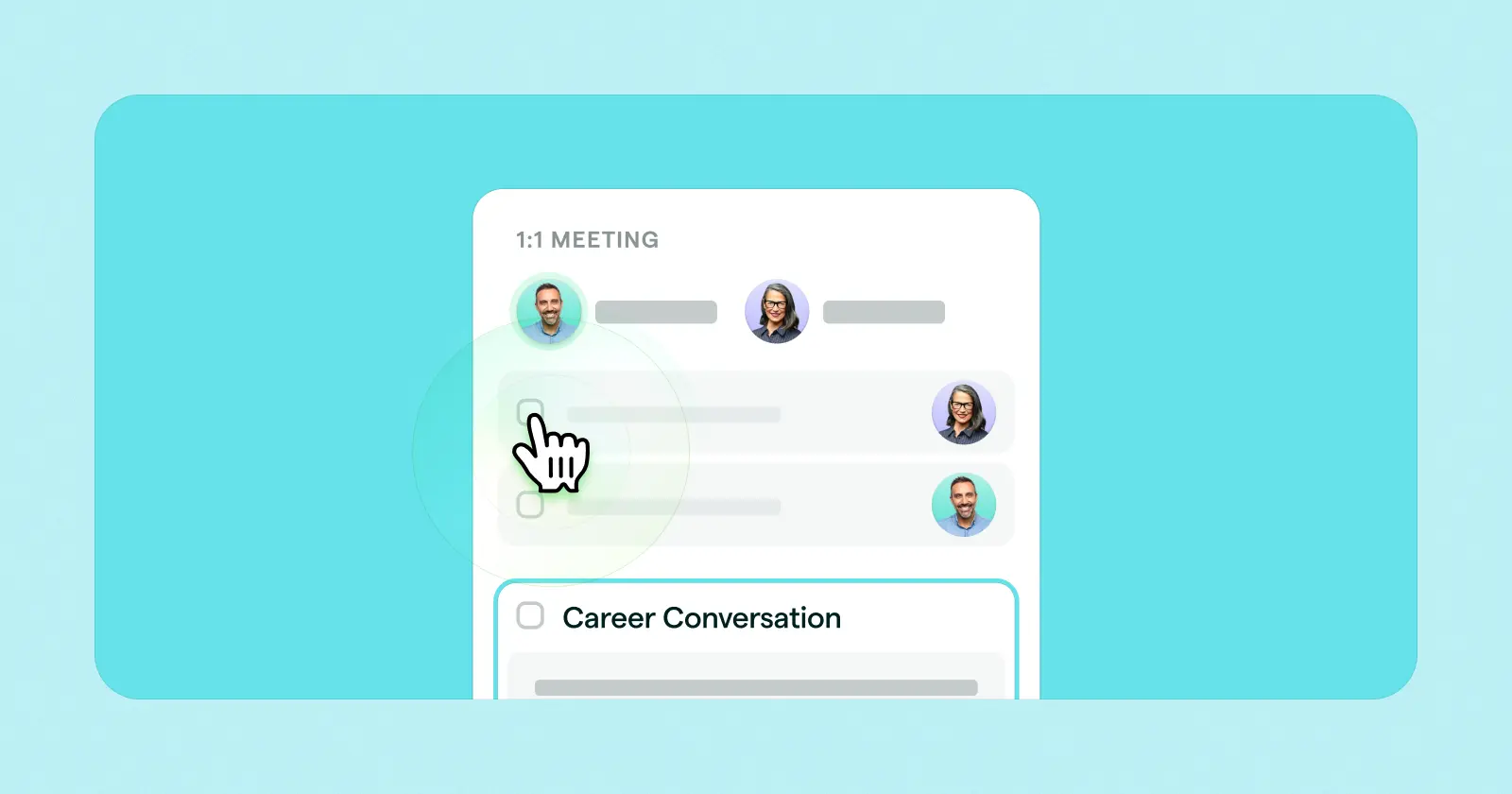
Take a self-guided tour to see how Lattice can help managers run one-on-ones that drive performance.
This meeting shouldn't be an email.
One-on-ones should be more than a recurring event on your calendar — they should be your most powerful management tool. In this free ebook, we break down how to lead conversations that strengthen relationships, unlock employee potential, and drive results.
What’s inside:
- The proven structure for high-impact one-on-ones
- Tips for balancing tactical updates with long-term career coaching
- Conversation starters that actually spark performance
- How to turn meetings into momentum
- Real advice from Lattice customers who’ve seen results
How Lattice Helps You Run Effective One-on-Ones
Lattice helps managers and their teams create a collaborative one-on-one process that helps strengthen their relationship. Here’s how.
- Lattice 1:1s: Co-create agendas, take notes, and track action items to ensure every conversation is productive and nothing falls through the cracks.
- Lattice Feedback: Capture real-time, impactful feedback that helps guide growth and fuels performance.
- Lattice OKRs & Goals: Easily set goals that ensure alignment across the organization, and keep them top of mind by integrating them with Slack, Microsoft Teams, and more.
- Lattice Grow: Support career development conversations by mapping skill-building, learning paths, and growth opportunities.
Ready to discover how Lattice can transform your one-on-ones? Schedule your demo to learn more.