

Most of us have sat through a meeting that should have been an email. Employees now spend large chunks of their time in recurring syncs, quick status updates, company-wide announcements, or team meetings without agendas. So of course they end up feeling drained or unclear about what’s supposed to happen next.
In contrast, productive meetings help teams make faster decisions, uncover problems earlier, strengthen trust, and stay aligned. Building an organizational culture where these kinds of meetings are the norm, not the exception, is achievable. Clearer structures, better facilitation, and the right tools make it possible for all types of meetings to be more productive, collaborative, and worth attending.
The Cost of Unproductive Meetings
A survey from Atlassian found that 78% of employees attend so many meetings that they can’t get their actual work done. The same survey found that 76% leave meetings feeling drained or demotivated, an effect researchers have termed a “meeting hangover.”
That effect is exaggerated when employees spend their days in back-to-back meetings. David Radin, CEO of Confirmed and creator of "Time Management in the Age of AI" workshops, explained that the cost of back-to-back meetings isn’t just fatigue; it’s the loss of processing time between conversations. “Without even a few minutes to capture context, reflect, or follow up, valuable discussions often lose momentum almost immediately,” he said.
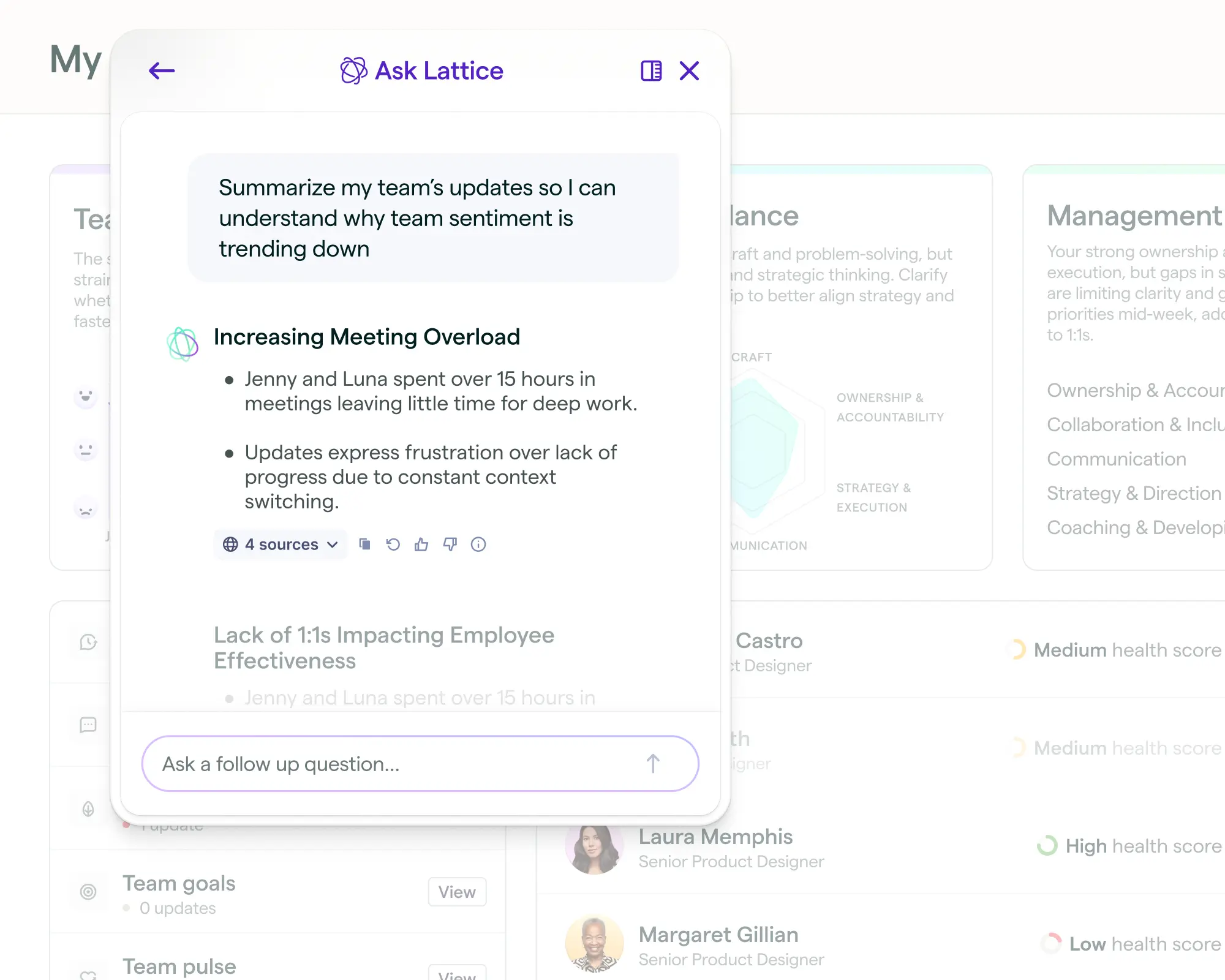
Constant meetings also mean employees may struggle to get their work done. Author and organizational psychologist Liane Davey, PhD, said employees may feel like they have to work overtime on evenings and weekends to complete their most important work.
And the impact goes beyond lost productivity. Poorly run meetings can also start to create resentment among team members, weaken collaboration, and contribute to stress, disengagement, and burnout.
Meetings without a clear purpose can also feel particularly frustrating. “People feel like they are not respected and that their time isn't respected, and they start to resent the culture and the organization itself,” said Lee Gimpel, president and founder of Better Meetings.
But unnecessary catch-ups aren’t just frustrating for employees. They also carry a financial cost. A report from the London School of Economics and Political Science estimated the annual cost of unproductive meetings to be $259 billion in the US alone.
That makes meeting quality an organizational priority. Managers set the tone for how meetings are run, while HR leaders can establish the norms, structure, and tools that help make every meeting count.
But as a professional meeting facilitator and expert in meeting design, Gimpel pointed out that many people don’t know the difference between a good meeting and a bad one. “Unfortunately, when I ask people what defines a good meeting, they often reply that it’s one that ended on time, and that’s a very low bar for success.”
What Separates a Good Meeting From a Bad One?
The strongest indicator of meeting quality is how people feel. “If we walk out of a meeting feeling like it was productive and worthwhile, then it probably was a good meeting,” said Gimpel. “If we walk out feeling bored, feeling like we weren't actually needed, or feeling like we were just talked at, then it probably was a bad meeting,” he added.
- State the purpose of the meeting. Every meeting should have a specific goal, whether that’s solving a problem, sharing weekly updates, or making a decision. If the information can be summarized in an email or an async video message, then use these formats instead.
- Enable everyone to be prepared. Sending out agenda items in advance gives participants time to prepare questions and consider how they can meaningfully contribute to the conversation. Without that structure, meetings can quickly drift off-topic or become dominated by a few voices.
- Clearly define roles and expectations. Attendees should know who’s facilitating, who needs to make a decision, and who’s there for information or context only. That clarity reduces confusion and helps employees understand why their participation matters.
- Create accountability before adjourning. Atlassian research found that 54% of employees frequently leave meetings with no clear idea of what happens next. Decisions, action plans, and next steps should be documented and sent to all meeting attendees. Otherwise, even productive conversations can lose momentum.
But productive meetings are about more than efficiency. Sarah Noll Wilson, president and founder of The Noll Wilson Group, explained that good meetings also create enough trust for people to be honest, curious, and clear. “The worst meetings are the ones that are very polite on the surface but lack real honesty underneath, or worse yet, ones where people just say absolutely nothing,” she said.
Gimpel added that people should never leave a meeting asking themselves why they were even there. “Ideally, you walk out feeling like more heads were indeed better than one in that situation and that you're more connected, more knowledgeable, more clear, or more energized by the work rather than the opposite.”
While HR can help establish the tools and systems needed for meetings to be useful, managers are still responsible for setting the tone.
The Manager’s Role in Meeting Culture
When managers or team leaders show up unprepared, dominate discussions, or let meetings run without a clear purpose, those behaviors can quickly become the norm across their team.
The reverse is also true: When managers are intentional about meetings, they model the behaviors that make collaboration successful: preparation, active listening, clarity, and follow-through.
A large part of this is psychological safety. Noll Wilson explained that managers shape the culture of their teams, including whether candor is punished, tolerated, or rewarded. “So often we hear leaders say they want honest feedback, but team members are really watching to see what happens when somebody disagrees, challenges an idea, or raises a concern,” she said. Over time, those moments determine whether people feel safe speaking up or not.
Because of this, effective managers need to be self-aware in how they facilitate discussions. Noll Wilson encourages managers to reflect on questions like:
- Am I the only one who talks?
- Do I interrupt or become defensive?
- Do I shut new ideas down too quickly?
- Do I only listen to certain voices, or do I invite different perspectives?
- Do I normalize curiosity over defensiveness?
Beyond how conversations are run, team leaders also shape how meeting time is used. “Managers who use meetings solely as a convenience for themselves, especially those who turn them into a series of one-on-one discussions with their direct reports, send the wrong message about the effective use of meeting time,” explained Davey.
Whether a meeting goes well or not isn’t all down to managers, though. Gimpel pointed out that company culture and workplace collaboration reinforce each other. “The culture of an organization shapes the meetings held within it, but meetings within an organization also shape the culture,” he said. This creates a feedback loop where small behavioral patterns in meetings can become embedded across the organization.
That means while manager behavior has a huge influence, it’s still not enough on its own. As Gimpel mentioned, many of the challenges in meeting culture persist because managers are rarely taught how to run effective meetings.
That leaves space for HR to play an enabling role. “The more we equip managers with the right skills, tools, and techniques to run good meetings, the better meetings we will have overall, along with more productivity and less frustration and resentment,” said Gimpel.
Tips for Making Meetings More Productive
Better meetings aren’t just about agendas and etiquette. Small changes to how organizations and managers approach meetings lead to less wasted time, better meetings, and stronger decisions.
Gimpel has seen this play out in practice. In his facilitation work with organizations, he often helps teams accomplish in a single morning what might have otherwise taken months of dozens of meetings with no end in sight. “A lot of organizations don't realize how much drag ineffective meetings create in terms of wasted time, frustration, slow decision-making, and lack of clarity,” he said.
To avoid this, follow these core principles of effective meetings.
Reduce friction before a meeting starts.
Often, a meeting’s effectiveness is shaped before it even begins. Gimpel noted that poorly prepared meetings often lose momentum before they’ve even begun because people arrive without having done much preparation for what’s going to happen or what they want to get out of it.
“Sometimes we’re basically preparing on the fly, or the right people aren't even in the room to provide information or make decisions,” he noted. Simple steps, like circulating a meeting agenda in advance, clarifying goals, highlighting who needs to participate, or ensuring hybrid participants have access to materials can reduce wasted time and help meetings move faster.
Manage cognitive load in meetings.
Meeting quality is also shaped by the mental and emotional load employees bring with them. To describe this, Davey coined the term “thoughtload,” meaning “the invisible tax on performance that comes from rising cognitive demands, increasing emotional burdens, and declining energy reserves.”
Davey added that when people have a heavy thoughtload, it might show up in meeting participation as less creative solutions, less patience and empathy for others, and less enthusiasm for the task at hand. “To mitigate the impact of thoughtload, give participants a chance to acknowledge anything weighing on them so they can compartmentalize it more easily,” said Davey. She added that this approach also helps provide context for how they show up and gives teammates a chance to empathize or be of greater support.
Invest in Manager Training
Many organizations assume managers know how to run productive meetings, but that’s not always the case. Radin recommended that anyone who runs meetings should either go through a manager skills training, or follow clear company guidelines for preparation, facilitation, and follow-up.
Noll Wilson also suggested managers bring intentionality into every meeting by asking themselves questions, such as:
- “What does this conversation actually need from us today?
- What is my goal with this conversation?
- What impact am I trying to make on myself, on the other person, on this project?
- And how do I clearly communicate that so we can be most effective?”
In addition to these principles, it’s also important to consider the type of meeting, and tailor the preparation accordingly.
Common Meeting Types — and How to Make Each One Work
Different types of meeting need different structures, but the principles of preparation, focus, and clarity apply across all formats. The distinction is how they show up in practice.
- Team standups and syncs
- Keep meetings tightly timebound and at predictable times.
- Encourage equal participation with time blocks for each team member.
- Focus on blockers, priorities, and alignment rather than full status updates.
- End with a quick summary of what’s changed since the last check-in.
- One-on-ones
- Create a shared agenda that balances daily work with long-term growth.
- Treat them as the most important meeting for employee development.
- Encourage managers and employees to share talking points in advance.
- Make space for personal topics that might be affecting an employee’s work.
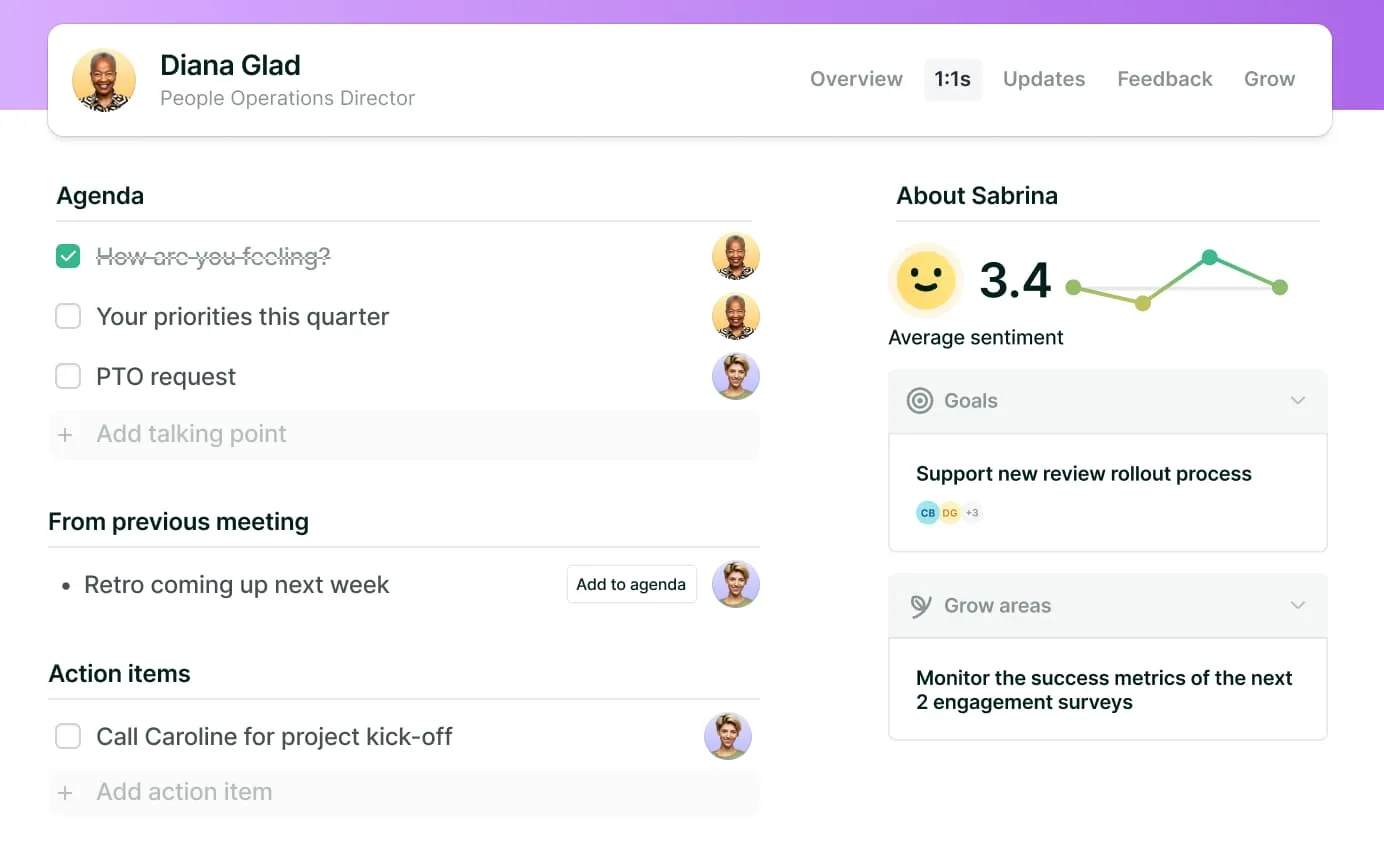
- Tools like Lattice 1:1s can support these conversations with shared agendas, AI-suggested talking points, and an easy-to-view timeline of past conversations.
- Performance and development conversations
- Share agendas and discussion topics in advance, so employees can prepare.
- Ground conversations in specific examples, feedback, and goals.
- Use development plans to create context and structure.
- Allow time for forward-looking coaching discussions.
How AI is Changing the Meeting Experience
As organizations build healthier meeting cultures, many are using AI tools to reduce administrative work before, during, and after meetings.
One of the biggest benefits of AI is reducing prep time by uncovering relevant context before a meeting, including feedback, goals, development plans, or summaries of past discussions. This helps managers and employees show up ready to have a real conversation, without all the busywork beforehand.
AI is also transforming some of the most time-consuming parts of meetings themselves: note-taking. AI transcription tools can capture discussions in real time, so there’s no need for participants to document every detail. This is one of the easiest wins for AI in meetings. “No one particularly likes taking meeting notes, and now that process largely happens automatically or with a very low barrier to entry,” said Gimpel.
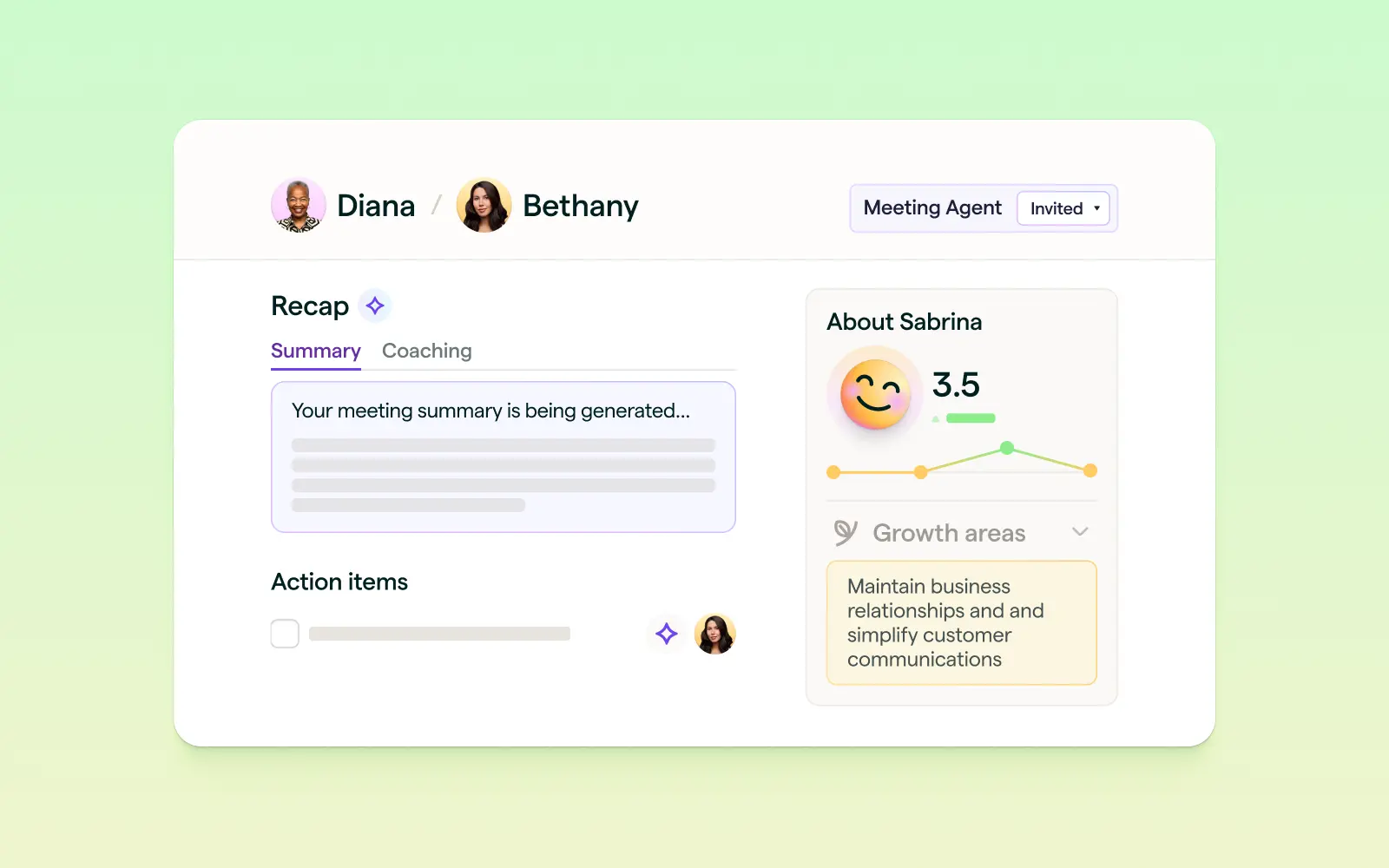
Lattice’s new Meeting Agent takes this a step further. When enabled, it automatically joins meetings to take notes, summarize discussion points, capture action items, and suggest next steps, all synced back to Lattice 1:1s alongside each employee's updates, reviews, growth areas, and feedback. This allows managers and employees to stay fully present in the conversation rather than splitting their attention between active participation and taking notes.
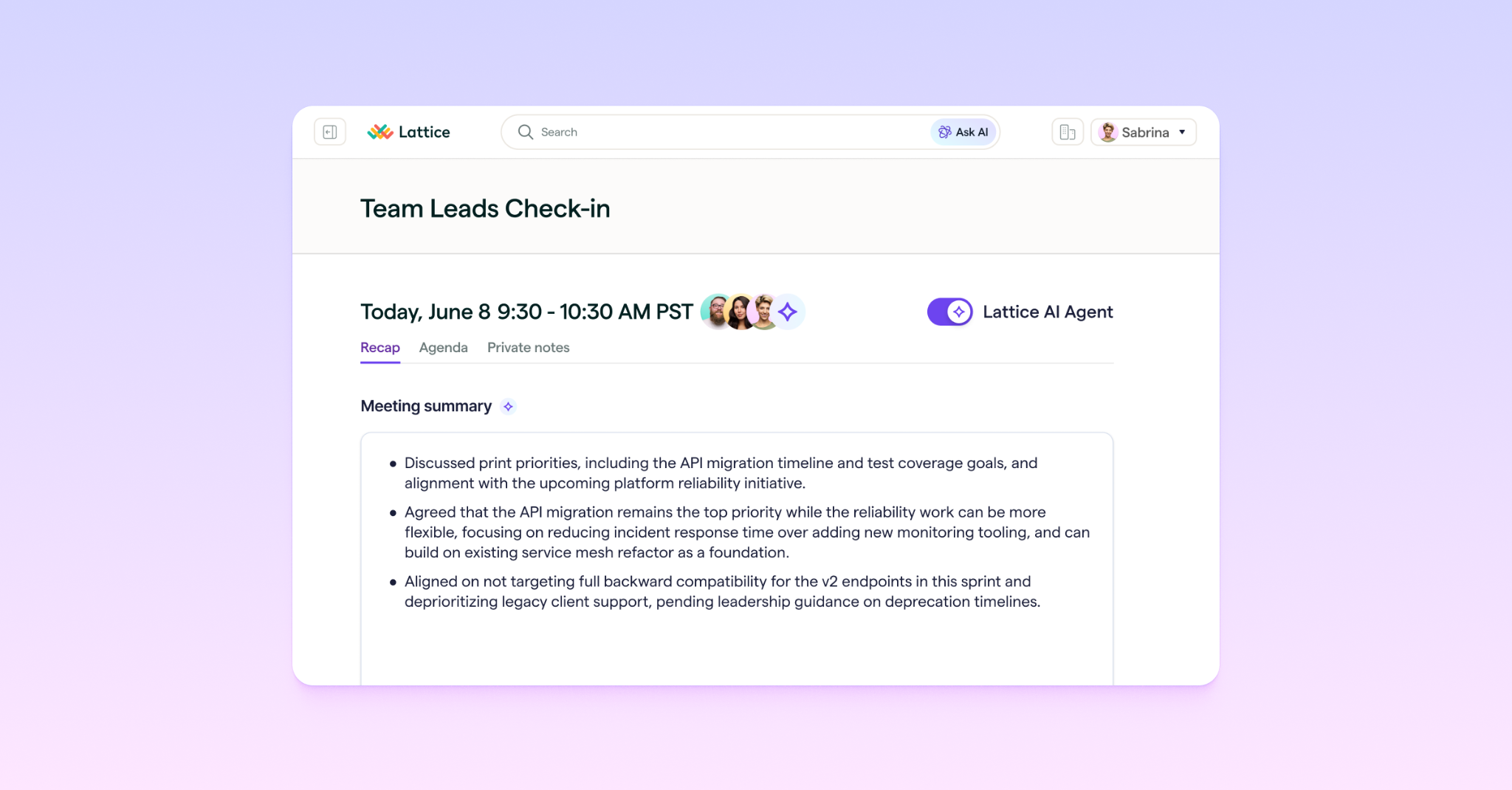
After a meeting, AI can capture action items, themes, and prompt follow-through, reducing cognitive load. Tools like the Lattice AI Agent also help managers and employees prepare for one-on-ones and performance conversations with context drawn from reviews, individual development plans (IDPs), goals, and feedback.
Despite its benefits, experts caution against using AI as a substitute for critical thinking or healthy communication. “The concern is that using AI without sufficient deliberateness or thought can mean skimming over the ideas and failing to process them deeply enough to contribute insights or even to remember what happened,” explained Davey. She added that while AI is great for menial work, generating questions, or poking holes in an argument, people should never outsource their thinking to it.
AI also can’t fix low trust or low candor environments. Noll Wilson mentioned that in some cases, AI can even expose issues that were already there. “Because now that we can clearly see the document from meetings, we realize it wasn't terrible note-taking. It was a lack of accountability and an inability to have the conversation.”
Transparency and consent are also critical. Employees should always know when AI tools are in use, including the Meeting Agent. As part of this transparent and ethical use of AI, it’s a good idea to create an AI usage policy, outlining how AI can and should be used within a healthy meeting culture.
Lattice’s own people team created AI fluency guidelines for how and when AI use is allowed, supported, and rewarded, including clarity on the importance of retaining human judgment.
Better Meetings, Stronger Performance With Lattice
Improving meeting culture isn’t just the responsibility of managers. HR teams play an important role too. Some of the most effective ways HR teams can build a healthier meeting culture include:
- Establish clear ground rules: Including guidelines for different meeting types, making meetings more inclusive, required agenda policies, meeting-free focus blocks, and expectations for follow-through and documentation.
- Support manager effectiveness: Provide training on meeting facilitation and communication skills, and give managers access to templates, tools, and best practices.
- Gather employee sentiment: Use pulse surveys and engagement data to identify meeting overload, look for patterns around unclear communication or excessive meetings, and use that data to make the case for change.
- Connect to business outcomes: By linking collaboration habits to employee engagement, retention, and productivity, HR teams can communicate the ROI of improving meeting culture to leadership.
Organizations don’t need more meetings, they need better ones. When meetings are intentional, well-facilitated, and supported by the right tools, they become a driver of better outcomes, rather than a drain of people’s time and energy.
Book your Lattice demo to explore how Lattice can help make meetings more intentional, structured, and productive.