
Quarterly One-on-One Meeting Template
Managers and employees can use this free template to get a better look at the big picture of performance, growth, and goal progress.


Unlock this template for free
By submitting your information, you agree to Lattice's Terms of Service and Privacy Policy. You can opt out anytime.
We've received your submission.
Quarterly one-on-ones are your opportunity to zoom out.
While weekly or monthly meetings focus on execution and short-term progress, a quarterly conversation creates space to reflect on the bigger picture: performance trends, career growth, and long-term goals. It’s less about what happened this week and more about where things are heading.
Done well, this meeting helps both manager and employee step back, reconnect on priorities, and make intentional decisions about the next quarter.
How to Structure an Effective Quarterly One-on-One
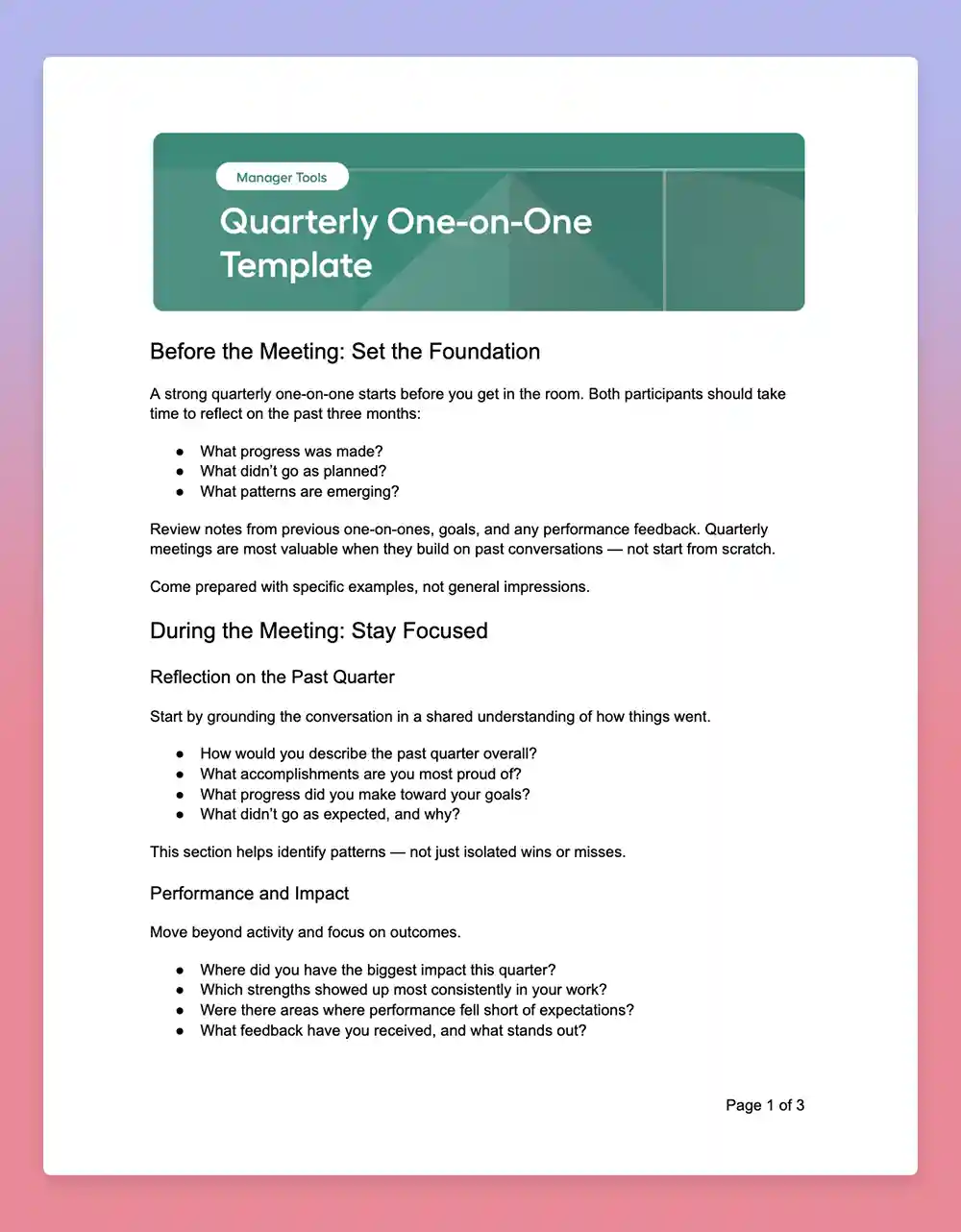
Before the Meeting: Set the Foundation
A strong quarterly one-on-one starts before you get in the room.
Both participants should take time to reflect on the past three months:
- What progress was made?
- What didn’t go as planned?
- What patterns are emerging?
Review notes from previous one-on-ones, goals, and any performance feedback. Quarterly meetings are most valuable when they build on past conversations — not start from scratch.
Come prepared with specific examples, not general impressions.
Quarterly One-on-One Agenda Template
Reflection on the Past Quarter
Start by grounding the conversation in a shared understanding of how things went.
- How would you describe the past quarter overall?
- What accomplishments are you most proud of?
- What progress did you make toward your goals?
- What didn’t go as expected, and why?
This section helps identify patterns, not just isolated wins or misses.
Performance and Impact
Move beyond activity and focus on outcomes.
- Where did you have the biggest impact this quarter?
- Which strengths showed up most consistently in your work?
- Were there areas where performance fell short of expectations?
- What feedback have you received, and what stands out?
Quarterly conversations are a natural place to connect day-to-day work to broader impact.
Challenges and Support
Dig into what made the quarter harder than it needed to be.
- What were the biggest challenges or obstacles you faced?
- Where did you feel stuck or slowed down?
- What support, resources, or clarity would have helped?
- What can I do differently to better support you next quarter?
This is where you uncover systemic issues, not just individual ones.
Growth and Development
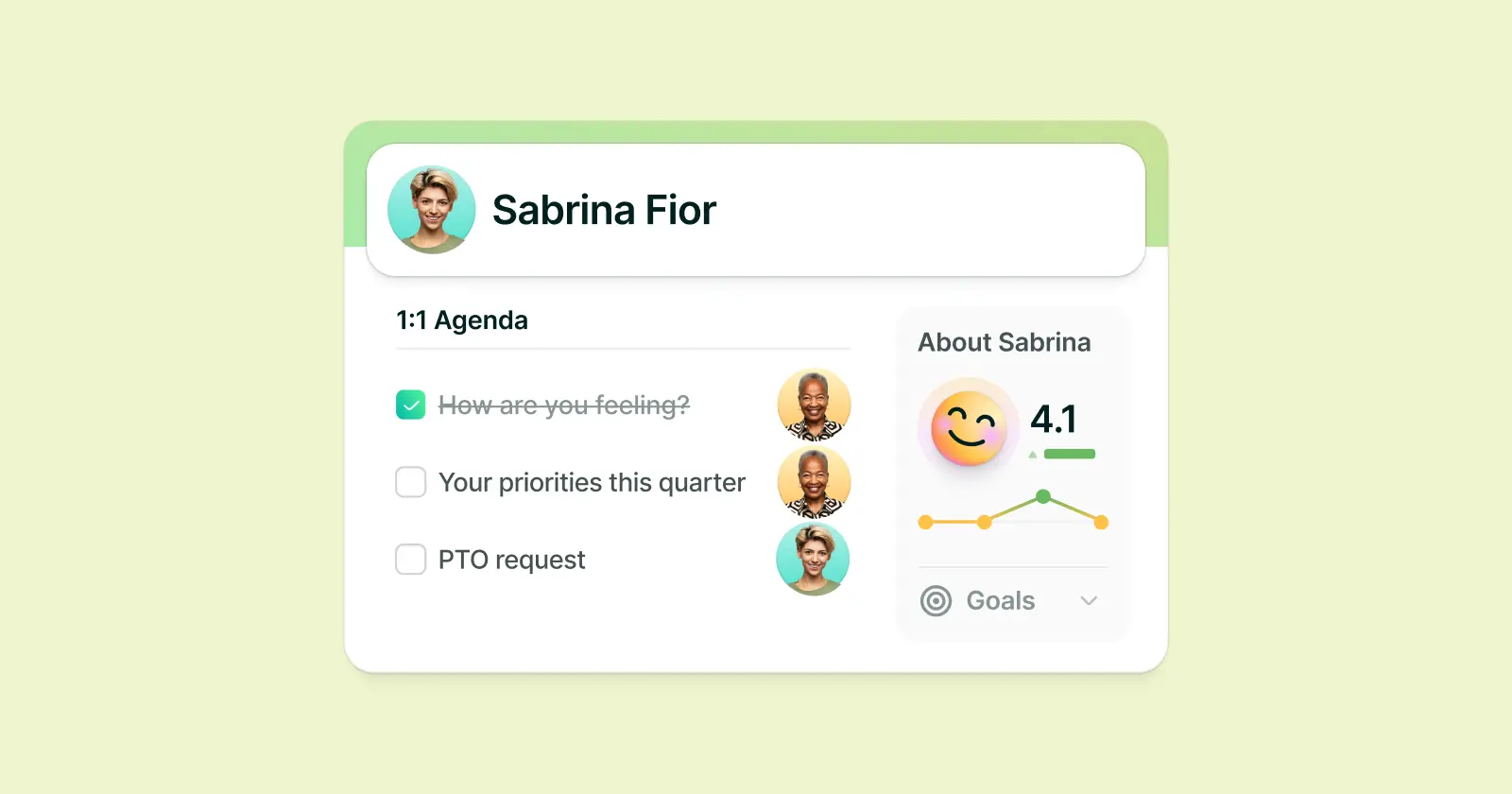
Quarterly one-on-ones are especially important for career development conversations.
- What did you learn over the past three months?
- Which skills have you developed?
- Where do you want to grow next?
- Are you getting enough opportunities to stretch and develop?
Regular one-on-ones are a key driver of growth and engagement, especially when they include forward-looking development conversations.
Career Direction and Long-Term Goals
Zoom out even further.
- How do you feel about your current role and trajectory?
- What are your longer-term career goals?
- Has anything changed in what you want next?
- How can we better align your work with those goals?
This section ensures the conversation isn’t just about performance, it’s about direction.
Looking Ahead: Next Quarter Priorities
Shift focus to the future.
- What are your top priorities for the next quarter?
- What does success look like?
- Are there any anticipated risks or challenges?
- How do your goals align with team and company priorities?
Quarterly planning helps maintain alignment as priorities evolve.
Feedback (Both Directions)
Manager → Employee
- What are you doing particularly well?
- Where should you focus to improve next quarter?
- What should you start, stop, or continue doing?
Employee → Manager
- What’s been helpful in how I’ve supported you?
- What could I do differently or better?
- Where do you need more clarity, direction, or autonomy?
Consistent, two-way feedback is one of the most valuable outcomes of a one-on-one.
Team and Organizational Context
Quarterly is a good time to surface broader themes.
- How are things going within the team?
- Are there any collaboration or communication challenges?
- What feels unclear about team or company direction?
- What should we address to improve how we work together?
Wrap-Up and Action Items
End with clarity and accountability.
- What are the key takeaways from this conversation?
- What actions will each of us take next quarter?
- What needs to be followed up on — and by when?
Why Use a Quarterly Template?
Without structure, quarterly one-on-ones tend to drift, either becoming overly focused on recent work or turning into vague, high-level conversations that don’t lead to action.
A clear template keeps the discussion balanced:
- Reflecting on the past
- Evaluating performance
- Planning for the future
- Investing in long-term growth
It also ensures that important topics — like career development and feedback — don’t get pushed aside by more immediate concerns.
Over time, this consistency creates better alignment, stronger relationships, and fewer surprises when formal reviews come around.
Download the Free Quarterly One-on-One Meeting Template
If you want to make the most of your quarterly one-on-ones, this template is your guide. Download it for free and start having one-on-ones grounded in structure, consistency, growth, and impact.
Frequently Asked Questions




Your people are your business
Ensure both are successful with Lattice.