Goal setting usually starts simply enough. Teams build out targets in a spreadsheet, updates get discussed in meetings, and everyone’s getting their work done.
But before you can blink, goals are everywhere like a bowl of dropped spaghetti. You’re left wrangling unfinished targets and figuring out who’s working on what.
The right goal-setting software can help you untangle the chaos, align company priorities to team goals, and keep teams focused on the goals that matter most.
In this guide, we analyze eight of the best goal-setting platforms, their ideal use cases, and how to choose which one is right for you.
What is employee goal-setting software?
Employee goal-setting software centralizes goal creation, tracking, and management at a department, team, and individual level across an organization. It’s designed with transparency in mind — from helping teams set clear goals to offering leaders top-down visibility on how the organization is working toward its business objectives.
Goal-setting software is great for managing objectives in a range of different organizational contexts. No two goal-tracking software options are alike, but most will allow you to:
- Set measurable goals across departments, teams, and individuals
- Monitor progress
- Support different goal types, including objectives and key results (OKRs) and SMART goals
- Set notifications, reminders, and check-ins to keep goals up to date
- Set timelines for goal progress and deadlines
{{rich-highlight-1}}
8 Best Employee Goal-Setting Software in 2026
When looking for goal-setting software, remember that there’s no single best platform out there. The right software depends entirely on your organization’s size, existing systems and processes, and current level of goal-setting maturity.
We’ve identified ten of the best goal-setting software platforms below to suit whatever stage your organization is at.
1. Lattice
Lattice at a Glance
⭐G2 rating: 4.7/5
- Pricing: $11 per employee per month (part of the Foundations bundle)
- Key features:
- Cascading goal alignment across individuals, teams, and the organization
- Integration with performance reviews and one-on-ones to keep goals and growth top of mind
- Flexible goal setting to accommodate evolving priorities
- AI-powered performance review support
- Integrations include: Workday, Hone, Lever, Personio, and Gusto
- Best for: Organizations needing integrated goal management and performance reviews with cascading alignment and real-time tracking
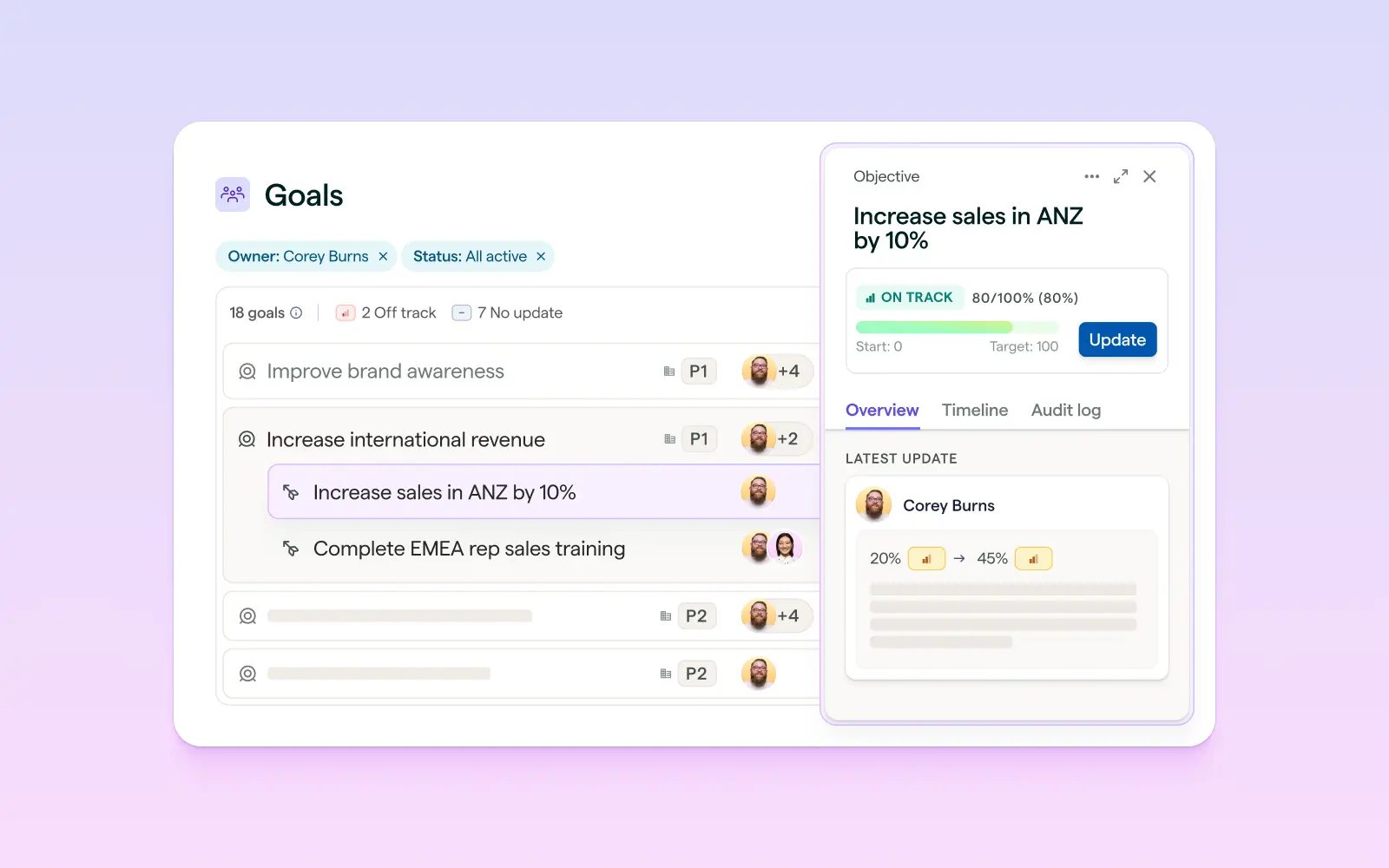
The strength of Lattice lies in its power to unite processes across the entire employee lifecycle, including core HR, performance management, employee engagement, and goal setting. Goals sit alongside reviews, one-on-ones, and employee development so that teams can stay focused on what they’re working toward, know how it ties to their growth, and understand it in the context of the broader organization.
Progress tracking through automation and integrations like Jira, Salesforce, and Slack keeps updates flowing across goals and team initiatives. Meanwhile, unified data reporting across your people processes gives everyone full context on goal progress.
Pros
- Integrated with your entire performance management system, so goals stay in sync with growth and progression
- Real-time goal progress tracking with dashboards
- Comprehensive HR platform
Cons
- Comprehensive platform pricing may bust the budget for teams that only need basic goal tracking
2. Culture Amp
Culture Amp at a Glance
⭐G2 rating: 4.5/5
- Pricing: Custom pricing, reach out to vendor
- Key features:
- 360-degree feedback
- Cascading individual and team goals
- Customizable competency-based goals
- Goal mapping across teams and departments
- Integrations include: Remote, Oyster, Paylocity, Paycor, and SAP SuccessFactors
- Best for: Midsize to large organizations that take an integrated approach to goal setting, performance, and employee development
Culture Amp is an employee experience platform that ties goal setting into the holistic performance and talent development process, making it easier for teams to keep goals connected to their work. That structure makes it great for organizations that prefer to keep goals as part of everyday conversation, rather than a separate workflow.
Pros
- Easy-to-use and intuitive
- Streamlines and aligns weekly one-on-one conversations with goals, growth, and performance
- Allows for the creation of individual goals
Cons
- Not mobile-friendly
- Limited customizability at scale, with one reviewer noting that it was “not a product that can support [their] level of growth”
3. PerformYard
PerformYard at a Glance
⭐G2 rating: 4.7/5
- Pricing: Custom pricing, reach out to vendor
- Key features:
- AI-enabled performance reviews
- Highly customizable review cycles
- Continuous feedback and check-in capabilities
- Flexible goal management
- Integrations include: BambooHR, Gusto, Slack, Workday, and ADP Workforce Now
- Best for: Organizations that want to tailor their performance review and goal-setting processes to their own structure and culture
PerformYard is an AI-driven performance management platform. Its key strengths are flexibility and customization, which give organizations a high level of control over their performance and goal-setting processes — making it ideal for complex setups.
Pros
- Dedicated performance management platform
- Bespoke performance review setup
- Structured check-ins and continuous feedback functionality
Cons
- Difficulty in setting goals and tracking overall progress
- Additional HR tools required
4. HiBob
HiBob at a Glance
⭐G2 rating: 4.5/5
- Pricing: Custom pricing, reach out to vendor
- Key features:
- 100+ integrations
- Customizable performance reporting capability
- Centralized source of employee data
- Automated performance workflows
- Integrations include: 360Learning, 15Five, Ashby, Deel, and Okta
- Best for: Teams in the market for centralized HR needs alongside performance and goal management
HiBob is an all-in-one HR solution that offers a full suite of products across core HR, payroll, talent acquisition, onboarding, and performance management. It’s a strong contender for teams that are looking for a core HR product that still offers the functionality of performance management and goal tracking.
Pros
- Offers goal setting and performance tracking within a centralized HRIS platform
- Has clear layouts for goals and feedback
- Supports remote and hybrid workforces
Cons
- Performance module comes at an add-on cost.
- Integration depth is sometimes lacking, with one reviewer noting that “some integrations can be limited or require manual workarounds.”
5. 15Five
15Five at a Glance
⭐G2 rating: 4.6/5
- Pricing: $11 per employee per month (part of the Perform bundle)
- Key features:
- 360-degree feedback
- Engagement and recognition tools
- Customizable reporting dashboard
- On-demand development managers
- Integrations include: Workday, Gusto, Rippling, Deel, and UKG
- Best for: Midsize and larger organizations looking for a dedicated performance management platform with bundled manager enablement
15Five is a dedicated performance management platform that combines performance tracking and continuous feedback in one package. Built with the belief that managers are the heart of every effective goal-setting process, the platform is one of the only ones to center performance around manager enablement and coaching.
Pros
- Encourages meaningful performance conversations between managers and teams
- Integrates with a number of leading HRMS and HRCM systems
- Focuses on continuous feedback with weekly check-ins
Cons
- Steep learning curve, with users reporting that it can feel “overwhelming”
- Interface and user experience that can feel unintuitive
6. Leapsome
Leapsome at a Glance
⭐G2 rating: 4.8/5
- Pricing: Custom pricing, reach out to vendor
- Key features:
- Flexible, automated goal cycles
- Customizable performance management
- Engagement surveys that connect to performance data
- Built-in growth paths and competencies
- Integrations include: Ashby, Deel, Paylocity, Sage HR, and Paycor
- Best for: Midsize to large organizations that want an integrated approach to their core HR and performance modules.
Leapsome is an HRIS and employee experience platform that offers a range of features across the employee lifecycle. It unites goals, performance, and engagement in a single core HR workflow, making it easy for teams to see how individual progress connects to broader priorities.
Pros
- Feedback that aligns across the organization
- Clean, intuitive interface
- Instant feedback feature that makes it easy to give in-the-moment input
Cons
- Limited ability to track individual tasks and meetings
- Difficult to track more technical goals and processes in real time
7. BambooHR
BambooHR at a Glance
⭐G2 rating: 4.4/5
- Pricing: Custom pricing, reach out to vendor
- Key features:
- Centralized core HR platform
- 150+ integrations
- Performance management tools
- Mobile-friendly platform
- Integrations include: Indeed, PerformYard, Greenhouse, Payscale, and Leapsome
- Best for: Small to midsize businesses that need a core HR tool with lightweight performance features
BambooHR is a unified core HR platform. Its performance management module offers organizations flexibility to create their own custom review cycles and goals, as well as take advantage of its templated options.
Pros
- Responsive, helpful customer support
- Integrations that “make cross-team collaboration effortless”
- User-friendly for both HR teams and employees
Cons
- Some user feedback notes limited goal tracking and planning.
- Reporting depth is lacking, with one user saying, “the reporting tools can be a bit frustrating[…]. They cover the basics, but more flexibility would go a long way.”
8. Personio
Personio at a Glance
⭐G2 rating: 4.4/5
- Pricing: Custom pricing, reach out to vendor
- Key features:
- All-in-one HR platform
- 360-degree feedback
- Continuous performance feedback model
- Customizable workflows
- Integrations include: 360Learning, Culture Amp, Deel, Oyster, and Ashby
- Best for: Midsize to large organizations that want to integrate core HR and performance in one system
Personio is an enterprise-grade HR platform that spans core HR, talent management, talent acquisition, and people analytics. It offers people teams a centralized source of performance and talent data that helps them link goals, performance, and growth.
Pros
- Centralized HR and performance data that keeps goals aligned in one place
- User dashboard to help keep track of tasks and reminders
- Good integrations with employee learning and development apps
Cons
- Some users say the pricing model feels steeper than competitors’ models.
- Some features lack customization.
How to Choose the Right Goal-Management Software
If by this point you’re thinking, ‘How am I supposed to pick?’ take a deep breath. Choosing the right software for your organization is less like being thrown into a grocery store on Thanksgiving without a list and more of a measured evaluation of where your organization is at.
Assessing your organization’s size, processes, integration needs, current HR tech stack, and user requirements will help you find your Goldilocks-style perfect fit.
1. Assess your organization’s size.
Size matters when buying the right goal-setting software for your organization — because what works for a small company of 20 probably isn’t going to fit a huge global corporation.
Here’s how that typically breaks down for organizations of different sizes:
- Small (under 50): Look for simple, lightweight tools with a quick roll-out and minimal admin overheads. You need clarity fast — not all the bells and whistles.
- Midsize (50–500): Scalable platforms that support multiple goal frameworks will be your best bet. You’ll need department-level visibility to prevent silos.
- Large enterprise (500+): Features like cascading goals, advanced security controls, and dedicated support will help you manage complexity and organizational objectives at scale.
2. Identify the features you actually need (and when they matter).
When you start shopping for the best goal-setting software for your organization, it’s very easy to get lost in a sea of features.
But put down your shopping list for a sec and listen up: Your organization’s exact needs for a goal-setting tool are going to differ according to your team size, goal-setting maturity, and integration needs.
We’ve rounded up the key features you should consider and highlighted where they might make the most difference.
Goal Hierarchy and Cascading
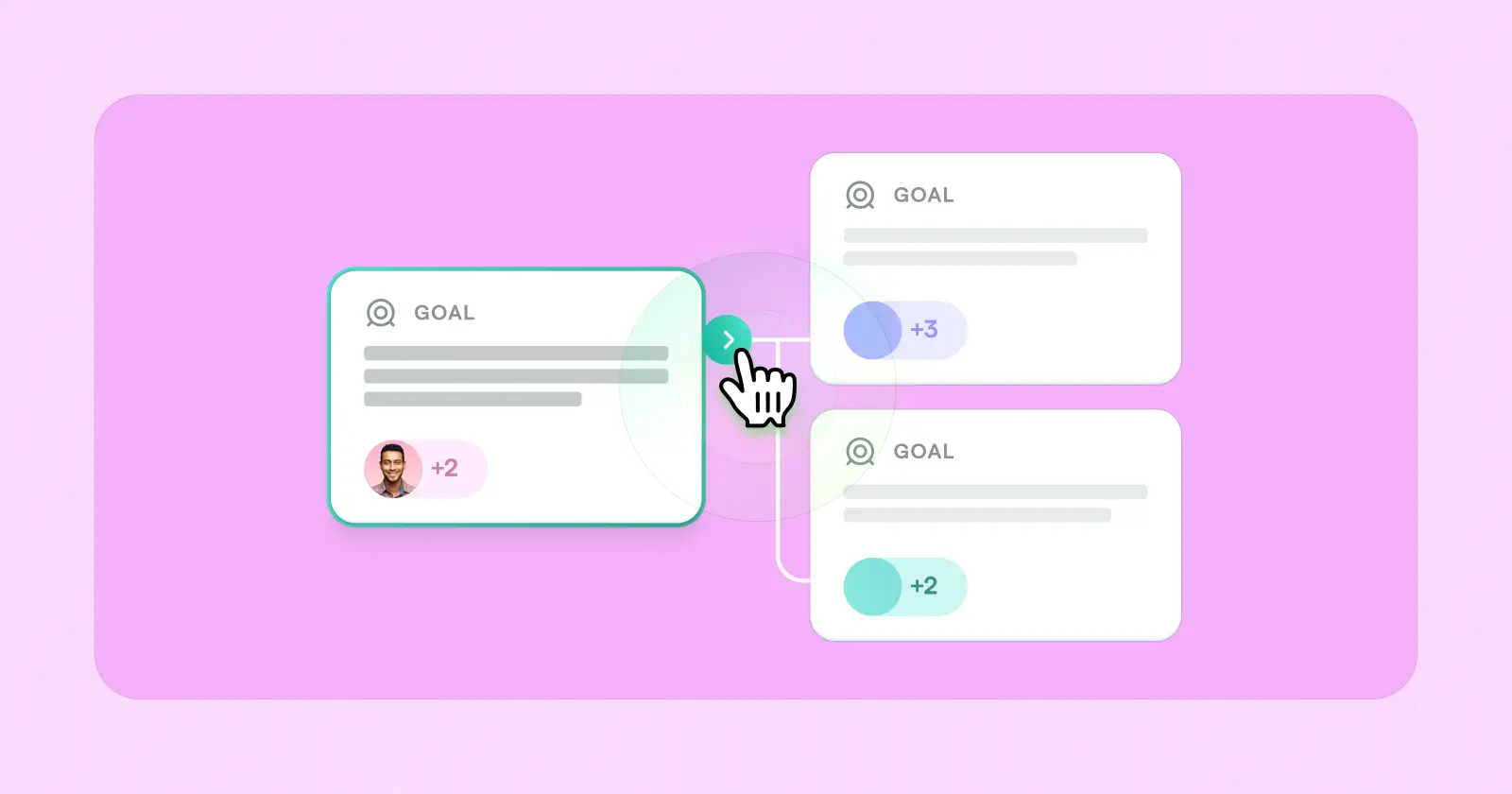
This helps teams create cascading goals across departments and levels — meaning that organizations have full alignment from top to bottom.
When it’s useful: This is especially helpful at larger organizations, where goals can become complex — but it might be overkill at smaller organizations.
What to watch out for: Tools that only support flat goal lists where there’s no room for alignment or flexibility.
Multiple Goal Framework Support
The right platform should support your chosen goal-setting methodology, not squeeze you to fit how their product works.
When it’s useful: This is key for midsize and larger organizations that need extra flexibility in codifying their goals to their culture and goal-setting framework.
What to watch out for: Some platforms may lock you into their specific methodology rather than letting you customize your organization’s goals.
Real-Time Progress Tracking
Tracking progress and adjusting goals in real time makes it easier to see what’s moving and what’s lagging between check-ins.
When it’s useful: This is especially valuable for midsize or large organizations using multiple tools for cross-functional workflows, so that you don't have to cross-reference information across multiple systems.
What to watch out for: If your chosen tool requires manual percentage updates, tracking progress becomes an added task, not a seamless process.
Integration With Performance Management
When goals connect across your entire performance management system, it means you can keep them visible across reviews, check-ins, and development conversations.
When it’s useful: This is particularly important for large organizations with formal review cycles, where goal progress needs to flow into development planning.
What to watch out for: Goal-setting tools that don’t have any review capability mean goals end up siloed from feedback — making it harder to connect them to employee development.
Dashboards and Reporting
Reporting on goal progress through dashboards and data gives leaders visibility into how the whole organization is performing, helping to identify patterns, spot bottlenecks, and see where more support is needed.
When it’s useful: This is most valuable for scaling organizations with multiple levels of hierarchy.
What to watch out for: Static or one-size-fits-all dashboards can limit insights — look for tools that can help you segment data, drill down into results, and tailor views.
3. Define your goal-setting methodology.
Your chosen goal-setting framework shapes everything from how goals are set to how they’re measured and tracked — so it’s a great filter to help you choose tools and ensure long-term adoption.
Here’s a quick rundown:
- If you’re using OKRs, OKR-focused tools will help you track organizational progress, offer automated updates, and show how company-wide goals connect.
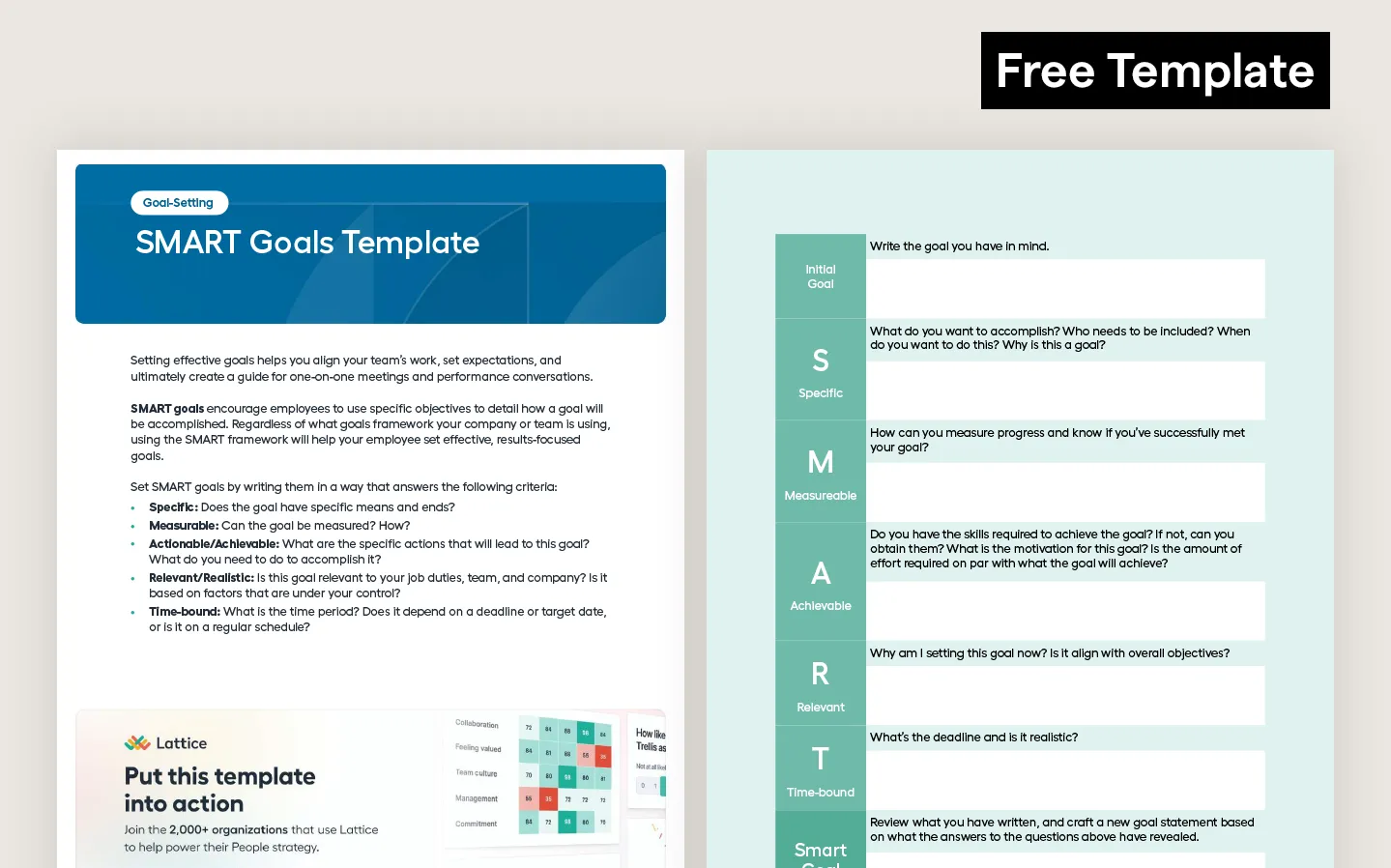
- If you’re using SMART goals, platforms with SMART goal templates help teams create measurable, actionable goals consistently.
- If you’re using multiple frameworks, you’ll want a platform that can support multiple goal-setting methodologies simultaneously.
- If you’re not sure, opt for flexibility over rigidity and choose a tool that allows for customizability, experimentation, and easy reconfiguration as processes mature.
4. Evaluate your integration requirements.
If you want any new tool to work out, reviewing its integration capability is critical — this keeps systems synced, reduces manual work for everyone, and improves data flow across your organization.
Evaluate integration capability and depth by asking:
- How easily will this slot into the HR tech stack we already rely on?
- Can it integrate into daily workflows via communication tools like Slack or Microsoft Teams?
- How well does it connect to calendars and performance flows to sync check-ins and reviews without additional admin?
- Do integrations just pull data in, or do they push updates in real time?
5. Test the user experience.
Even what seems like the best tool can fall short of the final hurdle: the user experience. Making sure your tool works for the people that are actually going to use it will be the benchmark for its success — because ultimately, even if you did stump up for all the bells and whistles, it means nothing if your employees don’t end up using it.
When evaluating the user experience, your platform should feel intuitive for all types of users. Ask:
- How does the interface feel to use? How long does it take to update a goal?
- How can managers track and manage team members’ goals?
- How easy is it to set up, roll out, and manage from the backend?
- How easy is it to report on company-wide strategic goals? How are metrics presented?
Transform your goal-setting process with Lattice.
Choosing the right goal-setting software is as much about your performance and goal-setting strategy as it is about choosing the right set of features and finding a tool that can meet your organization where it’s at.
Lattice OKRs & Goals keeps high-performing teams aligned by plugging individual goals directly into company objectives. It integrates with your performance management processes, filtering down across reviews, check-ins, and one-on-ones so that everyone has visibility across the company. And if you’re working with different goal-setting models, our flexible frameworks mean every team can track, update, and manage goals while staying in sync with broader strategic objectives.
Ready to explore how Lattice can help your organization meet and set better goals? Book a demo with our team to experience cascading goals, real-time tracking and reporting, and an integrated approach to performance management.
FAQs
What’s the difference between goal-setting software and performance management software?
Goal-setting software helps employees, teams, and organizations create, track, and update goals. Goal setting typically exists within a broader performance management process — but it could be separate depending on how your organization structures performance.
Performance management software uses these goals alongside feedback and growth opportunities to assess employee performance and progression.
What kind of customer support should you expect from a goal-setting platform?
Different vendors may vary in their roll-out approach, but in general, here are some vendor green flags when launching a new goal-setting platform:
- Onboarding and training to use the platform, including guided setup, live or recorded training, and documentation
- Responsive help-desk support for when issues pop up
- Knowledge base and self-service resources, including articles, FAQs, and how-to videos
- Tech support to configure the tool and connect integrations
What’s the difference between OKRs and SMART goals?
OKRs and SMART goals are both outcome-focused goal-setting methodologies. Organizations often use both as part of their goal-setting framework.
OKRs focus on broader company goals and keep the organization aligned on a mutual target — such as ‘delighting customers with a world-class customer support experience.’
SMART goals (which stands for specific, measurable, achievable, relevant, and time-bound) focus on individual goals for a person or team. The corresponding SMART goal for the example above for a customer support team could be “Resolve 80% of support tickets this quarter within 24 hours of receiving them.”
Want to get started setting OKRs and SMART goals? Grab our free templates below:
How do we measure ROI on goal-setting software?
Measuring your organization’s return on investment from any goal-setting tool involves collecting both quantitative and qualitative data on how users experience the tool.
Metrics include:
- Adoption and utilization: Percentage of employees using the tool, percentage of goals updated weekly/monthly, login frequency
- Goal effectiveness: Goal completion rates across teams, percentage of OKRs and SMART goals achieved
- User experience: Platform net promoter score, survey feedback on how satisfied employees feel with the tool
- Business outcomes: Cost savings, efficiency gains, percentage decrease in project delays, time saved
When is the right time to move from spreadsheets to goal-setting software?
There’s no hard-and-fast rule about when it’s the right time to upgrade your goal-setting approach. That said, here are some signs that it could be time to trade in your spreadsheet:
- Goals regularly get missed or misaligned.
- Updating your goal-tracking spreadsheet becomes a time sink.
- You’re struggling to track goal progress across teams or departments.
- Performance review cycles break down because goals are unclear or hard to track.
- Teams are working in silos because the shared spreadsheet is confusing or frustrating.
- Organizational goals shift faster than the spreadsheet can track.
{{rich-highlight-2}}

One of our core values at OppFi is ‘Dare to Win’ which includes setting bold goals. Lattice has provided us with a way to document those goals, track progress, and reflect on what we accomplished.
Kelsey Witmer, former director of culture at OppFi
The information provided in this article is accurate at the time of publication. Changes in product functionality and other relevant factors may occur after publication. We encourage readers to verify pricing information directly.