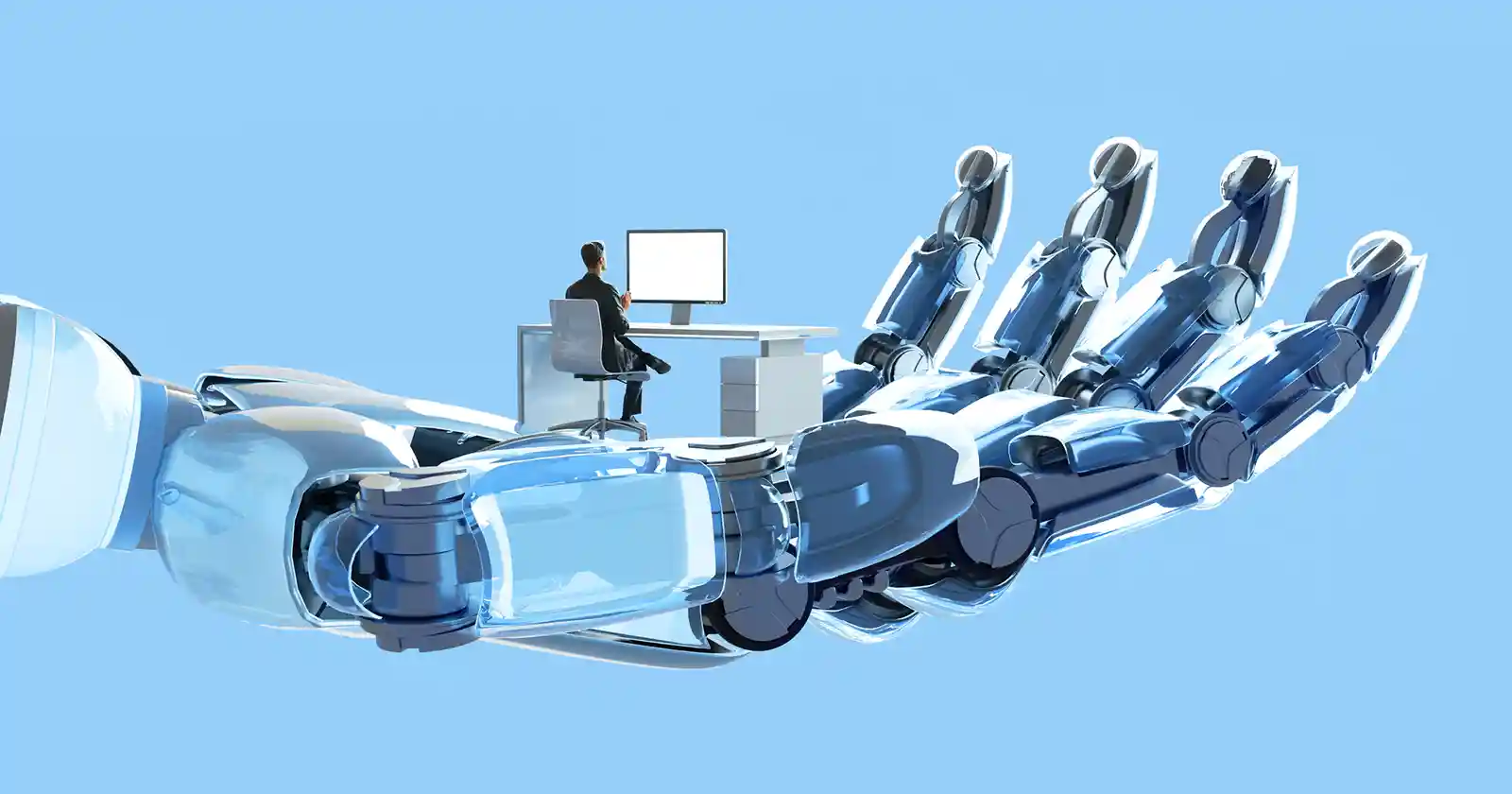

You introduce a new AI tool, but your staff aren’t using it. You’ve invested a lot, but it’s not having the impact you intended. Why?
Well, for starters, it’s not just you. More than 60% of businesses still haven’t begun scaling AI company-wide, according to 2025 McKinsey research on the state of AI.
The problem is never just the tech. It’s also the approach, and the costs of patchy AI adoption add up quickly. You end up with a two-tier workforce: employees who work more efficiently by using artificial intelligence, and others who lag behind because they aren’t.
To boost AI adoption among your teams, you need to build trust that AI can be used to augment, not replace, human roles. And HR has a big role to play: HR already handles onboarding and upskilling, so training and enabling employees to adopt AI solutions is a natural extension of its remit.
But more than that, HR understands your people. HR teams listen to employee voices to understand what drives employee engagement, and what curbs it. They’re perfectly positioned to identify and overcome adoption barriers.
It’s not enough to simply make AI technology available and expect it to be used. You have to introduce it in the right way at the right time, and make sure your people are ready and willing to use it.
Why Are Employees Hesitant To Adopt AI?
Increasing AI adoption starts with understanding why it’s low in the first place. It’s not necessarily a case of reluctant employees resistant to change. They likely have some very real concerns.
Here are three of the most common barriers, and why they are holding back your AI initiatives:
1. Employees don’t know how to use AI.
New technology often means stepping out of your comfort zone. And unlike earlier tech tools with clear use cases, employees may not be clear on how to relate AI capabilities to their day-to-day tasks.
Common AI platforms like ChatGPT or Microsoft Copilot offer such a blank canvas that employees don’t know where to start. They may not know how to function effectively with generative AI tools or understand the basics of prompt engineering. It’s not always obvious how to get from “AI can do anything” to “AI can help me complete this specific task in the most efficient way.”
If they lack the AI skills and confidence, employees are more likely to stick with the familiar, but less effective, tools they already use.
{{rich-highlight-1}}
2. Employees are wary of being replaced by AI.
Fear around automation and job displacement can cause employees to feel threatened by AI tools, especially in uncertain economic times. When new technology can do your work faster and better, such anxiety is understandable.
The reality is somewhat different. Roles are more likely to change and evolve with AI than be eliminated outright. For instance, a 2025 MIT Sloan study on AI in the workplace found that human-intensive tasks — those requiring creativity, empathy, and complex judgment — have actually grown in frequency since 2016, suggesting AI is more likely to augment what workers do than replace them entirely.
Framing AI-driven tools as an enhancement rather than a replacement for their work can help employees feel more at ease.
3. Employees have fears about data security and privacy.
It’s not always clear how AI works, what data it’s trained on, how it uses that data, and whether it’s safely stored. Suspicions about misuse can turn people off using it at all. According to a Forrester report on generative AI, nearly a third (29%) of AI decision-makers say trust is the single biggest barrier to adoption.
Employees may also worry that AI is being used for surveillance — to monitor their work, flag shortfalls or influence decisions about their future — leading to greater mistrust and lower adoption. Pew Research Center's report from 2023 found that a majority of Americans expect AI monitoring at work to leave employees feeling inappropriately watched. Just a year later in 2024, Cornell research found that AI surveillance technology led to a rise in quitting rates among employees.
In 2026, Business Insider reported on a new technology implemented by Meta to track employees’ keystrokes and mouse movements to help train internal AI systems.
“‘This makes me super uncomfortable. How do we opt out?’ was the top-rated comment in response to the internal announcement, according to Business Insider’s report. “The ‘angry-face’ emoji was the most common reaction to the original announcement.”
{{rich-highlight-2}}
Reframing AI As A Partner, Not A Replacement
Breaking down these barriers to AI adoption calls for a change of mindset. Rather than thinking of AI as “doing my work for me,” it can be reframed as “handling the grind so I can work more effectively.” By shifting the focus from AI’s end results to the time and effort it saves, we can start to think of AI as a partner, not a replacement.
Looked at this way, AI can be seen as an assistant, a researcher, even a typist, that helps gather and assemble the raw materials for you to use. AI tools pull the data you need, organize your schedules, and give feedback on your first drafts. But it remains up to you how to use it.
Here are a few examples:
- In HR: AI analyzes an employee’s engagement and performance, but it’s the manager who has the conversation with her.
- In sales: AI identifies buyer resistance patterns, but the salesperson decides how to address them.
- In marketing: AI generates ad campaign variants, but the team decides which best represents their brand.
When employees see AI tools as an enhancement, not a replacement, for human work and decisions, they’re more likely to adopt them.
{{rich-highlight-3}}
Why Leaders And Managers Are Key To AI Adoption
Managers play a critical role in ensuring AI adoption. As a manager, you have the opportunity to lead from the front and model AI as an accepted and natural aid to workflows.
When you use AI visibly to enhance your own work, you demonstrate to your teams that AI can add value to theirs too. In fact, 2025 McKinsey research on the state of AI found that companies with leaders who champion AI are three times as likely to be high performers with AI.
On the other hand, if you don’t use it yourself, or are secretive about using it, you risk validating employee reluctance.
Here are some practical ways managers can reinforce AI adoption:
Reference AI insights in one-on-ones.
In your one-on-ones and change management conversations, demonstrate how AI analysis has assisted your understanding of employees’ performance or job sentiment.
Be open about how talking points and action plans are based on AI insights and recommendations that are relevant to the employee’s real context.
Use tools like Lattice AI Agent to take minutes and generate next steps, which you can then review and agree with your employee.
When the people team at Waterford.org implemented Lattice AI for performance reviews, managers were able to complete their reviews twice as fast.
“People started using the Lattice AI Agent for coaching. Asking questions like, 'How do I write a performance review?', 'How do I handle this situation?'” said Wilson Kirkpatrick, Waterford.org’s Director of People Operations. “Some managers are even asking for summaries of the last six months of data from their direct reports.”
Encourage employees to automate time-consuming tasks.
For busy managers, AI is a gamechanger for tasks like drafting emails, writing performance reviews, structuring project plans and analyzing data.
Encouraging employees to identify where and how to incorporate AI and automation into their workflows not only encourages adoption, but also actively improves performance and productivity. Tracking metrics like time saved and output quality can help demonstrate the tangible value of these initiatives.
Incorporate AI analysis and recommendations into goal setting.
Managers can make the most of AI-powered recommendations in talent development conversations with employees.
Rather than simply relying on intuition, managers can use AI tools collaboratively with employees in goal-setting conversations to identify skills gaps or suggest action points that can lead to tangible results.
Lattice has been instrumental in enhancing our management's ability to foster a high-performance culture, aligning beautifully with our growth objectives. The AI capabilities provide insightful data that have improved our strategic planning. Highly recommend for companies wanting to elevate their HR systems!
Halai Shukran, COO at Pluribus Digital, Inc.
3 Best Practices For Rolling Out AI Tools
When and how you introduce AI tools to your teams is key for AI adoption. A well-structured rollout strategy will ensure better uptake. Here are some key strategies:
1. Communicate your plans early and often.
Tell employees about what’s changing, why, and what it means for them specifically. Generic pronouncements like “We’re introducing a new AI tool” won’t spark enthusiasm, and could cause confusion, leading to resistance.
If you want your people to adopt it, you need to make them enthusiastic for it. Don’t just focus on the features, but explain the why: what problems it will solve for them, and how it will improve their day-to-day work. Establish clear goals, and ensure there’s a rationale to everything you use AI for in your workflows.
2. Build in positive feedback loops.
Pilot the tool with select employee groups. Be sure to include skeptics alongside enthusiasts, as this will help identify where there may be issues. It can also help you to win them over, which can have a ripple effect for the general workforce.
Establish systems for feedback, such as online surveys or group discussions. Create the structure for employees in the pilot groups to discuss concerns and confusion, so that they can say “This doesn’t work,” or “I don’t get this” without feeling judged.
{{rich-highlight-4}}
3. Ensure transparency about guardrails and security
Establish a clear AI usage policy that sets out your company’s approach to using AI ethically, fairly, and transparently in plain language. With a clear understanding of the scope and the boundaries, employees can feel more confident and competent in how they use it.
Explain how data is collected and used, and who has access to outputs. Make it explicit what details the AI tool can and can’t use, and the security structures for protecting data and privacy.
Above all, reinforce the fact that humans are the final decision-makers. AI may make recommendations, but humans will always decide whether and how to act on them.
For more suggestions, Lattice’s No Regrets Playbook gives leaders seven strategic steps to implement an effective and all-round AI rollout that drives adoption.
Training And Enabling Employees To Get The Best From AI Tools
To encourage consistent AI adoption, make sure your employees are well-trained. AI has countless applications, so help them apply it to their specific roles.
Make training practical and relevant.
Forget the technical jargon. Focus your AI training on specific use cases, so employees can instantly understand what it offers to them in practical terms and how they can start using it in their workflows straight away.
Look at each function in the business and consider how AI can enhance that role:
- HR teams: Train them on using AI to draft job descriptions and analyze engagement data.
- Managers: Show them how to surface employee performance and feedback history and prepare for better one-on-ones.
- Finance teams: Train them to automate reconciliations or draft data-rich analytical reports.
- Marketing teams: Help them quickly analyze campaign performance and generate dynamic email campaigns.
Use before-and-after examples to make the impact clear: “Without AI, this task takes 45 minutes. With this tool, it should take 10 or less.”
Make trial and error an acceptable part of learning.
Everyone, from employees to leaders, is on a learning journey with AI. Recognize this, and make sure employees feel safe to tinker and experiment. Share leaders’ experiences of figuring out AI by trial and error.
For example, an HR leader might share how they needed to tweak their prompts to produce suitable job descriptions. A manager might have found that AI-generated talking points didn’t align with what she knows about her employees, so she had to iterate with details to get more personalized results.
Teach users the practicalities of AI.
Employees are more likely to use tools they understand. Focus training on the nuts and bolts of using AI for the specifics of their roles. In particular, give them hands-on guidance on how to write better prompts by providing details and context and then iterating to get the best results.
{{rich-highlight-5}}

Are your employees ready to take the AI plunge?
Find out with a survey that evaluates AI readiness, attitudes, and learning preferences.

Build Psychological Safety at Scale
Watch this free webinar to learn how other HR leaders are growing their talent with AI while baking psychological safety into their workplace culture.
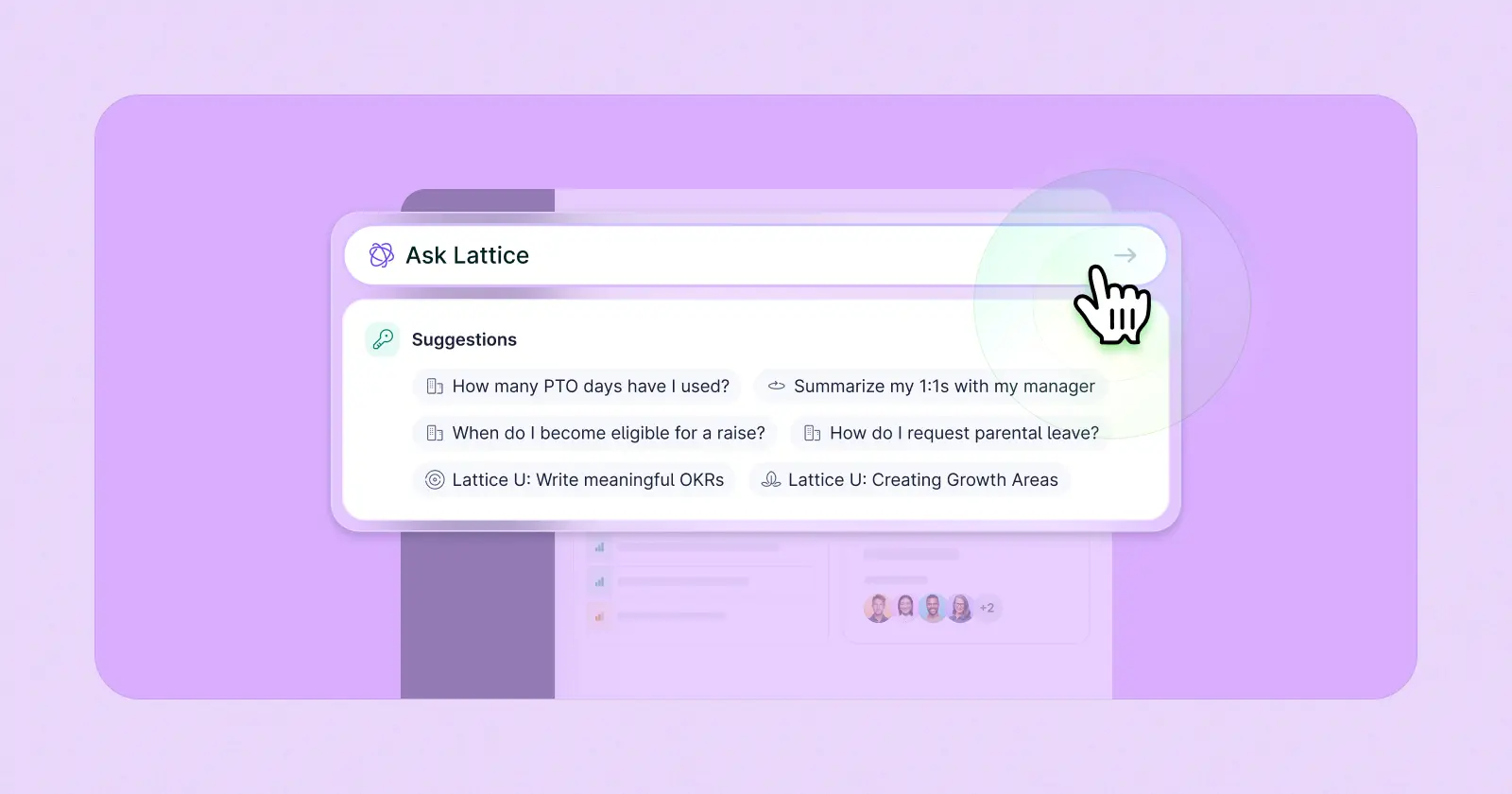
Your always-on HR partner
See how Lattice AI can support employees and HR with personalized coaching, meeting insights, performance reviews, and more.
Let us show you the ropes.
In this webinar, you will learn:
- How AI fits into everyday manager workflows (and where to start)
- Real examples of using AI for reviews, feedback, and 1:1s
- Simple ways to help managers adopt AI and improve performance, fast
How Lattice Helps You Drive AI-Powered Performance
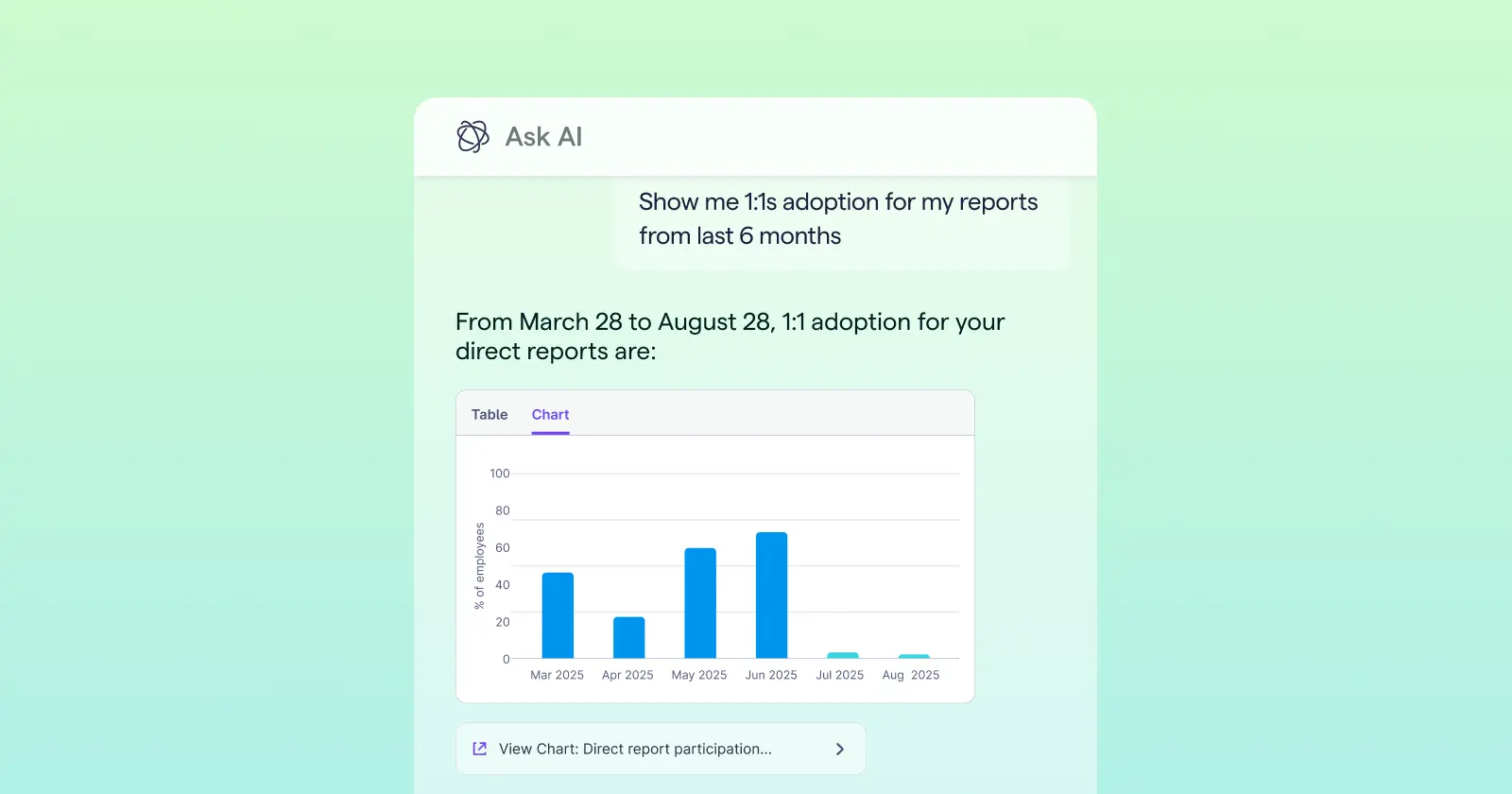
AI only creates value when people actually use it. Lattice makes that easy. Here's what that looks like in practice:
- Lattice AI uses data-driven insights to support strategic and informed decision-making.
- It automates routine HR tasks, answers repeat questions and delivers personalized guidance, so employees and managers can perform better.
- Lattice’s AI Agent delivers instant, reliable, and context-aware responses, coaching insights, and support for employees within the flow of work.
- Lattice’s GDPR and SOC 2-compliant Trust Center ensures data privacy with strong encryption and regular security reviews.
- Lattice offers a human-first approach to AI that enhances clarity, consistency, and fairness, and helps people work better.
Ready to transform your HR strategy with AI? Take an interactive tour of Lattice AI or request a demo to see how Lattice can help your organization drive meaningful AI adoption.