


Today’s employees want more than just a paycheck; they’re driven by purpose and want to work for a socially responsible organization that aligns with their personal values and goals.
One way businesses can help employees pursue their passions and find purpose is through volunteer time off (VTO). It allows employees to volunteer their time with the charities and organizations they believe in, without making them choose between collecting a paycheck and helping their favorite cause.
While a strong VTO policy allows employees to feel like they’re making a difference, it can also help your business boost retention, improve employee wellbeing, build connections, and meet corporate social responsibility (CSR) goals.
Key Takeaways
- Volunteer time off lets employees give back to their local community without losing a full day’s pay.
- Volunteering can benefit employees and employers by improving workers’ mental health, building valuable skills, and helping organizations attract and retain top talent.
- A successful VTO program must cover three key areas: employee eligibility, the amount of time offered, and how to submit a request.
What is volunteer time off (VTO)?
VTO is paid time for employees to volunteer individually or together during the workday. It’s distinct from standard paid time off (PTO) because the time is specifically designed to be used while volunteering for an approved nonprofit or community organization.
Many volunteer opportunities take place during the workday, so it’s often hard for employees to balance giving back and collecting a paycheck. VTO gives your employees the flexibility to volunteer during the workday and still get paid. This lets workers give back to their communities without having to use PTO or give up a day’s wages.
How much VTO employees get each year, who’s eligible for it, and which activities qualify are up to each organization to define. On average, organizations offer employees 20 volunteer hours (about two and a half days) per year, according to research from Double the Donation.
But VTO offerings can vary considerably by company size, industry, location, and resources. For example, if you have a primarily remote or hybrid workplace, you might let employees take a half day to volunteer in the morning or afternoon. When choosing policy details, consider what works best with your organization’s resources, advised Laura Handrick, HR tech expert and advisor.
“A smaller firm might let employees take one day of VTO a year to volunteer at a food bank, spend a day cleaning up a beach or highway, or teach a class at a domestic violence shelter,” Handrick said. “Larger firms might choose to offer larger blocks of VTO. For example, a construction firm might give employees up to five days of VTO a year to assist with local Habitat for Humanity builds.”

Why VTO Matters Now
“Employees are no longer satisfied with a paycheck and a plaque. They want to see that their employer cares about the community they live in,” explained Kendra Prospero, founder and CEO of Turning the Corner HR. As a result, she added, VTO has shifted from a “nice-to-have” perk to a signal of company values.
The Deloitte 2025 Gen Z and Millennial Survey found that 89% of Gen Zs and 92% of millennials consider a sense of purpose important to their job satisfaction and wellbeing. This sense of purpose can also influence retention: 44% of Gen Zs and 45% of millennials left a role because they felt it lacked purpose.
Together, these findings show that for employees, paid volunteer time off is more than just a benefit. Plus, by helping employees contribute to causes they care about, leaders can strengthen engagement, productivity, and retention at their organizations.
Benefits of VTO for Employees
VTO can benefit employees in several ways, including supporting their mental health, building new skills, creating a sense of purpose, and fostering relationships with coworkers.
Mental Health and Wellbeing Support
VTO allows employees to contribute to causes they care about and make a meaningful social impact, which can strengthen their sense of purpose.
According to Christina Muller, workplace mental health expert, advisor, and president of the NYC Leadership Council for Grateful Giving, this can work wonders for mental health and even reduce turnover. Muller explained she’s seen firsthand how volunteering can produce psychologically protective qualities against burnout — increasing purpose, connection, gratitude, and a sense of impact.
VTO isn’t a replacement for mental health support, but it can support employee wellbeing by giving them paid time off to do something meaningful outside their typical responsibilities.
Skills Development
Volunteer activities offer a valuable opportunity to learn new skills outside of work. Employees can get hands-on experience in a new field, or gain experience that could help them in their role.
Most skills can’t be perfected in a few hours of volunteering, but your VTO policy can connect employees with organizations they may want to continue helping outside of company-sponsored VTO hours. If employees build strong relationships with these organizations and become regular volunteers, they can develop new skills over time.
For example, a marketer could create a social media strategy and manage an online community by volunteering to run a dog shelter’s social media accounts. Or, an employee could hone their communication and leadership skills by overseeing a soup kitchen’s volunteer training program.
Stronger Workplace Relationships
VTO also gives people the opportunity to connect with coworkers outside of work. “For employees, it’s team building with actual meaning. You get stronger bonds volunteering side-by-side than you do in any conference room,” explained Prospero.
For remote workers, volunteer time also offers the chance to create a sense of connection. “Programs like VTO serve another important purpose by creating opportunities for employees to build interpersonal relationships and strengthen their connection to both their communities and their organizations,” said Stephanie Bilderback, PhD, assistant professor of management at Austin Peay State University, whose work focuses on organizational behavior, employee experience, and workplace culture.
Bilderback added that while technology has made collaboration more accessible than ever, it cannot fully replace the sense of purpose and connection that often develops through shared experiences. That kind of feel-good emotional boost can help employees lead fulfilling lives and come to work energized, engaged, and inspired.

Benefits of VTO for Employers
VTO doesn’t just benefit employees. When companies make it easy for people to give back, the effects show up in retention, engagement, company culture, and reputation.
Improved Talent Retention
Employees who join VTO programs, charitable giving, and other corporate purpose programs tend to stay with organizations longer. According to Double the Donation, employees involved in corporate giving programs stay with their companies 75% longer, while those who participate in VTO programs are 52% less likely to leave their organization.
Enhanced Employer Brand
VTO gives companies a way to demonstrate their commitment to their communities. Bilderback explained that VTO helps “strengthen employee engagement, reinforce organizational culture, support community partnerships, and enhance their employer brand.” She added that “the greatest value comes when volunteering is viewed as an extension of organizational culture rather than simply another employee benefit.”
Engagement and Productivity
Volunteering can help improve purpose, gratitude, and connection, which all contribute to engagement and productivity. Research from Double the Donation found that offering VTO boosts employee productivity by 13% and employee engagement by 7.5%, making it a high-impact investment.
Community Impact
VTO lets employees and organizations support causes they care about, like stopping domestic violence, climate change, or animal cruelty. And when volunteer efforts are local, VTO can have significant community impact. This can help improve your business’s reputation, reinforce your mission and values, and set you apart as an organization that cares about the local community and its inhabitants.
How to Write (or Update) a VTO Policy
Here’s what to consider when crafting your company’s VTO policy.
Amount of Time
As with all leave policies, you’ll need to determine how employees will be allocated their time off. Will they be given a set number of days or volunteer hours per calendar year? Or will their hours accrue through the year?
You’ll also need to decide whether unused VTO expires at the end of the year, if employees can split their hours across different organizations, and whether full days, half days, or hourly increments are allowed.
Employee Eligibility
Clearly outline all eligibility requirements. Will you offer VTO for part-time employees, or only full-time employees? You’ll also need to decide if there’s a tenure requirement, and if contractors are excluded.
Approved Activities
Your policy needs to include details of approved activities, including whether employees can choose to volunteer with any qualified nonprofit, or if you’re going to provide a list of pre-approved organizations. You’ll also need to clarify whether any activities are excluded.
Policy Administration
Finally, decide how VTO is requested, approved, and tracked. Many organizations choose to use a time-tracking tool, intranet, or a simple form. Whichever process you choose, Prospero recommended focusing on simplicity, keeping the policy light and the approval process minimal.
“I’ve seen companies draft 20-page policies requiring three layers of pre-approval, and then wonder why participation is in the single digits. VTO is a great benefit if it's not overthought. The goal is simple: Give employees time to give back in their community. The more red tape you wrap around it, the less likely anyone is to use it,” she explained.
Your policy should give managers and HR enough information to administer VTO, without creating an unnecessary burden for employees.
Looking for some help incorporating all this into a VTO policy customized for your business? Here’s a volunteering time off policy template you can use:
Sample VTO Policy
To encourage employees to give back to their local communities, [Company Name] allows all eligible employees to volunteer up to [XX hours] [YY days] per calendar year with a 501(c)(3) nonprofit organization. This time may be split across more than one organization if desired. Volunteering time off is paid at your regular pay rate and is not subject to overtime.
If unused, VTO days are forfeited at the end of the calendar year and do not accrue year to year. Unless the program is discontinued, employees will continue to receive the same [YY days] for volunteering per year. We reserve the right to amend or terminate this program at any time without prior notice.
Eligibility:
All full-time employees of [Company Name] are eligible to participate in this program. At this time, individuals are not eligible to participate in this program if they are:
- Part-time employees (individuals working fewer than [ZZ hours] a week) or contractors
- Failing to meet performance expectations or on a performance improvement plan (PIP)
- No longer employed by the company on the day of volunteering
Use and scheduling of volunteer time off:
Employees must complete and submit the VTO request form [in our HRIS, company intranet, etc.] for manager/HR team approval at least [XX business days] before the requested time off. All VTO requests are subject to your supervisor’s approval, as well as team or department staffing needs.
Policy exclusions:
While employees are welcome to choose a charitable organization to volunteer with, [Company Name] reserves the right to deny the request if we believe the chosen organization discriminates based on race, color, sex (including sexual orientation, gender identity, and pregnancy), religion, national origin, age, disability, political affiliation, genetic information, etc., or if it seems an employee is abusing the program.
*This sample policy is strictly meant to provide inspiration. Organizations should consult legal counsel before creating their own VTO policy.
Guidance for Employees: How to Use Your VTO
Ready to make the most of your volunteer time off? Follow these tips to get started.
Check your VTO eligibility and allowance.
If you’re looking for information about your organization’s VTO policy, begin by checking your handbook, time-tracking tool, or other benefits package. If it’s unclear, ask your manager or HR for advice. They should be able to clarify who’s eligible, how much time is allocated, and what activities qualify.
Choose a cause that matters to you.
When researching nonprofits, look for an organization whose mission aligns with your skills, interests, or values. If your company offers sponsored volunteering opportunities or keeps a list of approved nonprofits, that’s a good place to start.
VTO doesn’t have to be connected to your workplace skills. It can also be used to try something different, meet new people, or give time to a cause you’re passionate about. You might decide to volunteer regularly for one organization, or choose different causes throughout the year.
Request VTO in advance.
Once you’ve confirmed your eligibility and found a volunteering opportunity, submit your VTO request according to your organization’s policy. Giving your manager as much notice as possible makes it easier for them to coordinate requests around your team’s workload and deadlines.
Share your experience.
After volunteering, consider sharing your experience with your team. This could be during a team meeting, in informal conversations, or through a recognition channel. Your story can help build momentum and inspire others to join in.
What if your company doesn’t offer VTO?
If your employer doesn’t yet offer volunteer time off, you can advocate for it. Start by explaining what you’re asking for and why it matters. A small pilot program like one VTO day per year may be better received than expecting a full program immediately.
Try gathering examples of VTO policies from other organizations, and share employee feedback about the causes or activities they’d be interested in supporting.
How to Drive VTO Program Adoption
Offering VTO is only the first step. To build real participation, make the program easy to understand, simple to use, and visible throughout the year.
Communicate your plan clearly.
Explain how much VTO employees receive, who is eligible, what activities qualify, and how to request time off. Reinforce the policy through onboarding, newsletters, all-hands meetings, and internal communication channels.
Bilderback suggested that successful VTO programs include three characteristics:
- Visible leadership support
- Flexibility that allows employees to volunteer for causes that align with their own interests and values
- Consistent communication that reinforces why community engagement matters to the organization’s mission
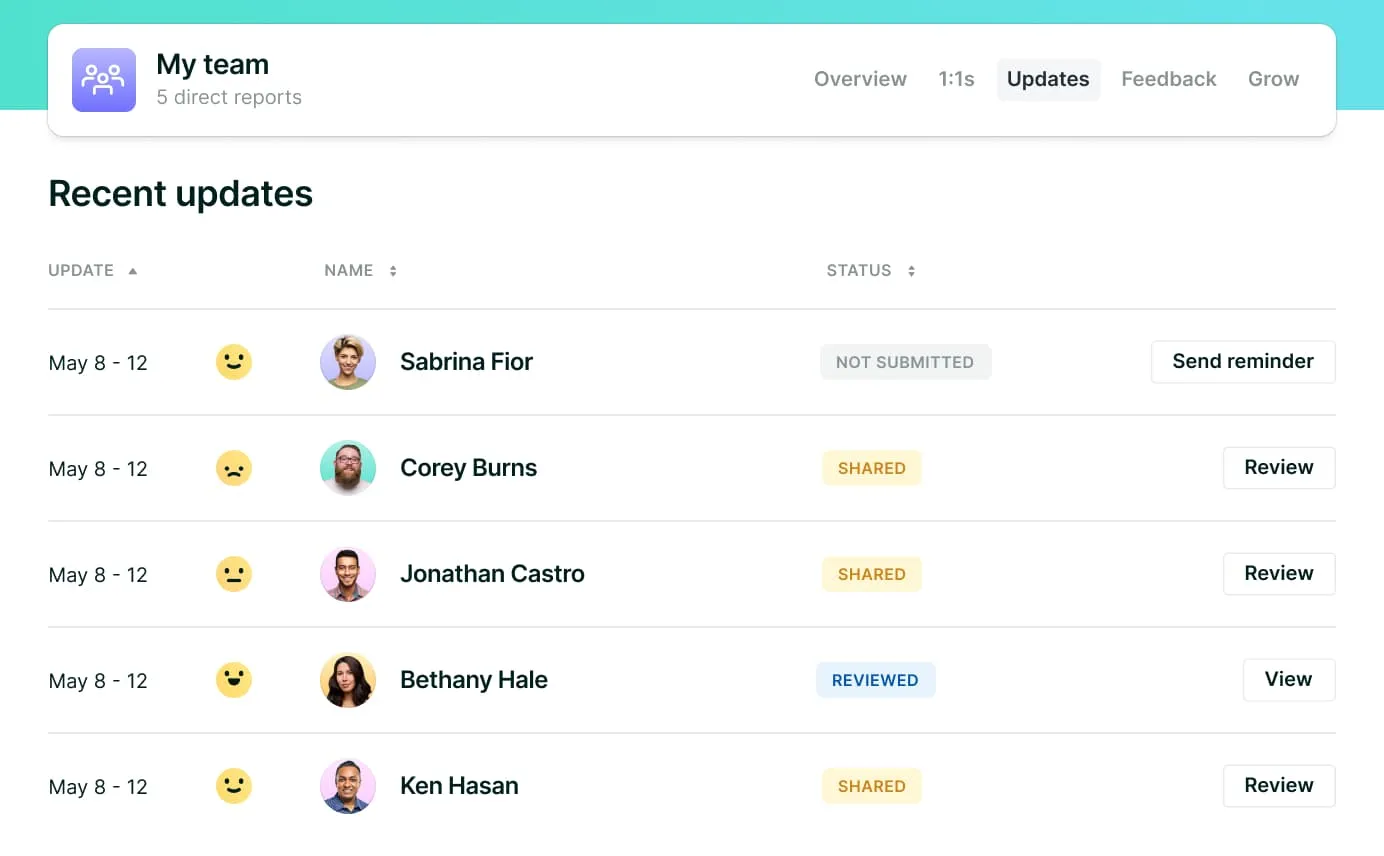
Lattice Updates can help HR teams keep VTO visible by sharing program information, volunteer opportunities, and employee stories.
Organize company-sponsored volunteering opportunities.
Company-sponsored events make participation easier and give teams a chance to volunteer together. Prospero suggested making it a team event, not an HR mandate. “When you ask the team to help pick the cause and plan the activity, ownership goes up immediately,” she added.
Recognize and celebrate participation.
Recognition reinforces that community service is valued. Share volunteer stories, celebrate milestones, or recognize individuals and teams through tools like Lattice Praise.
“Encouraging managers to actively support participation, recognizing employees’ volunteer efforts, and removing logistical barriers can all help transform VTO from an underused benefit into a visible part of the employee experience,” explained Bilderback.
Use pulse surveys to refine the program over time.
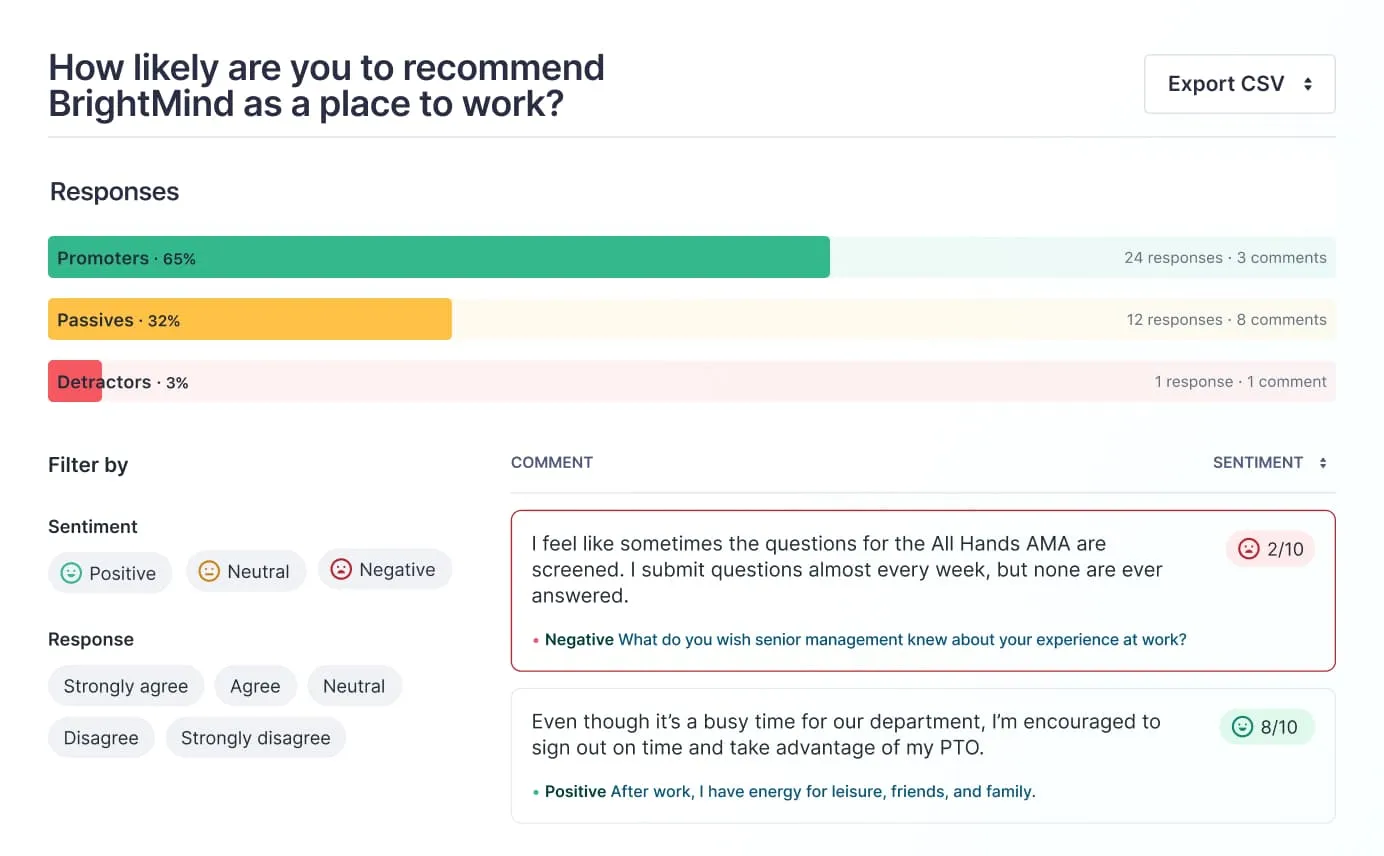
If participation is low, ask employees what’s getting in the way. Pulse surveys can reveal whether employees understand the policy, have enough flexibility to use it, or want more volunteering opportunities.
Lattice Engagement helps HR teams gather this feedback and identify areas for improvement. “If your engagement surveys show employees want VTO, implement it, then check back quarterly to see what’s working. The organizations that close that feedback loop and act on their data see participation rates that are often double those that don’t,” explained Prospero.
Incorporate VTO into wider CSR strategies.
Volunteer time off works best as part of a broader corporate social responsibility approach covering things like company-wide service days, donation matching, nonprofit partnerships, or skills-based volunteering.
“On its own, VTO isn’t that big a deal — it’s just one more paid day off,” said Handrick. “But when added to an existing list of employee-friendly, people-supportive perks, it demonstrates that the company cares about its employees and the community. That never hurts.”
Maximize VTO’s Impact with Lattice
VTO is a practical, high-impact way to improve the employee experience and create meaningful community connections. When organizations make VTO easy to understand, simple to use, and visible throughout the year, it becomes a natural part of how employees spend their time at work.
As part of a broader CSR strategy, VTO also helps employees feel proud of where they work, while giving employers a powerful way to boost retention, deepen engagement, and build goodwill in the communities they serve.
If you’re ready to build or update your VTO policy, download our Employee Volunteering Policy Template to give your team a clear framework for getting involved.
Or request a demo to learn how Lattice can help HR teams communicate, recognize, and measure VTO participation.