
Giving meaningful recognition is a skill few are taught.
We say, “great job” — but we actually mean, “thank you for that very specific thing you did.” It could be catching a mistake in a presentation, taking initiative to stay late and finish a project, or even just fixing a paper jam.
The gap between thinking and meaning is exactly where those good intentions become forgettable.
Employee recognition is one of the most effective — and potentially free — mechanisms organizations have for directly increasing employee engagement, performance, and retention.
Here’s why it matters, and how to create a recognition-rich culture in your organization.
Why Employee Recognition Matters
Recognition has never just been a workplace thing. From an evolutionary perspective, it’s the survival instinct we all share — our brain’s internal sense of reward that helps us feel valued, secure, and connected.
Within societies, it kept us alive. And at work, it can be a powerful driver for performance, motivation, and our level of discretionary effort.
A 2025 study on the impact of recognition found that it significantly boosts employee engagement. When employees feel that their efforts are valued, it fosters a sense of self-worth and validation, which in turn fuels motivation and commitment.
And that engagement is contagious, too. Because according to one 2023 study on the third-party impact of recognition, when employees see a peer being recognized for their work, it increases their sense of organizational justice and motivation — supporting workplace wellbeing and engagement.
{{rich-highlight-1}}
These benefits spill over into a bottom line impact. A 2024 report from Gallup and Workhuman found that well-recognized employees are 45% less likely to leave their jobs after a two-year period — saving organizations on costs relating to recruiting, lost productivity, and lowered performance.
In a nutshell: Organizations with highly engaged employees are likely to see higher levels of performance, productivity, and employee retention.
What Good Recognition Looks Like
When giving praise, many of us are focused on the act of delivering the good news, rather than focusing on the delivery itself. And with recognition efforts, the details matter — because without getting those specifics right, the feedback won’t boost morale effectively.
To deliver maximum positive impact, effective recognition hinges on four key building blocks:
- Specific: Tied to concrete actions, behaviors, or outcomes — rather than just “good work.”
- Timely: Delivered as close as possible to the moment, not weeks or months later.
- Inclusive: Acknowledges individual preferences and applies to everyone, not just top-performers or those in more visible roles.
- Public and visible: Shared so that others can celebrate it and learn from it.
But beyond the mechanics, a good recognition culture is also one that’s fluid.
“Recognition only works if the culture underneath it is healthy,” said Amy Spurling, founder and CEO of Compt. “It can’t be performative. And you can’t ‘set it and forget it.' It has to evolve with the team.”
“We used to have people share personal and professional goals and updates, but as the team grew, that was way too much,” she added. “We shifted to sharing wins in Slack, which gave people more flexibility and encouraged sharing little wins along the way.”
Types of Employee Recognition
Praise is often linked to a leader-subordinate kind of relationship. But in reality, it can flow in many different directions — and the most effective recognition programs balance all of them to maximize their impact.
There are three key levels of employee recognition that you need to pay attention to:
- Peer-to-peer: Peer recognition refers to both spontaneous praise and prompted shout-outs from our colleagues. It can be just as impactful — if not more so — than manager-led or company-wide efforts, because it supports connection, belonging, and team-building.
- Manager-led: Manager-led recognition tends to focus on praise delivered in one-on-ones and other continuous feedback processes. According to 2022 data from Harvard Business Review, employees who reported that their manager was great at recognizing their efforts were over 40% more engaged than those with managers who weren’t.
- Company-wide: Organization-level efforts might include recognition awards, employee of the month programs, milestone celebrations, or spotlights on specific employee contributions.
Beyond who gives recognition, there’s also the question of how it’s given. Some organizations choose to reward employees with monetary prizes, like performance bonuses or cash awards, while others focus on non-monetary options, like paid time off (PTO).
From a psychological standpoint, both are valid ways to recognize your employees’ achievements — as long as they’re tied to something specific and delivered with sincerity. The key is using both strategically while making sure that neither overshadows your focus on giving genuine, specific recognition to those that deserve it.
3 Common Barriers to Effective Recognition
In theory, recognition sounds simple enough: dole out a few compliments, celebrate a few wins, and let the warm-and-fuzzies do their magic.
But in practice, organizations can often forget the principles that make those efforts stick — or fail to build the foundations that make it sustainable. Getting past this hurdle hinges on building the right culture, processes, and design.
1. Leaders underestimate its impact.
One of the biggest blockers to making recognition work is cultural. When leaders promote recognition practices across the organization, but don’t demonstrate the behavior themselves, they’re not creating the cultural follow-through for employees to care.
“Leadership involvement matters,” Spurling noted. “People model what their leaders do. If I or [other leaders at Compt] never posted in [our] ‘wins of the week’ Slack channel, no one would. Recognition feels genuine when leadership participates consistently and vulnerably, not just when they tell other people to do it.”
When senior leaders get involved in recognition practices, it communicates to your employees that it matters — and it’s core to your company values.
2. Organizations lack the time or structure to make recognition work.
If recognition practices aren’t prioritized by leadership, they won’t be built into the infrastructure, either. And without guardrails for how or when recognition is given, it gets pushed to the margins — something that’s forever on everyone’s list, but that people rarely make the time for.
The result is that recognition either doesn't happen at all, it’s performative, or it gets bundled as a proverbial lump sum payment in annual reviews, completely disconnected from the event or behavior that earned it. And that, said Siobhan Brunwin, founder of consultancy Refraction HR, is what strips them of their engagement-boosting impact.
"Annual appraisals or end-of-year thank yous are nice, but they [can] feel like a tickbox,” she said. ”Waiting six months after they delivered some great work feels not only a lost opportunity but also quite bland. Without regular, specific appreciation, people can quickly start to feel unvalued and productivity could drop.”
3. Recognition feels impersonal or generic.
Recognition is all in the delivery. You can put praise on the schedule, but if employees don’t feel that it’s sincere, they’re not going to buy in.
But making it work in a team of 50 is very different to doing so in a team of 500. So, is building a personalized recognition culture at scale even realistic for companies?
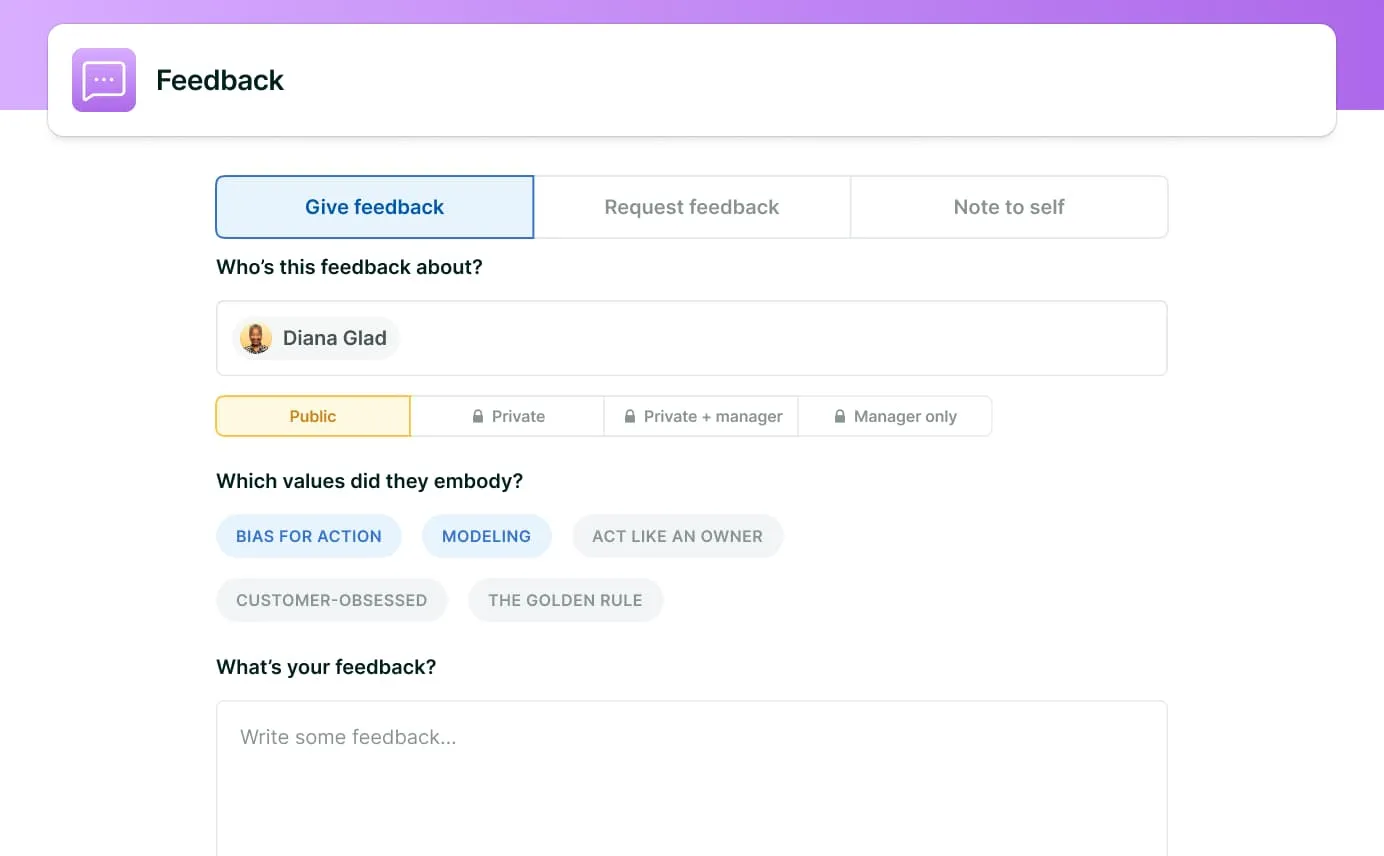
“It is realistic, but only if you stop trying to centralize it,” Spurling said. “Recognition has to be something everyone can participate in, not something only managers are responsible for or something the company dictates. Some people love public praise, others cringe. Some want a shout-out in Slack, others want a private message. The only way to manage that variability is to give people options and let recognition happen organically.
“The biggest mistake companies make is over-engineering recognition,” she added. “That’s when it becomes admin-heavy and performative. Keep it human. Keep it flexible. And give people the tools — not the scripts.”
How to Create a Culture of Recognition
Building an effective employee recognition program is less about the tactics, and more about how you integrate it strategically so that it feels accessible and natural for everyone.
Here are four strategies that will extend the impact of recognition in your organization long-term.
1. Hard-code recognition into regular HR processes.
Recognition practices work best when they’re built into the very fabric of processes teams do day-in, and day-out. This is because all feedback models — not just praise and recognition — work best when they’re frequent and specific, rather than just recognizing people for a job well done on an annual basis.
When recognition is codified into HR processes, it also stops being dependent on individual input — meaning everyone participates, not just an enthusiastic few. And because those processes are foundational to how everyone works, it means recognition practices are much more likely to stick than when integrated as a standalone effort.
How to do it: Add recognition prompts and questions to surveys and performance management.
Embedding recognition into the systems you use all the time doesn’t require a huge process overhaul — more of a sprinkling of intentional additions. Try:
- Integrating peer-to-peer recognition into performance reviews by encouraging employees to evaluate and praise their colleagues.
- Including recognition questions in regular employee engagement surveys, such as:
- In the past month, how often have you received recognition for your work?
- Recognition at [organization] feels inclusive across teams/roles.
- My manager regularly recognizes my achievements.
- Encouraging managers to track team data signals from surveys and performance to help them spot when team members are feeling underappreciated.
- Adding a recognition preferences question to new hire onboarding forms, and auto-share this with managers.
{{rich-highlight-3}}
2. Integrate recognition into the flow of daily work.
Recognition works when it’s delivered as soon as possible. That helps employees connect what they did with feeling appreciated — meaning they’re likely to repeat the behavior.
But sometimes, there just isn’t a good moment to pull someone aside. And that’s when making it part of a low-lift, daily practice can turn it into a habit.
“When recognition is treated like a separate program, that’s when you get the weird meetings where everyone has to say something nice about a coworker. No one enjoys that,” Spurling noted.
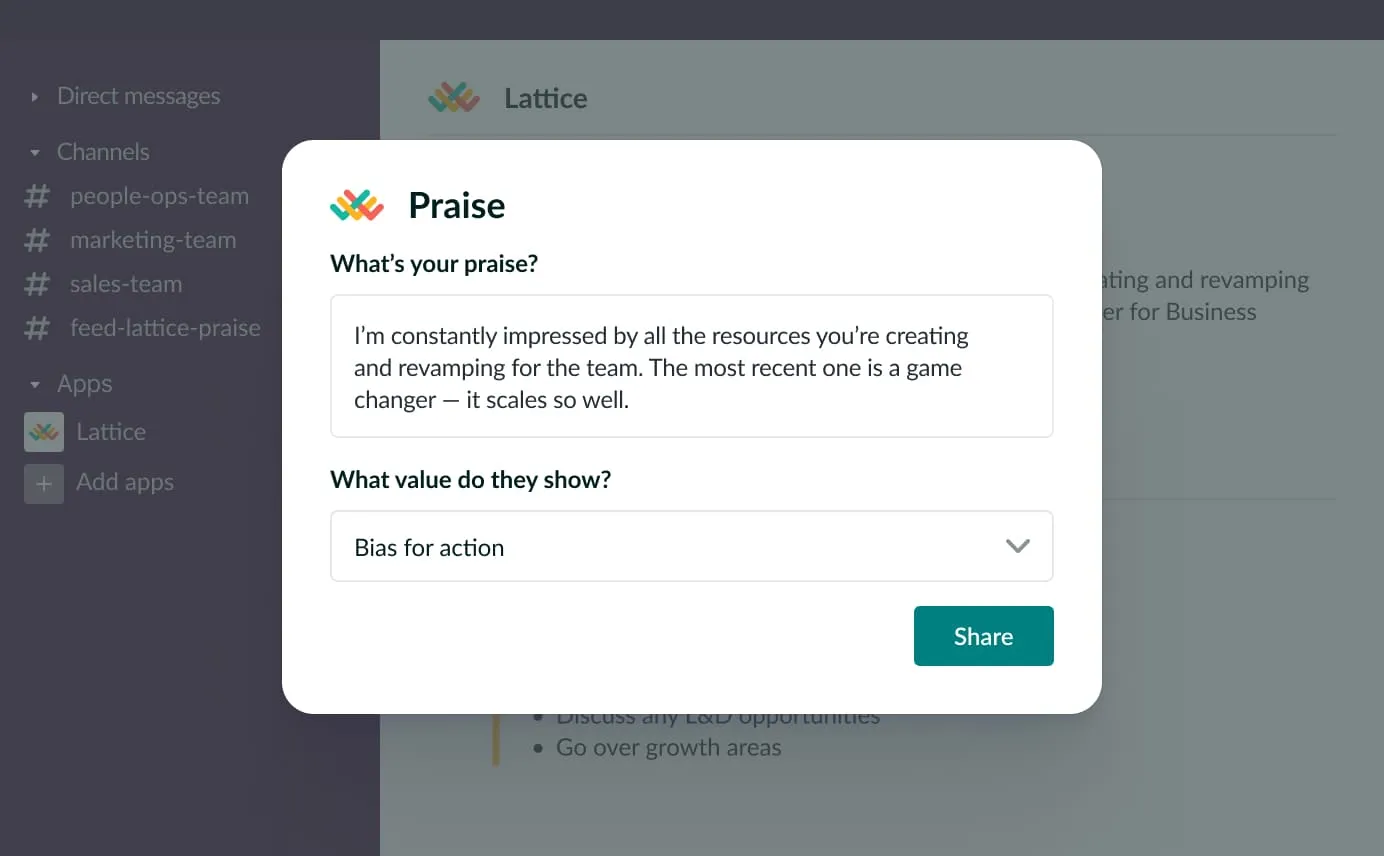
“What’s worked for us is integrating recognition into places where people already are, like Slack. Our ‘wins of the week’ thread became a natural space for people to share progress, gratitude, or small personal moments. It fits into the workflow instead of being a chore.”
How to do it: Meet teams in their existing workflows.
When celebrating your employees’ achievements day to day, the key is making recognition a low-friction activity that works with how and where your teams communicate.
The fit matters more than the format: Integrating an extra platform or login only works if your teams will remember to put in the effort — so think about the tools your team uses on a daily basis.
Creating a public recognition channel where employees can quickly share kudos is an easy way to bring this to life. A regular meeting segment can work for teams with high levels of psychological safety — while anonymized praise walls can help shyer employees come forward to celebrate their peers.
3. Equip and empower managers to lead on recognition.
Managers are the glue that holds teams together — and their role in building a recognition culture is foundational, because they interact with team members on a day-to-day basis.
But with recent reports showing that managers are juggling larger numbers of direct reports, many could be struggling to make recognition a consistent practice.
“People managers have a bigger workload than ever so adding ‘must show recognition to my team’ to the list feels overwhelming,” Brunwin said. “We know that 82% of people managers have never had [any] sort of formal training around people management. Managers are struggling to handle the tougher, urgent conversations, so recognition and appreciation falls down the list.
“From an employee perspective, managers being engaged in giving regular, specific feedback — whether that’s developmental or positive — is central to feeling valued and to [employee] development.”
How to do it: Offer simple frameworks and resources that enable autonomy in team rituals.
Addressing managers’ constraints is as much about training as it is providing managers with supportive materials so that feedback becomes easy to manage at scale. It’s less about setting a calendar reminder (although it doesn’t hurt) — and more about giving managers the autonomy to set the rituals that make sense for their teams.
Giving managers flexible guidelines around when and how to show appreciation will help establish the fundamentals while offering autonomy within a structured approach. Meanwhile, easy-to-remember templates, employee recognition ideas, and frameworks — Brunwin suggested the Situation-Behavior-Impact model — can equip managers with the language and autonomy to build and adapt based on their team’s style.
{{rich-highlight-2}}
4. Recognize the smaller moments just as much as the big ones.
With recognition, the big glitzy moments or achievements by high-performing employees often shout the loudest. But it’s the smaller ones that often slip under the radar that could make your employees feel more seen for who they are at work as humans.
And from an emotional wellness perspective, those moments count when it comes to how valued and connected employees feel at work.
“We have a tendency to heap praise on the big things — the person who leads on a pitch, or delivered a big event — but we need to recognise the hard and mundane stuff too,” Brunwin said. “One of your team had that difficult conversation with a client? Recognize that. Someone in the office finally got that annoying issue with the coffee machine fixed? Recognize that. Because it’s recognizing all those things that really make a difference to how people will continue to show up at work.”
At Compt, Spurling encourages her team to use these moments for micro-praise and gives her team a budget to do it — and the reason doesn’t matter.
“If organizations only celebrate the highlight reel, they miss the majority of what makes teams succeed,” she said. “[At Compt], every person gets $50 per quarter to give to a teammate. It's for anything — helping with a project, hitting a goal, supporting someone through a tough week, celebrating something personal. It's simple, flexible, and completely employee-driven."
How to do it: Create low-cost, high-frequency moments of recognition.
Celebrating the small moments can snowball into a big impact. But finding and recognizing them may require more effort and intentionality as teams learn to spot what’s been going unseen. Try:
- Offering micro-budgets or gift cards per employee or team with autonomy over spend to fuel team rituals or recognize peers
- Thanking employees with personalized gifts or handwritten notes
- Offering extra PTO as a performance perk or employee reward
- Automating calendar reminders and Slack shout-outs for employee birthdays, work anniversaries, or years of service
- Celebrating project milestones by acknowledging the specific contributions of each team member
How Lattice Helps Build Recognition Processes That Scale
Recognition without structure is just sporadic compliments. Without design, it’s not scalable. And without leadership modeling, it becomes hollow tactics, not a strategy for long-term employee engagement.
But the biggest make-or-break factor in the success of any recognition program is how it feeds into and supports your culture. Because if recognition doesn’t feel like it meaningfully connects into your company culture or values, no amount of budget, structure, or the very best of intentions will make it land.
Lattice helps organizations build recognition right into their culture, with a range of modules that embed seamlessly into how they already work:
- Lattice Praise makes peer- and manager-led recognition visible to the whole team, while Slack and Microsoft Teams integrations keep recognition flowing where the work already happens.
- Performance tools link recognition to reviews and development opportunities.
- Engagement surveys help leaders and managers measure recognition’s impact on morale, performance, and retention
- AI-powered nudges remind busy managers to specific, timely praise at regular intervals
Find out more by booking a demo.
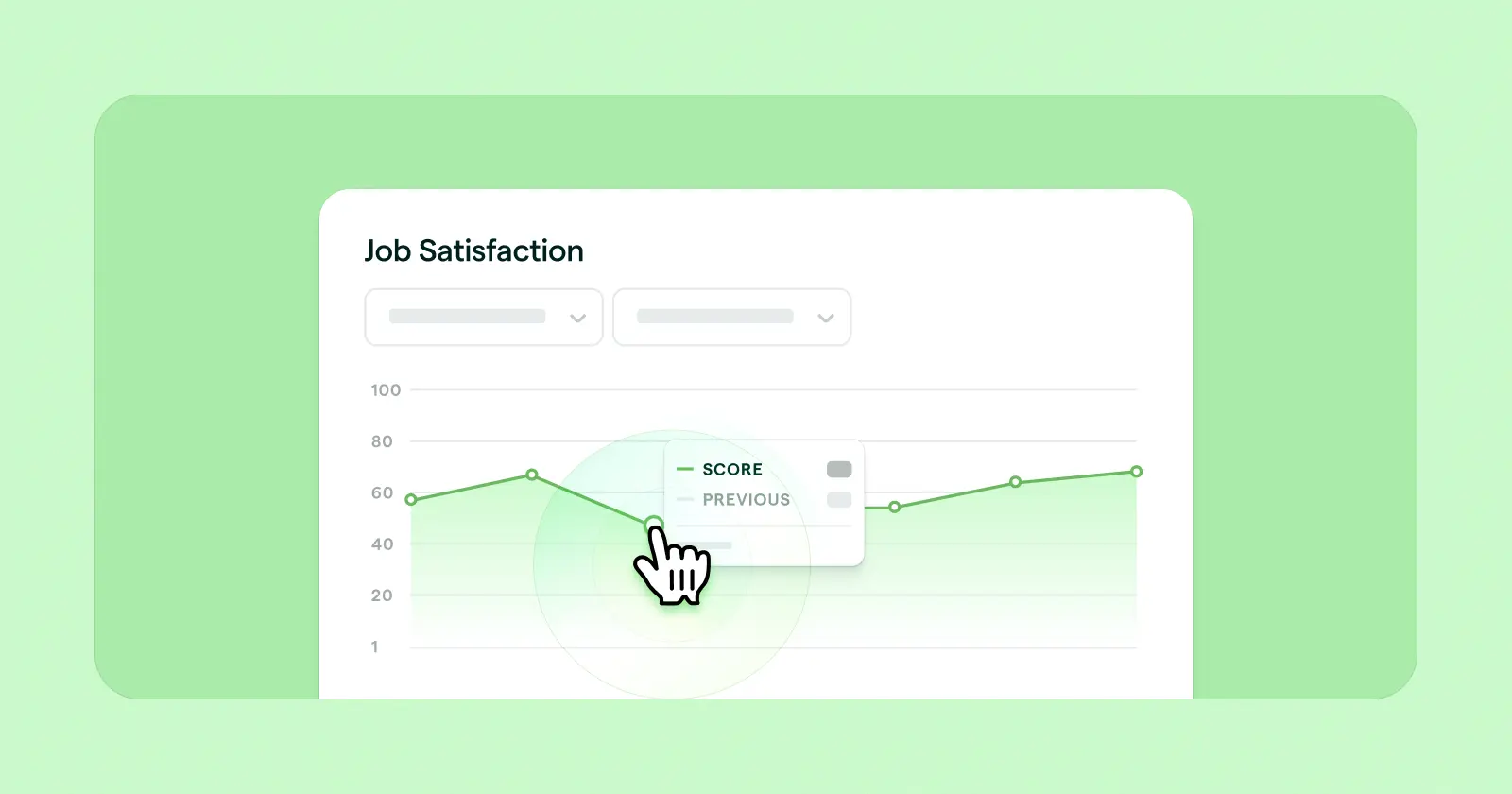
Engagement impacts the bottom line.
See how Lattice Engagement puts employee retention data at your fingertips with a self-guided tour.
Better feedback, higher performance.
This simple and interactive workbook gives you the tools to help employees, managers, and leaders become feedback champions.
Make it official.
Need help formalizing the what, how, and why of your recognition efforts? Snag our free Employee Recognition Program Policy template.