
The higher you go in any organization, the less you hear about how work’s actually working. From the penthouse, you have a great view of strategy and priorities guiding your company goals. Employees, several floors down, are the ones making that vision a reality.
But somewhere along the way, the day-to-day realities — good and bad — of what that takes start to get a little hazy. And that’s where trust gaps form. According to 2023 data from Gallup, only 21% of employees strongly agree that they trust their organization’s leadership.
Skip-level meetings are one of the most effective ways to close that distance and build the trust needed to be a better leader. In this article, we’ll walk you through everything you need to know about skip-level meetings, including:
- 30+ skip-level meeting questions senior managers can ask
- Preparing for skip-level meetings with confidence
- Documenting and following up on the meeting
What is a skip-level meeting?
A skip-level meeting is where a senior leader meets with individual contributors one or more levels below them, without the employee’s direct manager present. They’re typically offered at quarterly or semi-annual intervals, depending on organizational size, business priorities, and personal capacity.
But because skip-level meetings sit outside the normal manager relationship, organizations need to be explicit about what they are — and what they aren’t. While they’re an important opportunity for feedback and leadership connection, they’re not designed to be an individual performance review, an investigation, or a chance to bypass the employee’s direct manager.
Both managers and employees need to be in the loop before the invite shows up in their inbox, with a clear indication of the purpose of the skip-level meeting, what will be discussed, and an understanding that it’s a safe space for sharing.
When done well, skip-level meetings are an effective way to support a culture of continuous feedback — keeping senior leaders connected with every level of their organization, highlighting key workforce challenges, and strengthening the trust and transparency that drive success.
{{rich-highlight-1}}
Skip-Level Meeting Questions for Senior Leaders
Reaping the benefits of skip-level meetings comes down to the specific questions you ask. That’s where you get the kind of feedback that helps you spot patterns, course-correct issues, and build trust across the organization.
The list of questions below are organized by category for you to adjust and build a complete skip-level meeting agenda. Focus on open-ended questions that encourage conversation beyond a basic ‘yes’ or ‘no’ — these will give you far more insight on how your employees feel about their relationships, role, development, and work environment.
Questions to Build Rapport and Set the Tone
While the term “ice-breakers” may make your toes curl, they’re vital for establishing common ground when you’re building a relationship with someone new. Try these questions to get a natural conversation flowing without things feeling robotic or scripted:
- What initially attracted you to this role or team? How do you feel things are going?
- What are you enjoying most about your work right now?
- What’s one skill or hobby that you’ve always wanted to learn? Why?
- What’s one non-work achievement from the last year that you’re particularly proud of?
- What kind of environment do you value to do your best work?
Questions About Team Dynamics and Culture
Team work makes the dream work — so they say. Asking questions about team dynamics and culture during a skip-level meeting helps you see if that dream is actually working. This is your opportunity to understand how the organization collaborates and communicates on a daily basis.
Try some of the sample questions below:
- How effectively does your team collaborate to get work done? Can you share some examples?
- How effectively do you feel your team communicates? Are there any challenges to how you communicate?
- How often do you give and receive feedback to your peers?
- Do you feel that everyone’s contributions are valued equally within your team? Why?
- Do you feel that people in your team feel safe speaking up with concerns, ideas, or different opinions without fear of judgment? If not, why not?
Questions About Manager Effectiveness
Understanding how individuals perceive their manager is a way to gain insight into what keeps your teams motivated. But to keep feedback focused, make sure questions center on the specific behaviors and leadership styles that lead to successful teams:
- How often do you receive specific feedback from your manager that helps you improve your work?
- How does your manager recognize contributions and accomplishments on the team — either publicly or privately?
- How clear are your priorities and expectations from your manager week to week?
- How well does your manager support your personal and professional growth?
- Do you feel that your manager values the opinions of everyone on the team and treats people fairly and consistently?
- Do you feel your manager advocates for your team when resources or decisions are being discussed?
Questions About Career Development and Goals
Career growth is strongly intertwined with our level of employee engagement at work — and how likely we are to stay at an organization. According to 2021 data from Lattice, 76% of employees said they’d be somewhat or very likely to leave a company if they didn’t feel satisfied with the opportunities available to grow and develop.
Ask the following questions to get a sense of how well-supported employees feel in their growth and career development:
- Where do you see yourself in the next one to two years? Do you feel you’re getting the right support to achieve that goal?
- What skills or experience would you like to gain in your current role?
- What part of your job would you like to do more of? What part of your job would you like to do less of?
- Are there any stretch projects or roles here that you’d like to work towards?
- What kind of role or skills development opportunities would make you excited to stay here in the next few years?
Questions About Organizational Health and Strategy
Understanding your employees’ individual experiences of your organization is helpful insight. But digging into their perception and understanding of how your company operates and its current goals can help expose gaps in communication and alignment:
- How clearly do you understand our top priorities and what we’re currently trying to achieve?
- How well do you feel your role and day-to-day responsibilities align with our priorities?
- How well do you think we communicate across the company — especially in terms of our updates, changes, and priorities?
- Are there any broader concerns or frustrations that you feel we’re not addressing as a company? Can you share examples?
- How would you describe our company culture? How well does that line up with what you expected when you joined?
- How well aligned on goals and priorities do you feel with other teams/departments across the organization?
Questions For Times of Change or Crisis
During times of uncertainty, asking the right questions can help expose what’s keeping your employees up at night — whether that’s the fear of a layoff, a new leader destabilizing team dynamics, ongoing change fatigue, or worries about their future job direction.
Ask:
- What do you understand about what’s changing and why? Is there anything that feels unclear in our communication?
- Are there any unanswered questions you wish leaders would answer directly?
- What extra resources would help you feel more supported during this time?
- How are you feeling about your current workload and stress levels?
How to Structure a Skip-Level Meeting Agenda
The most effective skip-level meetings balance structure with leaving flexibility for your employees to bring their own topics to the table — especially if they raise something important or unexpected.
“The best way to leave space for an employee in a skip-level meeting is to share an agenda ahead of time (complete with agenda items and desired time blocks for each) or to simply share goals ahead of time,” said Joey Price, CEO and founder of Jumpstart HR, and author of The Power of HR: How to Make an Organizational Impact as a People-Professional.
“You might say, ‘We just rolled out our new patient care recognition initiative and I’d love your thoughts about how it’s going and what can be improved. Can we meet for 15 minutes so I can hear your thoughts?’” Allow room for the employee to process thoughts in real time but the more prep you can give them, the better.
How you structure this agenda depends on how much time you have.
- In a 30-minute skip-level meeting: Make sure you keep the conversation grounded in exposing the highs and lows of your employee’s typical day-to-day life at your organization. This includes asking about how their work is going, their team environment, and how supported they feel.
- In a 60-minute skip-level meeting: Expand the conversation to your employee’s career development, their perception of the organization’s goals, and their broader experience of your company culture. Allow time for an open forum where employees can ask their own questions or talk about topics important to them in more depth.
See our sample skip-level meeting agenda template below to get a sense of how this looks.
Sample 30-Minute Skip-Level Meeting Template
- Break the ice (5 minutes): Build rapport with ice-breakers, and clarify the goals and purpose of the meeting.
- The reality of work (5 minutes): Check in on how work is feeling for the employee. What’s going well? Where are the friction points?
- Leadership topic (10 minutes): Ask for feedback on issues relating to the broader organization.
- Team environment and support (5 minutes): Check in on team dynamics and support needs.
- Close it out (5 minutes): End the meeting, noting any follow-ups you need to make.
{{rich-highlight-2}}
How to Prepare for Skip-Level Meetings
In skip-level meetings, a little advance work can be the difference between a corporate-feeling conversation and a discussion that actually makes your organization successful.
Preparation on both sides helps set everyone up for success.
Senior leaders: Review and contextualize.
- Review the employee’s role, tenure, recent projects, and any feedback or updates they’ve submitted.
- Reference past skip-level notes if there are any — noting any issues raised or notable discussion points from last time.
- Let their manager know that you’ll be inviting their direct report to a skip-level meeting
- Share the agenda and meeting purpose with the employee
Employees: Reflect and organize thoughts.
- Prepare talking points and feedback according to the shared agenda.
- Reflect on recent experiences within the team and at a broader level — what’s working? What’s not? Where do you need more support? Bring concrete examples.
- Write down a few questions you’d like to ask about the organization’s direction or priorities.
{{rich-highlight-3}}
After the Meeting: Best Practices for Skip-Level Meeting Documentation
Once the meeting has finished, follow-through is what matters most — and Price said this is where leaders are most likely to slip up.
“When an employee is left to wonder whatever happened as a result of their meeting with you, they rarely fill their minds with positive thoughts,” he noted. “Make sure you establish follow-up mechanisms to share how the meeting has informed your thinking and the direction of the organization. It’s also a form of respect to let an employee know their time wasn’t wasted.”

A strong documentation process can really help here — helping leaders gather meeting receipts that build trust and highlight patterns over time. Effective documentation tends to follow a few key principles:
- Aggregate key themes and topics raised and any follow-up actions.
- Protect employee confidentiality by knowing what you should and shouldn’t report — especially when dealing with sensitive topics that require escalation.
- Put in the right security and privacy controls, making sure access is on a need-to-know basis.
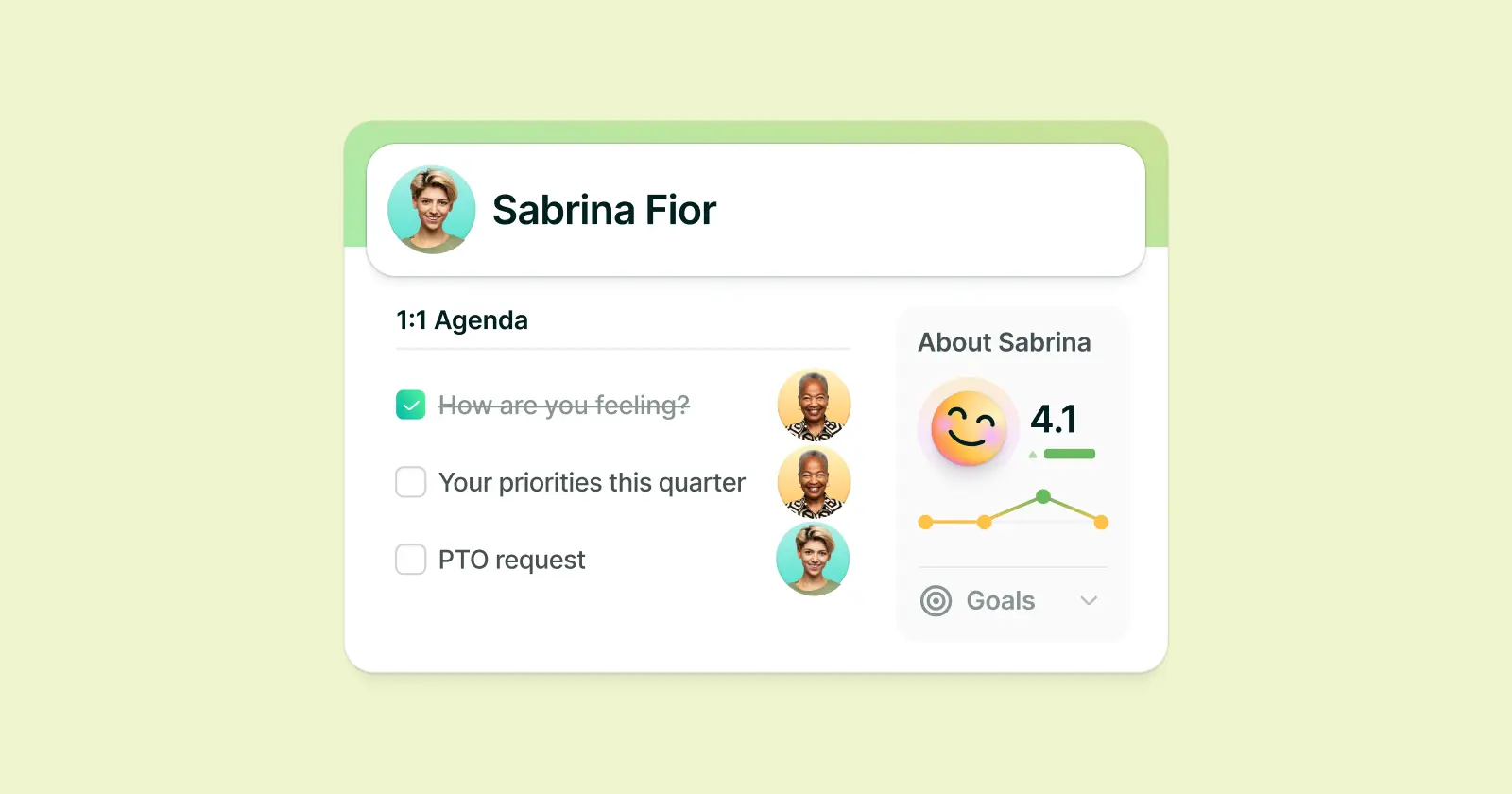
- Make it easy to track follow-ups with tools like Lattice 1:1 — meaning private notes stay private, while action items and agendas can be shared to relevant team members.
- Reduce the admin burden by using platforms like Lattice’s Meeting Agent, which automatically captures notes, action items, and summaries.
Once you have the notes covered, don’t forget to reach out to the employee directly and recap what you discussed.
“Follow up no later than seven days after your meeting,” Price suggested. “That should be plenty of time to formulate a response to your employee about what you valued most in the meeting.”
{{rich-highlight-4}}
FAQs
How often should senior leaders conduct skip-level meetings?
In the majority of cases, senior leaders should offer skip-level meetings on a quarterly or semi-annual basis. This is usually enough to build patterns and maintain trust without becoming overwhelming for both parties. But during times of organizational change, more frequent meetings can help maintain trust and minimize stress.
Should middle managers be informed before skip-level meetings?
Yes. Skip-level meetings work best when there’s transparency between all parties. Informing middle managers reduces anxiety, maintains trust, and enables them to provide helpful context about their team members. Try to give managers a heads-up one to two weeks ahead, if possible.
What should leaders do if an employee shares serious concerns about their manager?
Leaders should listen carefully, and document any relevant details before assessing the level of risk and next steps. In the first instance, support the employee and thank them for sharing while reiterating the confidentiality of the matter. Then, depending on the seriousness of the issue, address it privately with the manager while protecting the source, or flag it with HR.
How do you document skip-level meetings without violating confidentiality?
To maintain trust in the process, the information shared in a skip-level meeting must remain confidential. Leaders can document insights by noting down key themes or topics, rather than following a ‘he-said, she-said’ mentality. Make sure all action points and decisions are recorded and receive follow-ups in a timely manner.
What's the difference between a skip-level meeting and a one-on-one?
Skip-level meetings and one-on-ones involve a different scope, purpose, and include different participants. One-on-ones are owned by employees, and involve a manager meeting with their direct report to discuss day-to-day workflows, goals, and challenges. Skip-level meetings are run less often, and involve a senior leader and employee.
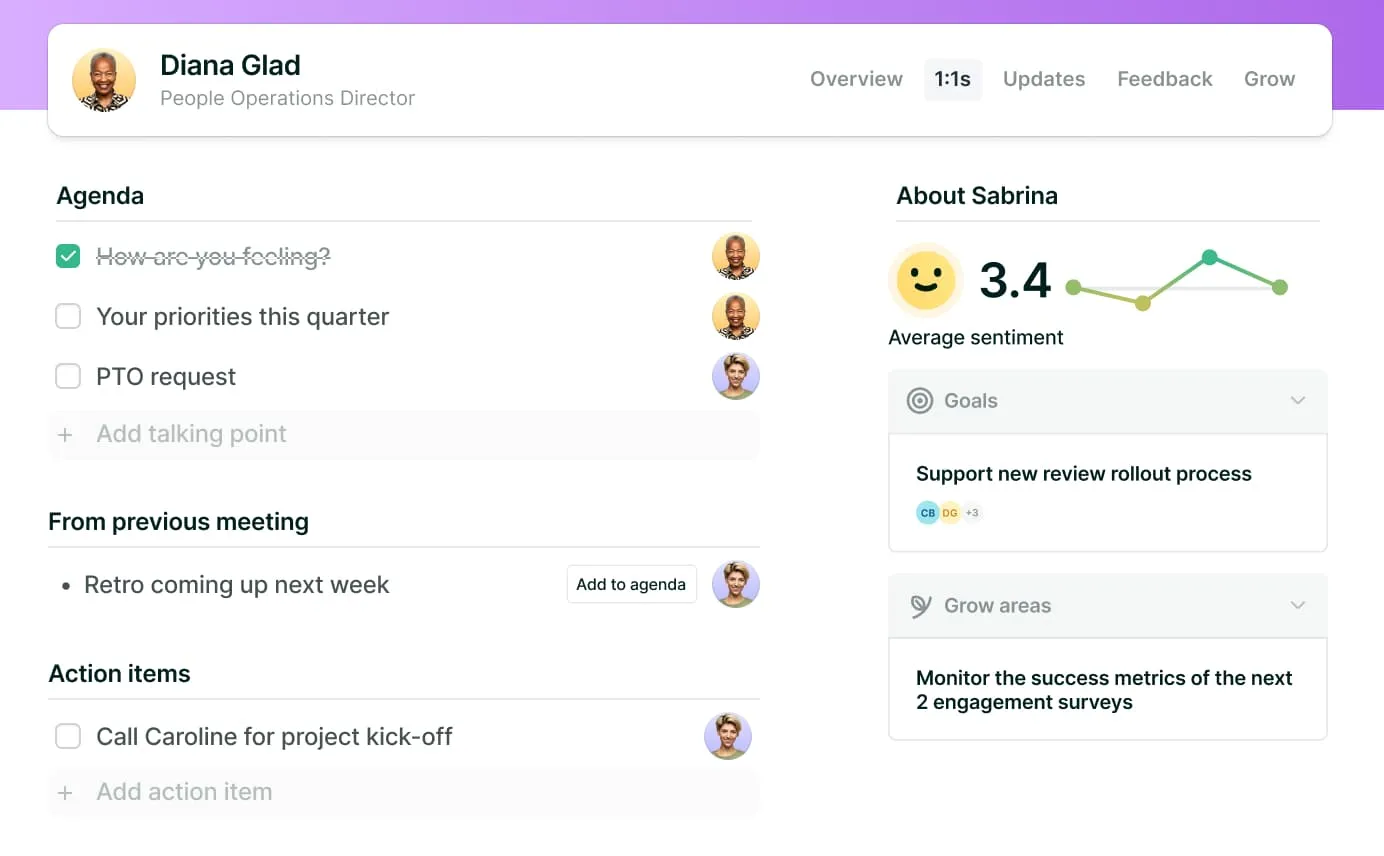
Build skip-level agendas in a snap.
Take a self-guided tour to see how Lattice’s AI Agent can help leaders get ahead of skip-level meeting prep by highlighting themes from past one-on-ones, employee feedback, and updates. Leaders spend less time digging through notes — and more time talking to employees about what matters.

Your next 1:1 agenda is ready.
Use our free template to prepare yourself for your most productive meeting yet.
One-on-Ones That Drive Performance, Not Just Conversation
In this free guide, we break down how to lead conversations that strengthen relationships, unlock employee potential, and drive results.
Run Better Skip-Level Meetings with Lattice
Skip-level meetings work best when leaders come prepared, ask the right questions, and use them as an exercise in curiosity to find out what’s driving — or demotivating — their skip-level employees. But to work long-term, leaders need to prioritize what comes after, and make sure that they follow through on any issues and action items raised.
Lattice’s suite of tools helps organizations prepare, run, and follow-up on skip-level meetings more efficiently — meaning trust remains unbroken, and organizations can turn conversations into action that drives them forward.
Lattice supports this in a few key ways:
- 1:1 agenda templates that standardize questions across upper management
- Action item tracking to ensure follow-through on key issues
- Role-based visibility, so that confidential notes stay locked up while shared agendas and action items foster transparency
- Automated insights from employee feedback, updates, and past one-on-ones with our AI Agent, so that leaders arrive prepared
- Automatic meeting capture and transcription with Meeting Agent
Want to find out more about how Lattice can help your organization run more effective skip-level meetings? Book a demo with our team.