

One-on-one meetings deserve more attention. They’re valuable opportunities for managers and direct reports to check in, solve problems, and maintain progress. But if you’re treating them like generic status updates, you’re flushing valuable time and energy down the drain.
Great one-on-one questions turn meetings into strategic, developmental, and alignment touchpoints. Curated question groups empower both managers and employees to come prepared and keep discussions focused and useful. With Lattice 1:1s, teams can add these topics to shared agendas, where they live with meeting history, so every conversation builds on the last.
In this article, you’ll find 80 questions organized by type, plus frameworks to help you make the most of every one-on-one.
{{rich-takeaway}}
Types of One-on-One Meeting Questions
Different types of one-on-one meeting questions serve distinct purposes. Strategic managers know which questions to ask their direct reports at the right moment, ensuring conversations drive progress and development.
Here are five different question types and why they’re useful.
Check-in Questions
Typically used at the start of a one-on-one, check-in questions set a positive tone by gauging wellbeing and motivation. They help identify urgent concerns, including signs of burnout, before they escalate. Lattice 1:1s allows you to add a check-in as a recurring topic in your one-on-ones, which helps you record how team members’ wellbeing changes over time.
Example: What’s been on your mind lately?
Work-Related Questions
To help managers keep meetings effective, one-on-ones should also cover priorities, obstacles, and tactical alignment. Questions in this category let managers identify blockers before projects go off track.
Example: What is your top priority right now?
Development and Career Growth Questions
Use these questions monthly or quarterly to explore long-term goals, skills gaps, and career aspirations. These areas are important, and Lattice’s 2021 Career Progression Survey found that 76% of employees would be somewhat or very likely to leave a company if they felt dissatisfied with the career growth opportunities it offered.
Example: What new skills would you like to learn?
Feedback and Relationship Questions
These questions help create a safe space where you can get honest feedback and talk openly about how you work together. They encourage managers to give constructive, supportive feedback that is respectful, not harsh or judgmental. Maintain rapport by storing recurring relationship questions in your Lattice 1:1s shared agenda and use them regularly, but especially after big projects or changes.
Example: How can I better support you in your role?
Team Dynamics and Collaboration Questions
How a team works together is key to its success. These questions help identify team tensions, communication gaps, and opportunities for better collaboration. Use them when you’re involved in cross-team projects or after any team changes. With its meeting history feature, Lattice 1:1s helps you easily track patterns over time.
Example: How do you think the team dynamics are affecting our work?
{{rich-highlight-2}}
50 One-on-One Meeting Questions for Managers to Ask Employees
Whether you’re sitting down with a new hire or a seasoned team member, one-on-ones can bring a variety of benefits for your team.
The purpose is to give everyone enough feedback to perform at their best, with an emphasis on improving employee engagement — which, according to Gallup Workplace, heightens productivity and leads to 70% greater wellbeing among employees. An added bonus: Regular one-on-ones help prevent surprises during performance reviews, which supports employee retention.
The questions below help managers run effective one-on-ones that drive engagement, development, and progress. Organize these questions into recurring topics using Lattice 1:1s to keep track of key themes and follow-ups. And, for best results, use the questions with our Manager One-on-One Agenda Template.
Employee Engagement and Morale
These questions help managers check in on their team members’ wellbeing and overall morale. Use them regularly to encourage candid conversations and sustain a supportive environment.
- What’s been on your mind lately?
- How are you feeling?
- Is anything stressing you out right now?
- What were your work and non-work highlights over the past week?
- Do you feel like you have a good work-life balance and are able to disconnect after work?
- Are there any team activities you think would effectively boost morale and engagement?
- What’s one change that could make your work process smoother?
- How can I better support you in your role?
- What should we make sure to discuss next time we meet?
Collaboration and Teamwork
Questions about team communication and collaboration reveal how employees’ relationships are affecting performance. These questions can identify areas for improvement.
- Do you feel like the team is communicating effectively enough? If not, what’s standing in the way?
- Do you have any problems with the team that I can help you resolve?
- Do you feel like you’re able to stay connected with everyone? How can I help?
- Which team members do you wish you had a stronger connection with?
- Do you see any gaps in the team’s knowledge that might be holding us back from getting the job done?
- Do you feel like you’re able to ask others for help? Why or why not?
- What types of questions do you wish I’d ask you in team meetings?
- How do you think the team dynamics are affecting our work?
- What can we do to improve teamwork and collaboration?
- Is there anything about our team meetings that frustrates you?
Career Growth and Development
With these questions, managers can have meaningful conversations with direct reports about their career paths, professional growth, and development opportunities.
- What new skills would you like to learn?
- What long-term goals are you thinking about?
- Are you interested in any conferences or courses? Are you open to recommendations?
- What aspect of your job do you most want to develop?
- Are there mentors inside or outside the company with whom you’d like to connect?
- What’s your opinion of your career growth since you started working here?
- What part of the business would you like to learn more about?
- What challenges are you facing in your professional development?
- What support do you need to advance your career?
- Are there specific tools or software you’d like to learn how to use?
- How can I help you find career development opportunities?
- Is there a project or role you’d like to take on to grow your skills?
Productivity and Current Work
Questions that review top priorities, tackle recent obstacles, and recognize workloads help maintain progress and boost productivity.
- What is your top priority right now?
- What are your current projects, and how are they progressing?
- What took up most of your time this past week?
- What are the biggest challenges you face in your role that aren’t visible to others?
- What roadblocks can I help you with?
- What upcoming deadlines or milestones should we be aware of?
- What’s your outlook on the next week? How about next month?
- Are there any resources or tools you need to be more productive?
- Are there aspects of your job that frustrate you or keep you from doing your best work?
Feedback and Communication
Open communication and constructive feedback allow stakeholders to feel heard, respected, and valued. These questions improve employee engagement.
- Do you feel like this is a safe space to share concerns?
- What’s one piece of constructive feedback you’ve received recently that helped you grow?
- What can I do to make your job easier?
- How am I doing with bringing you into team decisions? Would you like to be more involved?
- Do you feel like you’re getting enough feedback from me? How would you like me to share feedback?
- Do you feel team members are comfortable speaking up and sharing their ideas openly?
- Can you share what you think the company does well and could improve when it comes to internal communications?
- How do you like to give feedback to your peers?
- What’s one thing we could change to improve communication within the team?
- In your view, is there anything I could develop or change about my management style?
{{rich-highlight-3}}
30 One-on-One Meeting Questions for Employees to Ask Managers
It’s easy to assume your manager knows what you’re dealing with day-to-day, but with their busy schedules, they rely on you to practice managing up. When you use one-on-ones to share what works and what doesn’t, you help your manager better understand your challenges and opportunities.
“Employees should ask about things that prevent them from realizing their objectives or slow them down,” said Susan Norton, a human resources consultant and coach. “Whether you’re a manager or in HR, you don’t want bottlenecks to stand in their way. If employees don’t communicate their problems, we might not be aware of their struggles.”
Because one-on-ones are a safe space to discuss challenges, you should feel empowered to bring your own focused questions that support your success.
Employee Engagement and Morale
When preparing questions, show you understand that strong team relationships go both ways. Building rapport with your manager and noticing how they’re doing helps you see when they might need support — from you or the team.
- How are you doing?
- Are there any changes that I should know about since the last time we met?
- Looking ahead, what are you most hopeful and worried about?
- Is there anything about our team culture you wish you could change?
- What’s your biggest challenge right now, and how would you like me to help?
Collaboration and Teamwork
Staying in sync with your team can be challenging when everyone is working on different projects. Use one-on-ones with your manager to explore ways to improve communication, strengthen team cohesion, and identify opportunities for cross-functional collaboration.
- Who would you like me to start talking to or working more with?
- What can we do as a team to collaborate and communicate better?
- What part of my job would you like more visibility into?
- What’s your preferred way to receive updates from our team?
- What should I be mindful of when working with other teams?
- What talking points should we cover in our next team meeting?
Career Growth and Development
Your manager provides an outside perspective on new skills and development opportunities that can help you perform better now and advance your career. Ask great questions to get helpful advice.
- What should I consider adding to my growth plan?
- How do you see my role evolving over the next year?
- What technical skills should I work on?
- Are there any soft skills I should develop?
- In your view, what are my strengths?
- What skills gaps do you see on our team?
- What skills gaps do you see on our team that I could help fill?
- Based on our last conversation about career goals, what progress have I made?
Current Work and Priorities
Managers are the vital link between you and the rest of your organization, often juggling priorities and tasks you might not fully see. Asking about their priorities, challenges, and upcoming projects helps you work better with others, uncover new opportunities, and support your manager proactively.
- What’s your highest priority at the moment? How can I help?
- Right now, what do you need more of — quality or quantity?
- Is there a process or project you’d like me to start owning? What is it?
- What are your long-term goals for the team?
- Are you thinking about expanding the team?
- Is there anything I should prepare ahead of our next meeting?
- What status updates do you need from me to do your work better?
Feedback and Managing Up
While there’s a time and a place for open-ended questions, giving constructive feedback is easier when you’re able to tie it to a particular topic or assignment. That’s why you should be specific in what kind of feedback you need from your manager.
“Put yourself in your manager’s shoes. The obligation of having regular meetings where you’re expected to give feedback can make you run for the hills,” said Paula McLeod, an executive coach and founder of Success by Design. Focused questions can lead them to address what is important to your needs.
- Is there anything I should be doing differently? Do you have examples?
- Has anyone shared any feedback about my work? What was it?
- How could I better contribute to our team meetings?
- What are my key areas for improvement?
One-on-One Meeting Templates, By Frequency
Whether weekly, monthly, or quarterly, each meeting cadence serves distinct goals — from quick check-ins to deep, strategic planning — and using a structured framework ensures every minute is well spent. With a clear agenda and distinct time blocks, templates can help keep your one-on-one meetings on track — no matter how much time passes between them.
Weekly One-on-One Template

Weekly one-on-one meetings are short, focused sessions designed to maintain consistent communication and address immediate priorities. Here is one approach that uses a time-block structure for a 30-minute meeting:
- 5 minutes for a quick check-in to set the tone
- 10 minutes to discuss current work and any roadblocks
- 10 minutes to review action items and follow-ups
- 5 minutes for open questions or additional topics
Time-blocking these topics in advance with the shared agenda feature in Lattice 1:1s can help you keep the meeting organized and efficient.
Monthly One-on-One Template

Monthly one-on-one meetings are longer sessions designed for deeper, strategic conversations that go beyond day-to-day tasks. Here’s a suggested time-block structure for a 60-minute meeting:
- 10 minutes for a check-in to connect and set the tone
- 10 minutes to discuss career development and long-term goals
- 10 minutes to review wins and goal progress
- 10 minutes to explore team dynamics and collaboration opportunities
- 5 minutes to review action items and plan next steps
Monthly meetings should be framed as strategic development conversations, focusing on growth and alignment rather than status updates.
Quarterly One-on-One Template

Quarterly one-on-one meetings are extended sessions meant for high-level strategic planning and analysis. Here’s a suggested time-block structure for a 90-minute meeting:
- 20 minutes dedicated to reviewing long-term career goals and aspirations
- 30 minutes to reflect on significant projects completed during the quarter
- 20 minutes to discuss lessons learned and areas for improvement
- 20 minutes to plan for upcoming priorities and strategic initiatives
These meetings are a chance to step back, reflect on progress, and plan for growth that supports both your goals and the bigger picture.
How to Structure Effective One-on-One Conversations
One-on-ones are meant to provide an easy and consistent way to stay aligned on shifting priorities and challenges week to week. They are intentionally time-bound to concentrate on the most pressing issues.
Without a clear agenda, however, valuable time can be lost to off-topic chitchat, venting sessions, or overly rigid project check-ins. Adding some structure ensures key points are covered while leaving some room for relationship-building.
- Set a recurring schedule. One-on-ones should be a consistent, expected part of the routine. When managers frequently cancel these meetings, it signals that employees aren’t a priority. Setting a fixed time each week for each direct report — and keeping it firm — reinforces that these meetings are essential, not optional. Lattice helps by auto-surfacing upcoming one-on-ones in shared calendars to keep everyone on track.
- Try time-blocking the meeting agenda. Using a meeting agenda template or structured topics maximizes time for both parties. For example, in a 30-minute meeting, allocate 5 minutes for catch-up, 10 minutes for current projects, 10 minutes for action items, and 5 minutes for wrap-up or additional thoughts. To keep meetings on schedule and on topic, try customizing an agenda template in Lattice 1:1s.
- Track progress from week to week. Keeping a record of your one-on-one discussions helps identify recurring topics and trends, improving workflow and wellbeing support. Lattice 1:1s creates a historic record of talking points, action items, and conversation themes, preventing repeated discussions about the same issues.
- Organize questions by conversation type. Grouping questions by topics such as growth, feedback, and collaboration helps managers address different needs effectively. This collection of questions keeps conversations focused and relevant.
{{rich-highlight-1}}
FAQs
How do I structure a one-on-one so it doesn’t turn into a status update?
Encourage employees to lead the agenda with topics that matter most to them, such as challenges, development goals, or feedback. Keep a consistent agenda that balances personal check-ins, work discussions, and future planning to build trust. For example, Lattice’s template includes dedicated time for open dialogue alongside task updates, making these meetings more meaningful and supportive.
How many questions should I bring to a one-on-one meeting?
Prepare to ask five to eight thoughtful questions to keep the conversation focused yet flexible. Answers may lead to impromptu follow-ups. Questions should cover a mix of wellbeing, current work, development, and feedback to address different needs. Overloading with too many questions can make the meeting feel like an interrogation, while too few might miss important topics. Sharing the agenda or questions in advance allows both the manager and the employee to prepare and contribute helpful observations. This balance helps maintain engagement and ensures the meeting can be productive for everyone.
What’s the best cadence for conducting effective one-on-one meetings?
Weekly one-on-ones are essential for maintaining momentum and addressing immediate priorities, keeping communication consistent and timely. Monthly meetings offer more time for deeper conversations focused on career development and team dynamics. Quarterly sessions provide space for high-level planning, reflection on progress, and setting long-term goals. While maintaining a regular cadence is important, it’s equally important to be intentional about keeping each meeting’s agenda. Consistency is key to ensuring employees have a dependable space for real conversations.
How do I keep track of what we discussed in past one-on-one meetings?
For continuity, use shared notes or digital tools like those provided by Lattice 1:1s to help document key discussion points, decisions, and action items. This record helps both manager and employee track progress, follow up on commitments, and avoid repeating conversations.
How do I choose the right type of questions for each one-on-one?
Select questions based on the meeting’s purpose and your current needs. For example, start with check-in questions to gauge wellbeing, then talk about work tasks to stay on track, and add development or feedback questions when needed. Choose questions that fit current needs, new problems, career growth, or team dynamics. Rotating question categories over time ensures comprehensive support and keeps conversations fresh.
Give Your One-on-Ones a Glow-up with Lattice

Though they can feel routine, weekly one-on-ones are an important part of your performance management process. For managers, they’re a way to ensure productivity and success. For everyone else, they’re a chance to maintain connections and maybe even set the stage for that next big promotion.
There’s a reason more than 5,000 organizations use Lattice: We help you unlock your team’s potential. With Lattice 1:1s, you can take one-on-one meetings to the next level with features like:
- Private notes: Managers can track sensitive observations without sharing them with direct reports.
- Action item tracking: Follow-up items from past one-on-ones automatically surface in the next meeting.
- Historic record: Search past one-on-ones by keyword or date to see how conversations evolved.
- Calendar integration: Meetings auto-populate from Lattice, keeping one-on-ones on schedule.
To see how Lattice’s software empowers teams to get more out of their one-on-ones, schedule a product demo.
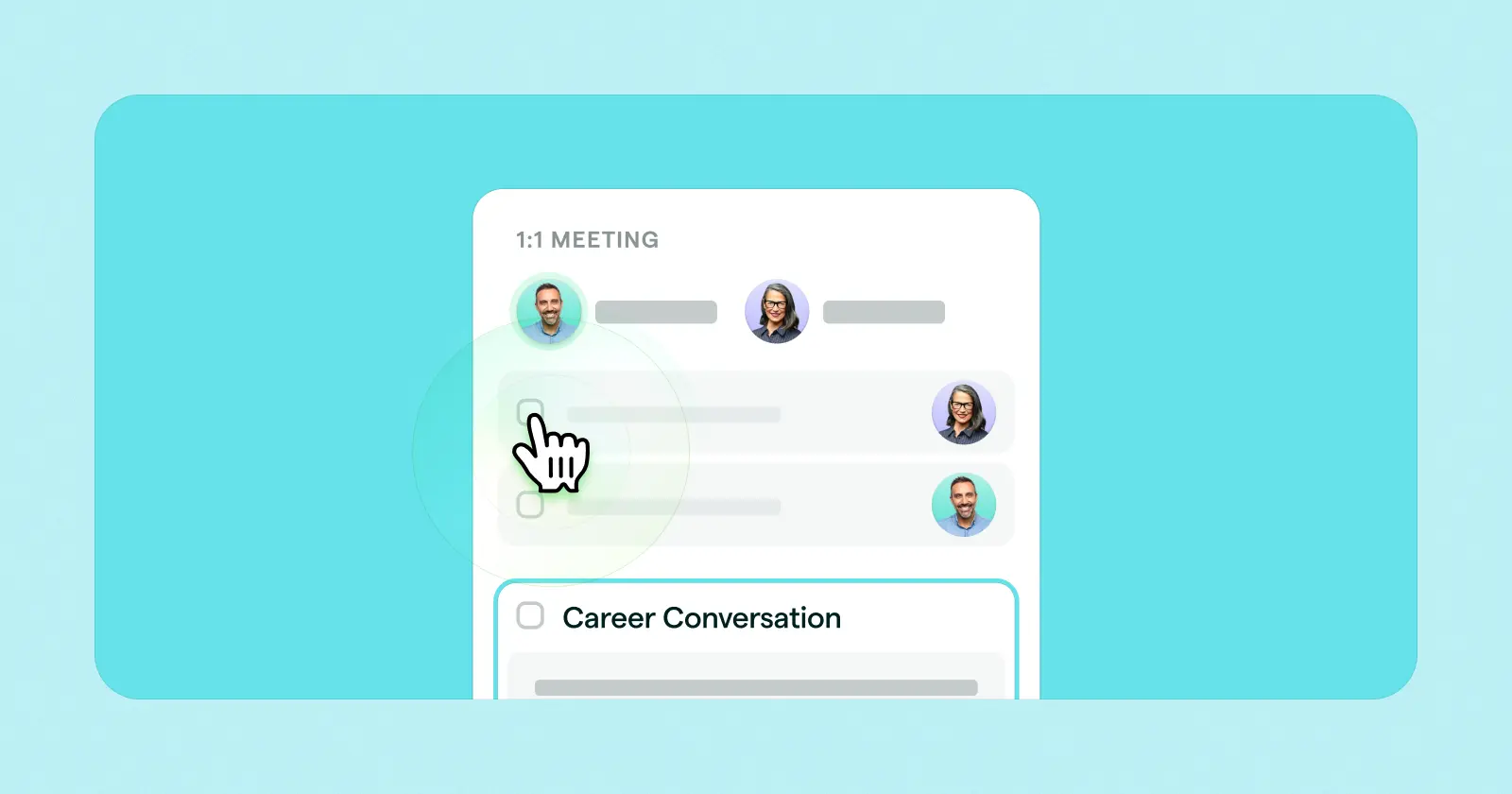
Make your next 1:1 your best 1:1 with Lattice.
Take a self-guided tour of Lattice Performance to see how our AI-powered 1:1s can transform your one-on-ones.
One-on-ones That Do More for the Business
In this free guide, we break down how to lead conversations that strengthen relationships, unlock employee potential, and drive results.
Key Takeaways
- Effective one-on-ones are critical to driving manager-employee alignment, fostering a culture of continuous conversations, and building an engaged, high-performing workforce.
- Managers should let employees lead on the talking points while using great questions to steer discussions to cover workload priorities, growth goals, and employee wellbeing.
- Employees can use one-on-ones to clarify responsibilities, develop skills, and check in on team collaboration.
- Meeting templates and question frameworks help keep one-on-one meetings productive, adding structure and regularity.