
Performance improvement plans (PIPs) often carry a negative reputation. Many employees see them as a signal that termination is imminent, and managers sometimes hesitate to use them for fear of escalating a difficult situation.
But when used correctly, a performance improvement plan is a coaching and alignment tool. A well-designed PIP clarifies expectations, identifies support resources, and creates a structured path for improvement.
One challenge HR teams and managers frequently face is that performance issues rarely look the same. Some employees struggle with hitting measurable targets. Others may have behavioral or communication challenges. And sometimes the issue lies in collaboration rather than individual output.
Below are four performance improvement plan templates, each designed for a specific type of performance challenge, so managers can address issues more clearly and effectively.
Performance Improvement Plan Templates
These templates provide structured frameworks managers can use to document expectations, outline support, and track improvement over time. Each template addresses a different category of performance challenges.
General Performance Improvement Plan Template
The General Performance Improvement Plan Template is designed for situations where performance concerns span multiple areas rather than a single measurable issue.
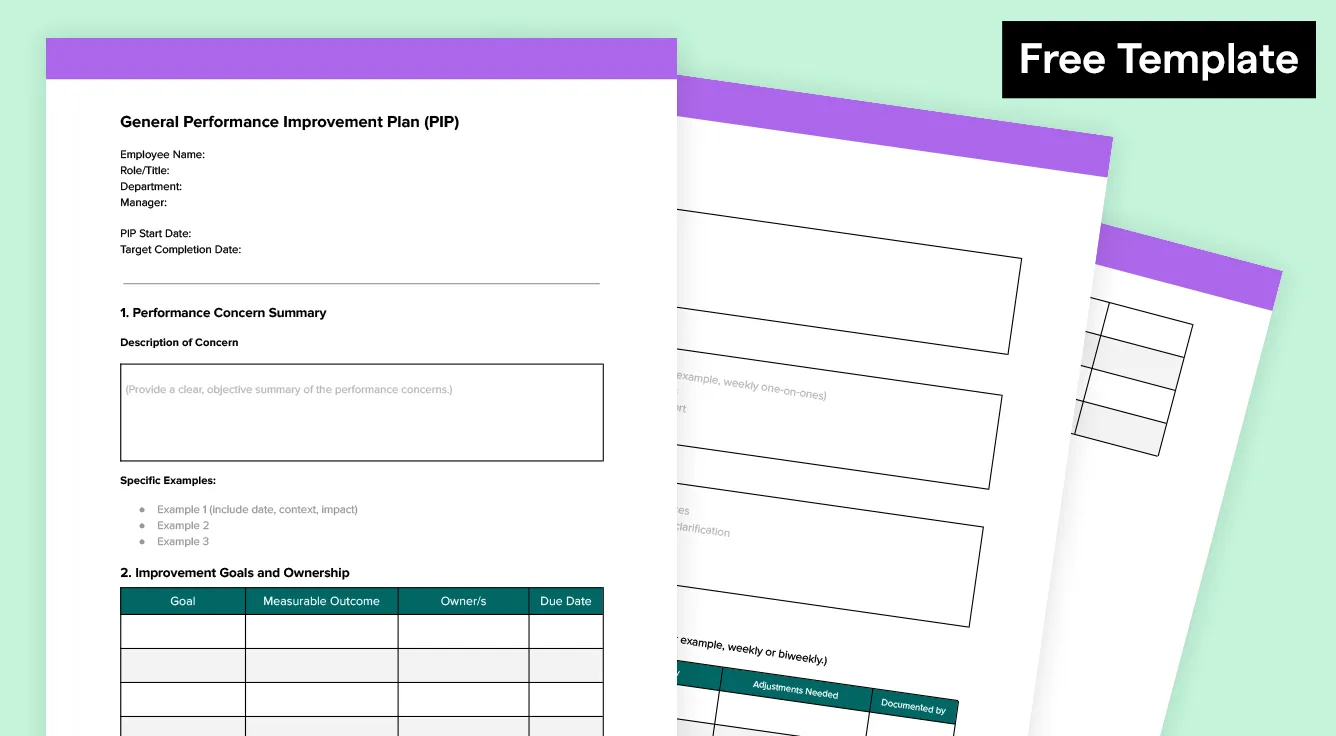
This template works well when an employee is struggling across several dimensions, such as communication, timeliness, work quality, or role expectations. Instead of focusing narrowly on one metric, it provides a flexible structure that helps managers identify patterns and create a comprehensive improvement strategy.
Benefits of Using This Template
1. Encourage coaching conversations.
The flexible structure creates space for collaborative problem-solving between managers and employees.
2. Clarify expectations across multiple dimensions.
When performance issues are broad, documenting them in one place ensures nothing gets overlooked.
3. Reinforce shared accountability.
By defining ownership for goals and actions, both the manager and employee take responsibility for progress.
Key Elements Included in the Template
This template includes several sections to guide the improvement process:
- Employee and manager details for shared clarity
- A performance concern summary with specific examples
- Clearly defined improvement goals with measurable outcomes
- A structured action plan outlining employee and manager responsibilities
- A resources and support section for training or mentorship
- A regular checkpoint schedule
- Optional 30/60/90-day milestone tracking
- Progress documentation and shared acknowledgment of expectations
These elements help create a balanced plan that focuses not just on problems, but also on support and measurable progress.
Metrics-Based Performance Improvement Plan Template
The Metrics-Based Performance Improvement Plan Template is best used when an employee consistently misses clearly defined quantitative targets.
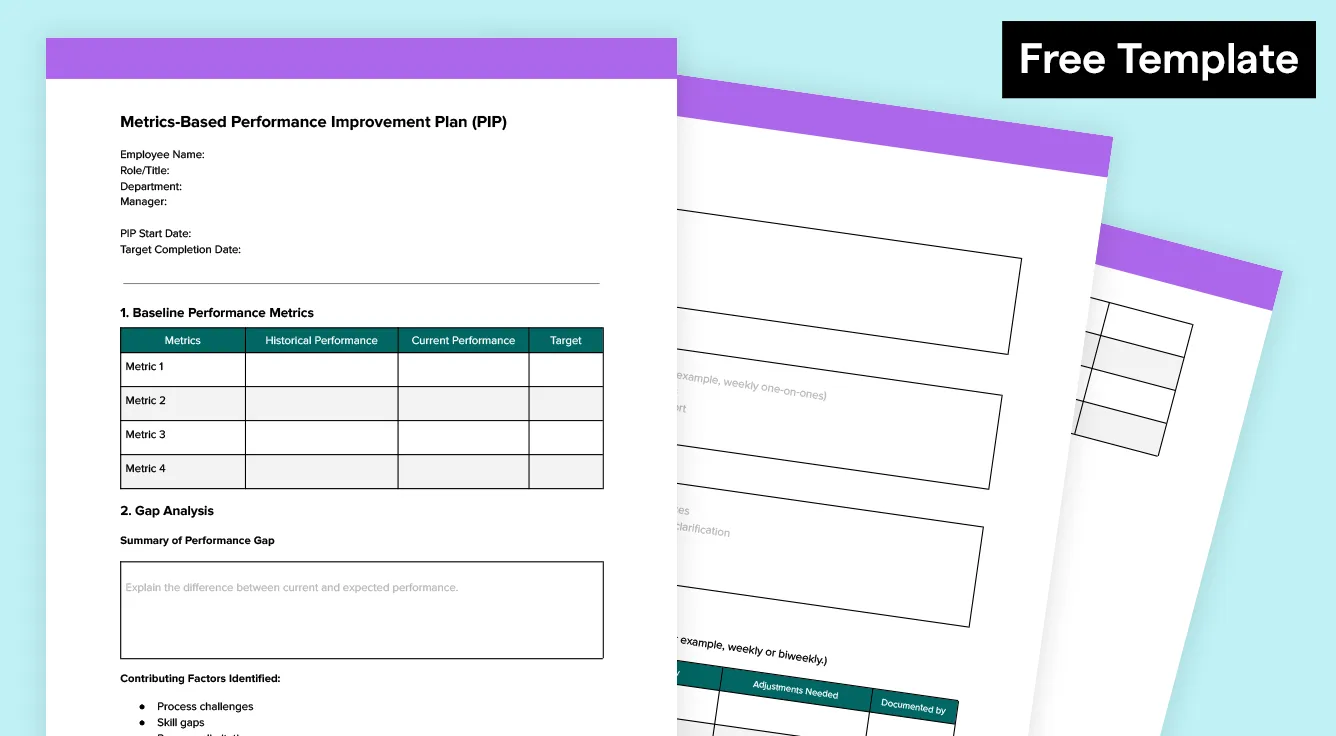
This template is ideal for roles where success is measured by specific metrics, such as sales quotas, response times, productivity levels, utilization rates, or quality benchmarks.
Benefits of Using This Template
1. Anchor feedback in objective data.
Clear metrics reduce ambiguity and remove emotional interpretation from performance discussions.
2. Promote fairness and transparency.
Historical performance data ensures improvement expectations are based on trends rather than isolated incidents.
3. Create visible progress milestones.
Incremental targets help employees see measurable progress toward full performance recovery.
Key Elements Included in the Template
The metrics-based template includes structured sections designed for data-driven improvement:
- Baseline performance metrics with historical data
- Current performance compared to target expectations
- A gap analysis explaining the difference between current and expected performance
- Milestones tracking progress at 25%, 50%, 75%, and 100% improvement
- A training and development plan tied to specific metrics
- Progress notes to document coaching conversations and updates
- Shared acknowledgment of expectations
This approach keeps improvement discussions focused on measurable outcomes and continuous tracking.
Behavioral Performance Improvement Plan Template
The Behavioral Performance Improvement Plan Template is designed for situations where performance concerns stem from conduct rather than output.
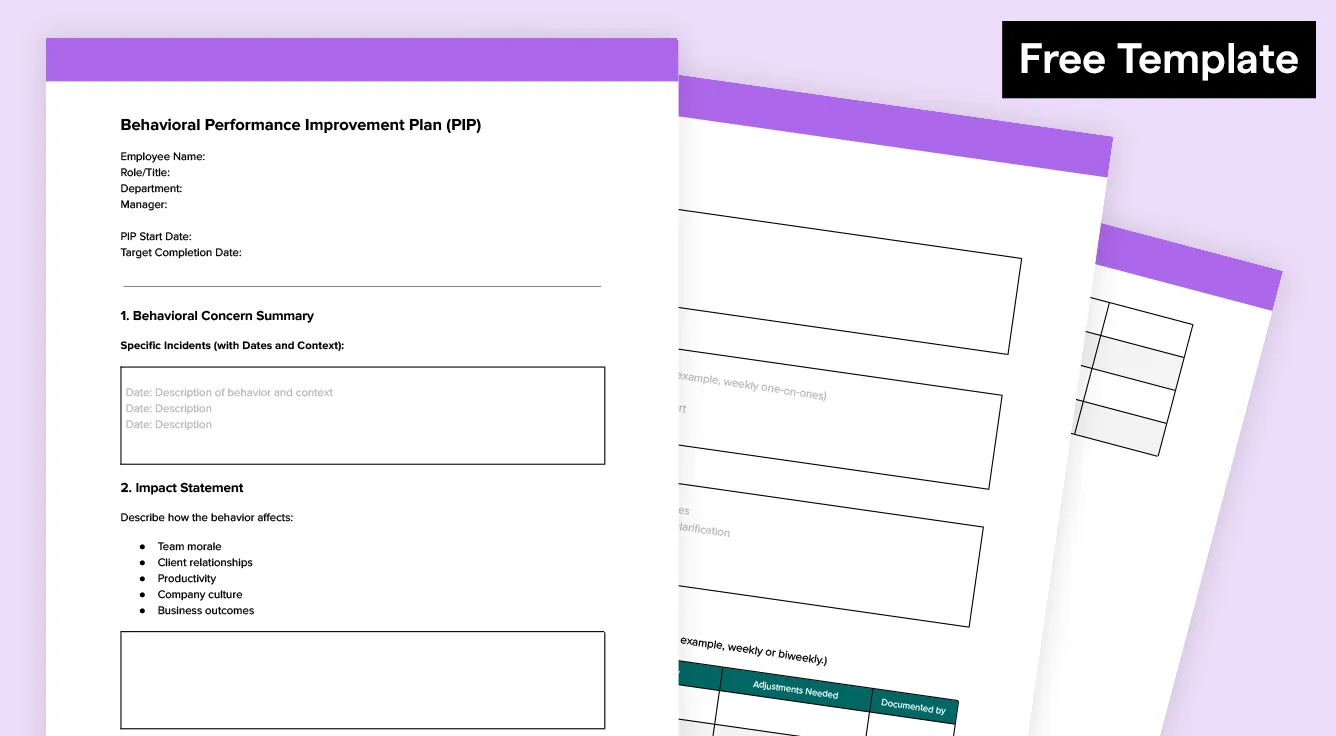
Managers can use this template when issues relate to professionalism, reliability, communication style, compliance, or team dynamics.
Benefits of Using This Template
1. Focuses on observable behaviors.
Documenting specific incidents helps remove ambiguity and keeps feedback grounded in facts.
2. Clarifies what “good” behavior looks like.
Clearly defined standards and examples make expectations easier to understand and follow.
3. Supports fairness and consistency.
Structured documentation helps ensure performance conversations remain objective and consistent across employees.
Key Elements Included in the Template
The behavioral PIP template includes several components designed to document conduct-related concerns:
- A behavioral concern summary with dated incidents
- An impact statement describing how behaviors affect team outcomes
- Clearly defined expected behavior standards
- Behavioral goals framed as observable actions
- A 360-degree feedback section to collect peer insights
- An incident tracking log
- Conflict resolution resources such as coaching or training
- Progress documentation and shared acknowledgment
These sections help managers track behavioral improvements over time while ensuring expectations remain clear and objective.
Collaboration Performance Improvement Plan Template
The Collaboration Performance Improvement Plan Template addresses situations where an employee performs well individually but struggles to contribute effectively to team outcomes.
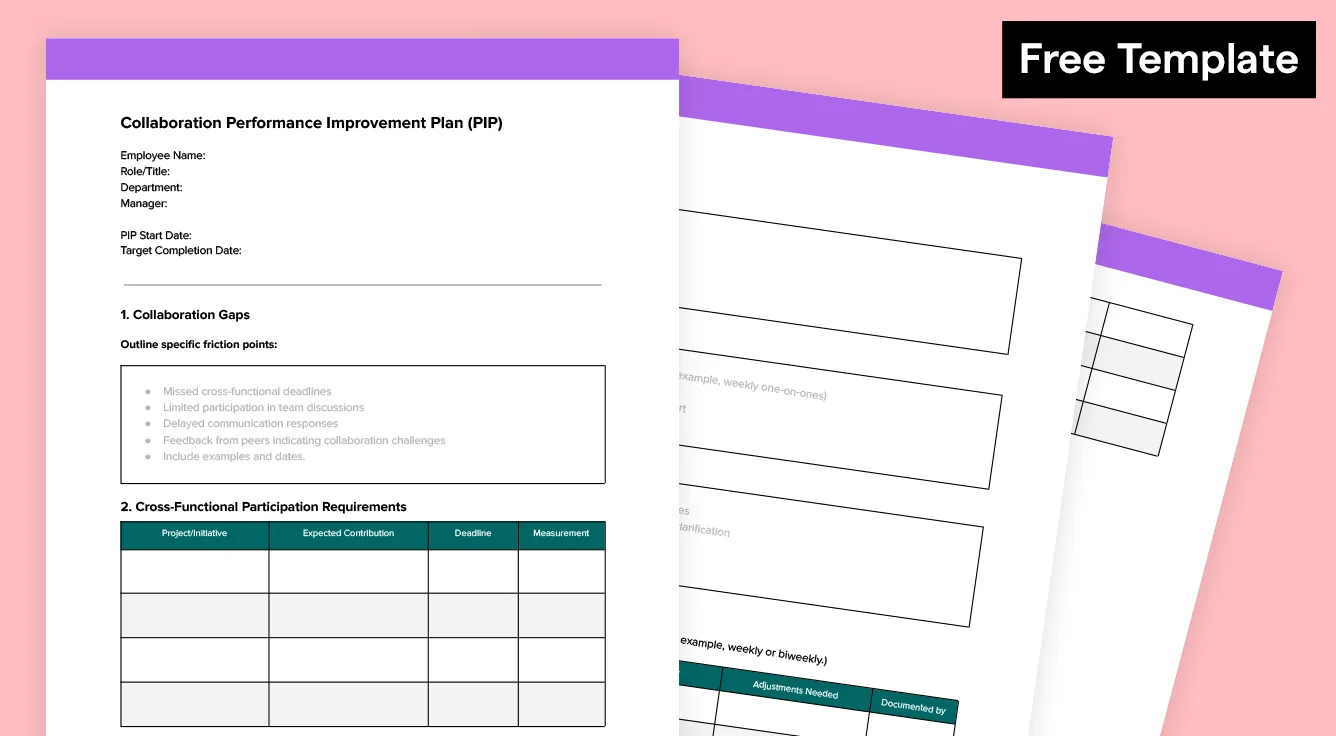
This type of PIP is particularly useful when employees show strong technical skills but experience challenges with knowledge sharing, cross-functional teamwork, or communication responsiveness.
Benefits of Using This Template
1. Encourages stronger team accountability.
The template reinforces that high performance includes both individual results and team contributions.
2. Improves knowledge sharing across teams.
Structured goals around documentation, mentoring, and presentations help reduce silos.
3. Strengthens communication expectations.
Clear response time standards and meeting engagement expectations help improve collaboration.
Key Elements Included in the Template
The collaboration template includes structured sections that focus on team interaction and communication:
- A collaboration gap description outlining friction points
- Cross-functional project participation requirements
- Knowledge-sharing goals such as documentation or mentoring
- Structured peer feedback touchpoints
- Expectations for team meeting engagement
- Communication response time standards
- Progress tracking and shared acknowledgment
Together, these elements help managers improve collaboration while maintaining individual accountability.
How to Use These Performance Improvement Plan Templates
A performance improvement plan works best when it’s part of a thoughtful coaching process, not a rushed administrative step. Before implementing a PIP, managers should gather context, document performance concerns clearly, and select the template that best matches the situation.
Here’s how to approach the process.
1. Document specific performance issues.
Before choosing a template, collect clear examples of the performance concerns you want to address. Vague feedback like “communication needs improvement” or “performance is inconsistent” can lead to confusion and defensiveness.
Instead, document:
- Specific incidents
- Dates and context
- The expected standard
- The impact on the team or organization
Concrete examples create clarity and help ensure the conversation focuses on improvement rather than disagreement about what happened.
2. Identify the root cause of the performance gap.
Not every performance issue stems from a lack of effort. In many cases, employees struggle because expectations weren’t clear or they lack the tools needed to succeed.
Before launching a formal improvement plan, consider whether the issue may stem from:
- Skill or training gaps
- Unclear role expectations
- Resource constraints
- Process inefficiencies
- Team communication challenges
- Personal circumstances affecting work
Understanding the root cause helps managers choose the right template and tailor the improvement plan to address the real problem.
{{rich-highlight-2}}
3. Choose the template that fits the situation.
Once you’ve clarified the issue, select the template that best matches the type of performance challenge.
Use a general performance improvement plan when an employee is struggling across several areas such as communication, quality, or time management.
Use a metrics-based PIP when performance concerns relate to measurable outcomes like quotas, productivity targets, or response times.
Use a behavioral PIP when the primary issue involves professionalism, reliability, or workplace conduct.
Use a collaboration PIP when an employee performs well individually but struggles with teamwork, cross-functional communication, or knowledge sharing.
Selecting the right structure helps keep the improvement plan focused and actionable.
4. Define clear goals and measurable outcomes.
A strong performance improvement plan clearly defines what success looks like.
Goals should be:
- Specific
- Measurable
- Time-bound
- Directly tied to role expectations
For example:
Instead of writing: “Improve communication with the team.”
Write: “Respond to internal Slack messages within one business day and provide weekly project status updates during the Monday team meeting.”
Clear expectations help employees understand exactly what needs to change.
5. Provide resources and support for improvement.
A PIP should not simply document shortcomings. It should also outline how the organization will support the employee’s improvement.
Depending on the situation, support might include:
- Coaching sessions with the manager
- Skills training or professional development
- Mentorship or peer shadowing
- Process documentation or workflow clarification
- Access to new tools or systems
This step reinforces that the goal of the plan is development, not punishment.
6. Establish regular checkpoints.
Improvement rarely happens overnight. Regular check-ins ensure progress stays on track and challenges can be addressed early.
Many teams structure checkpoints at weekly or biweekly intervals, with milestone reviews at 30, 60, and 90 days.
During these conversations, managers and employees should:
- Review progress toward goals
- Discuss blockers or challenges
- Adjust the action plan if necessary
- Document progress and feedback
Consistent follow-up helps maintain accountability and momentum.
7. Track progress and document outcomes.
Throughout the improvement period, maintain records of updates, feedback conversations, and progress toward goals.
Documentation helps:
- Ensure fairness and transparency
- Provide a clear record of improvement efforts
- Support future performance conversations
At the end of the plan, managers should review whether the employee has:
- Met the defined goals
- Demonstrated sustained improvement
- Reached the expected performance level for their role
If progress is strong, the employee can transition back to normal performance management processes. If challenges remain, the manager and HR team can determine the appropriate next steps.
{{rich-highlight-1}}
Take the guesswork out of PIPs with Lattice.
Performance improvement templates provide a helpful starting point. But managing improvement plans through standalone documents can quickly become difficult.
Managers often struggle with:
- Tracking progress across 30/60/90-day timelines
- Remembering checkpoint conversations
- Updating documents after every meeting
- Maintaining a clear record of feedback and progress
Lattice helps teams turn improvement plans into living, trackable workflows rather than static documents. With Lattice, managers can:
- Surface improvement goals directly in 1:1 agendas
- Track progress with real-time updates
- Receive automated checkpoint reminders
- Keep all feedback and documentation in one centralized system
Lattice AI can also help summarize key takeaways from 1:1 conversations, capturing improvement discussions automatically and reducing manual note-taking. Instead of managing disconnected spreadsheets and documents, teams can keep improvement plans integrated with their broader performance management system.
Take an interactive tour of Lattice PIPs or, better yet, schedule a personalized demo today.
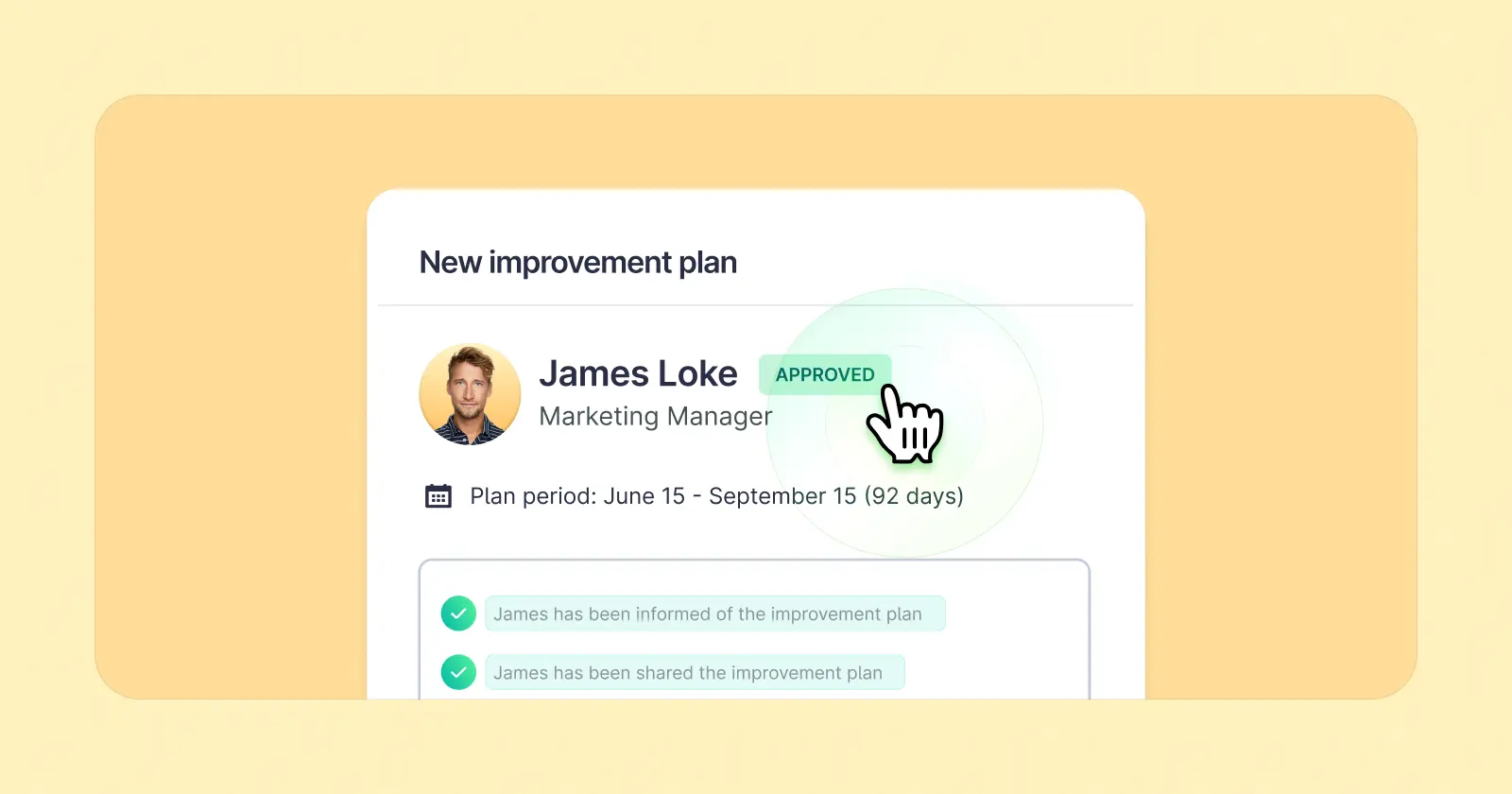
Take an interactive tour of Lattice PIPs. 🕹️
Ditch the manual processes with structured PIPs that bring clarity, reduce risk, and drive real improvement.

Guide: Using One-on-Ones to Drive Performance 📖
Regular one-on-ones are one of the most effective ways to support employees on a performance improvement plan.