

How many times have you left a one-on-one and thought, “What did we just talk about?” Or discovered your own notebook is full of incomprehensible shorthand?
Once is more than enough when the meeting itself is meant to address sensitive or serious discussions. You either need:
- An AI-powered meeting agent or notetaker that can automate the documentation and share it out with everyone who attended
- A record of discussion template to capture all the important details so you can rest assured nothing slips through the cracks.
Whichever route you choose, Lattice has you covered. Our all-new meeting agent turns everyday conversations into moments of clarity, growth, and better leadership with real-time coaching.
But if you’d rather go analog and make your own docs, keep reading for details on downloading our free template and putting it to use.
{{rich-highlight-1}}
What is a record of discussion?
A record of discussion is a formal written account of a workplace conversation between a manager and an employee. It documents what was discussed, what was agreed upon, and what happens next.
It's used across a wide range of situations, including performance improvement plans to career development conversations, and serves as an official reference point for both parties. While regular one-on-ones might lend themselves to casual documentation in a weekly agenda or meeting description, more serious situations like code of conduct violations would warrant a formal record of discussion, which is structured, stored permanently, and often includes manager and employee acknowledgment.
Free Record of Discussion Template
The record of discussion template below is designed for managers who need to document employee conversations in a clear, consistent, and legally defensible format. It works across a range of conversation types and can be adapted to fit your organization's HR policies.
Benefits of Using a Record of Discussion Template
Using a standardized template — rather than ad hoc meeting notes — brings real advantages for managers, employees, and HR teams alike:
- Consistency across managers. When everyone uses the same format, documentation quality doesn't rely on individual habits, handwriting, or memory. New managers can pick up the template and start documenting conversations the right way from day one.
- A clear record for future reference. Structured records make it easy to revisit key points weeks or months later. Whether you're preparing for a follow-up conversation, a performance review, or an HR inquiry, a well-documented record gives everyone the same shared understanding of what happened.
- Fairer, more defensible decisions. When documentation captures context — not just outcomes — it supports more consistent and equitable decisions for everyone. It also protects both the employee and the organization if a situation is ever disputed or escalated.
What the Template Includes:
Lattice’s free record of discussion template helps you capture the following fields:
When to Use a Record of Discussion
Records of discussion aren't only for formal disciplinary situations. They're valuable any time a manager needs to document a conversation for future reference, and using them proactively actually reduces the risk of escalation by creating clarity before problems grow.
Goals and Progress-related Conversations
When you're discussing expectations, reviewing progress against goals, or identifying areas where an employee needs additional support or clarity, a record of discussion creates alignment. Both parties leave with the same understanding of what "on track" looks like — and what the path forward is when things go “off track.”
Behavioral or Conduct Issues
When you're addressing recurring patterns such as attendance issues, communication concerns, or conflicts within the team, documentation is essential. A record of discussion captures what was observed, what was discussed, and what the employee agreed to do moving forward. This creates a paper trail if the behavior continues and demonstrates that the manager raised the issue directly and constructively.
Coaching and Development Discussions
Not all records need to be about problems. Coaching conversations, career growth discussions, and skill-building commitments deserve documentation too. When you capture agreed-upon development steps in writing, it signals that those commitments are real — and gives you a reference point for future conversations, which can be especially helpful for promotions, raises, and performance-based bonuses that have specific criteria.
Project or Team-level Decisions
Records of discussion can supplement meeting minutes by documenting specific ownership and commitments from team-level conversations. If a key decision was made, a deadline was set, or a responsibility changed hands, a written record prevents the "I didn't know I owned that" problem.
{{rich-highlight-2}}
How to Write an Effective Record of Discussion
A template is only as good as what you put in it. Here's how to document conversations in a way that's clear, fair, and actually useful down the line.
Be specific and factual.
Vague documentation never holds up. It creates ambiguity and can undermine both the manager's credibility and the employee's understanding of what's expected.
❌ Avoid language like: "Employee has a bad attitude and isn't pulling their weight."
✅ Document observable facts: "In the past three weeks, the employee missed two deadlines (March 4 and March 11) and raised their voice during a team meeting on March 9. We discussed these incidents and the expectations going forward."
Specific, factual language documents what actually happened — not an interpretation of it.
Capture agreed actions with owners and dates.
Every action item in the record should answer three questions: What needs to happen? Who is responsible? By when?
❌ "Employee will work on time management."
✅ "Employee will submit weekly status updates to their manager every Friday by 5 PM, beginning April 4."
Clear ownership and deadlines eliminate the "I thought you meant..." conversations that happen when follow-ups are vague.
Record the employee's perspective.
An effective record of discussion isn't just the manager's account — it includes a summary of the employee's response. What did they say when the issue was raised? Did they agree with the assessment, offer context, or raise a concern? Capturing this accurately (without interpretation or sensationalizing) makes the record more credible and demonstrates that the conversation was two-way.
Complete the record promptly.
Aim to complete the documentation within 24 hours of the conversation. Details fade quickly, and a record written a week later is more likely to be incomplete, inaccurate, or contested. Treat documentation as part of the meeting itself, not an afterthought.
Sign the document within the same business day, if possible, and submit it to the human resources so they can sign it, too.
Store records in a consistent location.
A record of discussion is only useful if it can be found. Personal email drafts, individual hard drives, and shared folders all create risk — records get lost, deleted, or siloed. Documentation should live in a centralized system accessible to HR and relevant managers, with version history and access controls in place.
{{rich-highlight-3}}
Record of Discussion Template FAQs
What is the difference between a record of discussion and meeting minutes?
Should the employee sign the record of discussion?
Yes. An employee signature — or written acknowledgment — confirms that the employee has reviewed the document. It's important to note that a signature typically means "I have read this record," not "I agree with everything in it." Employees should have the opportunity to add their own comments or note any disagreements before signing.
If an employee refuses to sign, document that refusal in the record itself. The refusal doesn't invalidate the document — it simply becomes part of the official record.
What if the employee disagrees with what was documented?
Give the employee a formal opportunity to respond. Most records of discussion include a section for employee comments, where they can note disagreements, add context, or provide their perspective. This doesn't change the manager's record — it supplements it. Both the manager's account and the employee's response become part of the official documentation.
If there's a factual error, correct it. If there's a difference in interpretation, document both views. The goal isn't a single "official truth" — it's a complete, accurate record of what happened and what each party said.
How long should I keep records of discussions?
Retention requirements vary by organization, state, and country, but a common guideline is to retain personnel-related documentation for at least three to seven years after the employee's separation. Some situations — particularly those involving legal claims or formal investigations — may require longer retention. Check with your HR or legal team to confirm the requirements that apply to your organization.
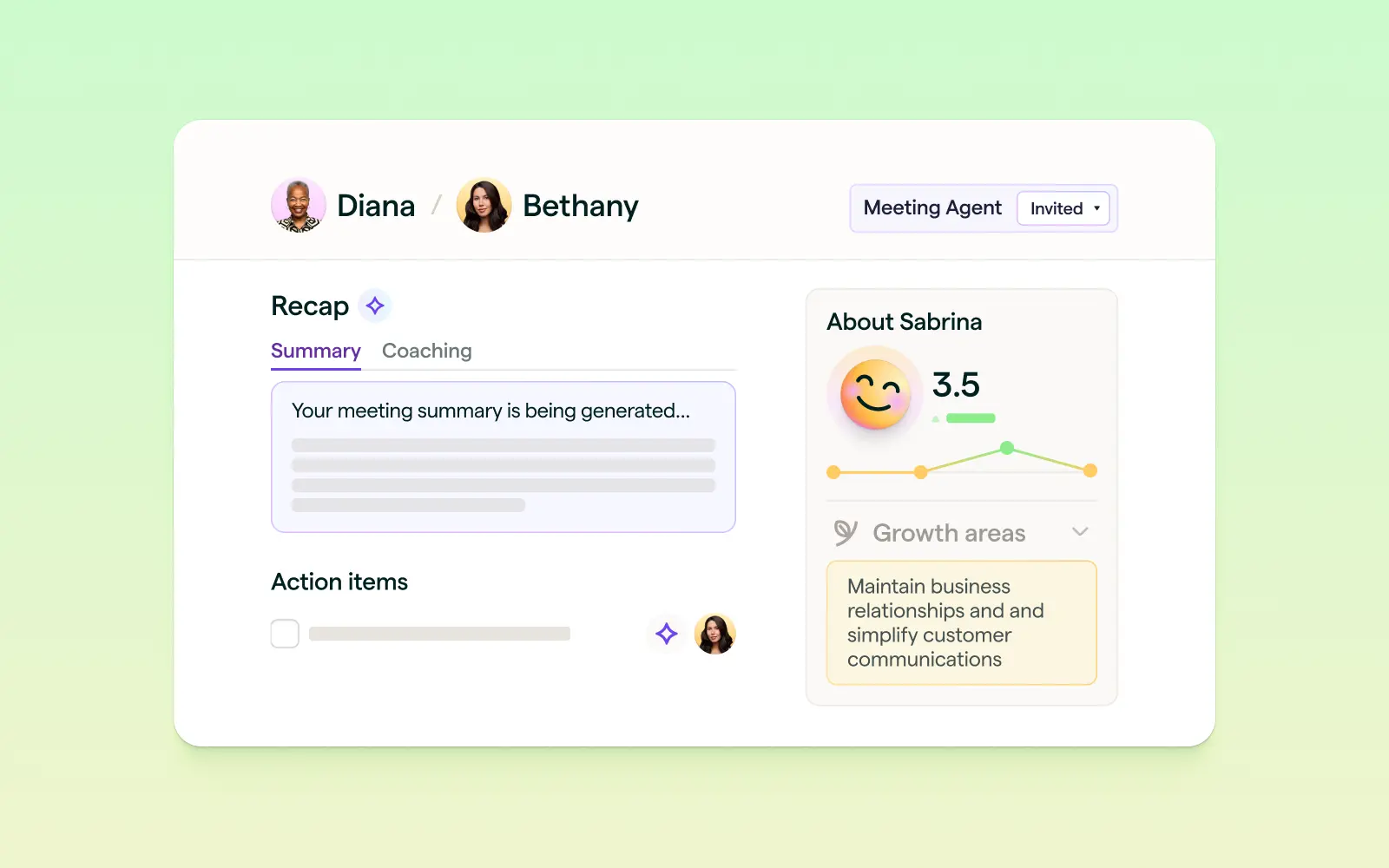
Better conversations, stronger performance.
The Lattice Meeting Agent joins one-on-ones to transcribe conversations, generate thoughtful summaries, and surface clear agenda and action items — while also delivering personalized, role-aware coaching to help managers and employees continuously improve how they show up.
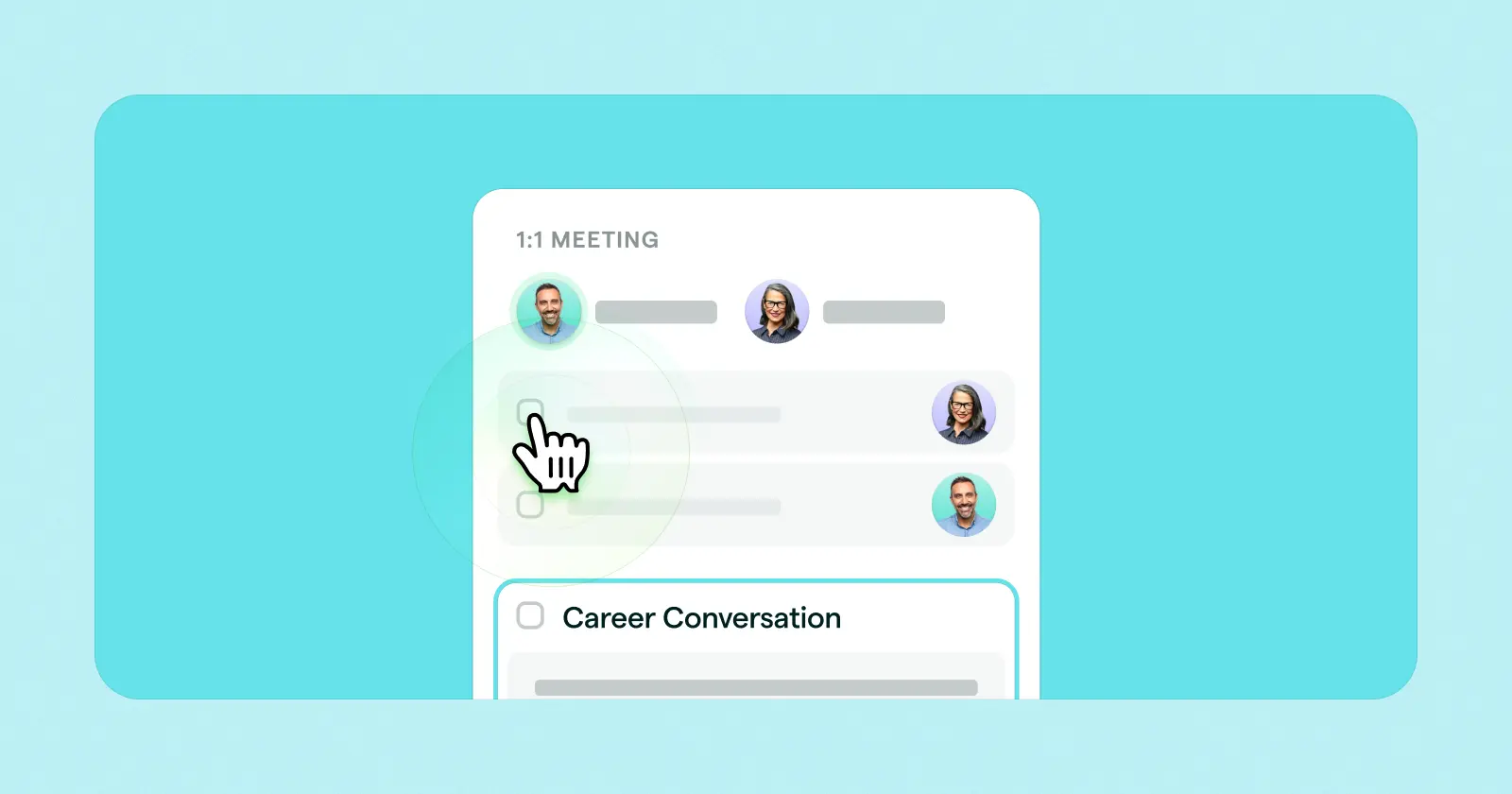
Big meeting on the books? There’s an agent for that.
Unlike generic meeting tools that focus on documentation, the Lattice Meeting Agent is built to reinforce better habits, stronger leadership, and more effective employee performance across the organization.
Turn Meetings into Momentum With Lattice
A downloadable template is a good starting point, but standalone documents create challenges over time. Files get lost, formatting drifts, context fades away. The manager who wrote the original record leaves, and the institutional knowledge goes with them.
A centralized, searchable, AI-powered system solves these problems.
- Lattice 1:1s gives managers a consistent, structured format for documenting conversations — so records are created in the same place every time, not scattered across inboxes and personal drives.
- Lattice AI automatically surfaces relevant meeting notes from past discussions. Before a follow-up meeting, the manager can see exactly what was discussed last time — what was agreed, what's still open, what changed.
- Connected to goals and feedback. When documenting a conversation, managers can reference related goals, feedback, and previous meetings in the same place — giving a fuller picture of the employee's trajectory, not just a snapshot of a single meeting.
- Centralized and accessible. Conversation records are available to HR and managers in one place, reducing version confusion and making it easier to maintain continuity when team structures change.
Sure, templates are useful, but a connected system is how documentation becomes a habit that drives performance. Request a demo today to see how.